Travel
The Sunlit Canyons and Diamond Trails of Brazil’s Ancient Tabletop Wilderness
Deep within the heart of Bahia, the Sincorá Range rises in a dramatic display of prehistoric tabletop mountains and soaring falls. Following the echoes of a nineteenth-century diamond rush, travelers find a rugged sanctuary where endangered jaguars roam and vital watersheds sustain a vibrant, fragile ecosystem.
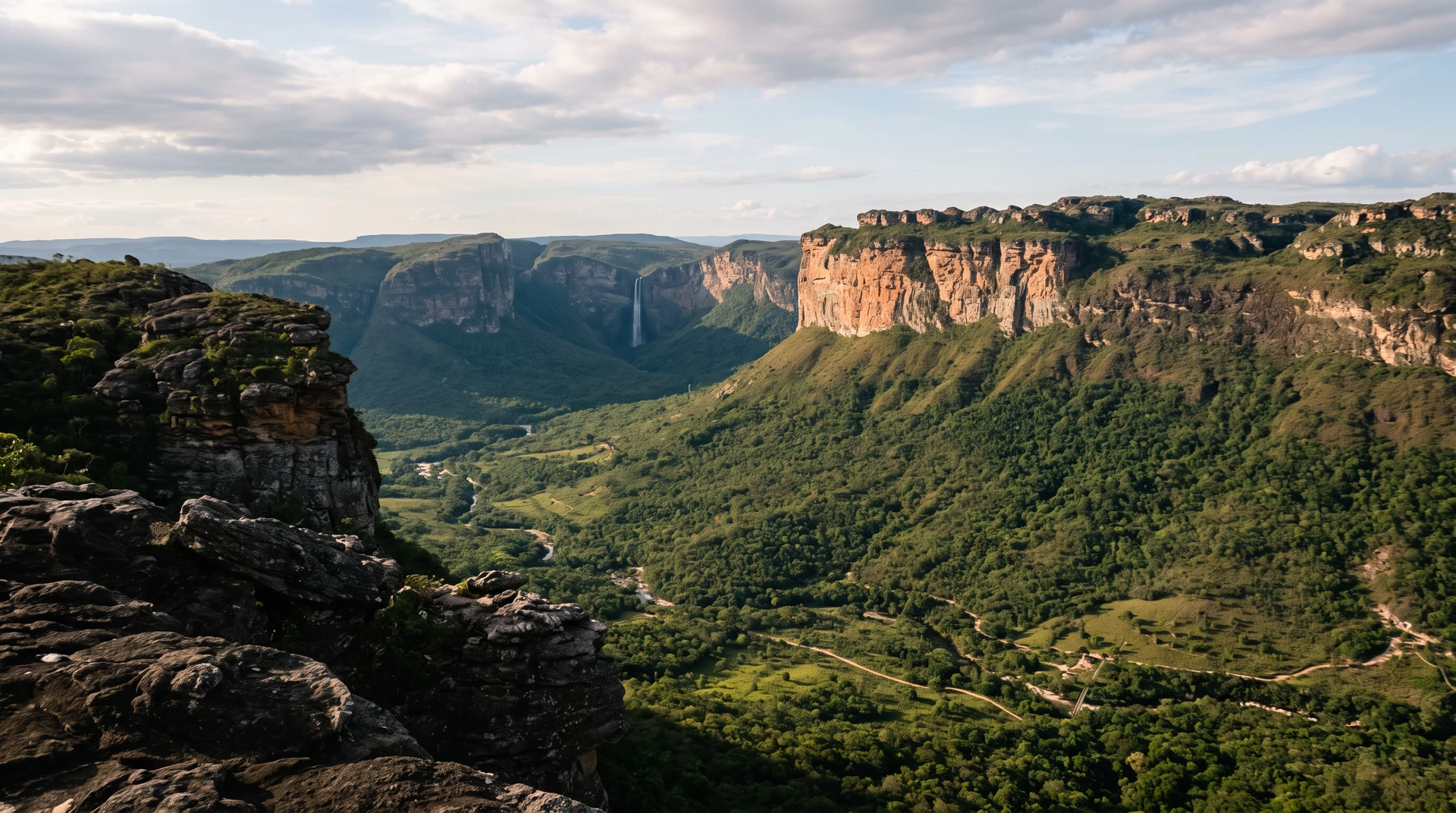
Arrival in the town of Lençóis feels like a deliberate step away from the modern coastal pulse of Brazil and into a preserved chapter of the nineteenth century. Once the bustling center of a global diamond rush, the town’s cobblestone streets and brightly painted colonial facades now serve as the quiet threshold to the Chapada Diamantina National Park. The air here is thinner and cooler than the humid shores of Salvador, carrying the scent of dry earth and mountain scrub. Beyond the town’s edge, the Sincorá Range begins its ascent, a series of jagged peaks and flat-topped plateaus that have defined the geography of central Bahia for eons. It is a place where the history of human greed has been overtaken by the slow, relentless pace of geological time, leaving behind a wilderness that feels both ancient and remarkably untouched.
The park, established in 1985, spans over one hundred and fifty thousand hectares of high-altitude grasslands and deep canyons. These tabletop formations, known locally as chapadas, are prehistoric monuments of sandstone and conglomerate rock, weathered by millions of years of wind and rain into gravity-defying shapes. Standing atop the Morro do Pai Inácio, one gazes across a sea of these plateaus, their vertical walls glowing in shades of ochre and deep violet as the sun dips low. The scale is disorienting; the vastness of the Sincorá Range creates a sense of profound isolation, a "lost world" where the horizon seems to stretch into infinity. This is a landscape that demands respect, its beauty born from the harsh realities of erosion and the enduring strength of the earth’s oldest crust.
Water is the lifeblood of this region, and the park serves as a vital watershed for the state of Bahia. The rivers that carve through the canyons are often stained the color of dark tea by the tannins of the surrounding vegetation, yet they remain remarkably clear. Among the park’s many aquatic wonders, the Cachoeira da Fumaça, or "Smoke Waterfall," stands as a testament to the dramatic verticality of the terrain. Dropping nearly three hundred and forty meters from a high plateau, the volume of water is often so light that the wind catches the stream, blowing it upward in a shimmering veil of mist before it can reach the canyon floor. It is a spectral sight, a reminder that in this high-altitude environment, the elements often behave in ways that defy expectations.
Beneath the grand vistas lies a complex and fragile ecosystem, a transition zone where the dry Caatinga forest meets the lush moisture of the mountain valleys. This biodiversity is the park’s true treasure, far more enduring than the diamonds once pulled from its stream beds. The high-altitude grasslands, or campos rupestres, are home to a staggering array of endemic flora—orchids, bromeliads, and cacti that have adapted to the thin soil and intense solar radiation. In the deeper, more sheltered reaches of the park, the forest thickens, providing a sanctuary for some of South America’s most elusive predators. The jaguar and puma still move through these shadows, their presence a silent indicator of the wilderness's health, while the rare Caatinga titi monkey swings through the canopy, found nowhere else on earth.
Trekking through the Chapada Diamantina is a physical dialogue with the past. Many of the primary trails used by hikers today were originally blazed by the garimpeiros, the diamond prospectors of the 1800s. These paths wind through narrow rocky passes, across sun-drenched plateaus, and down into cool, fern-draped grottoes. The walking is rarely easy; the terrain is a mosaic of loose stone, steep inclines, and river crossings that require a steady foot and a patient mind. Yet, there is a rhythmic satisfaction in following these old routes, knowing that each step traces the history of those who sought their fortunes in these mountains. The silence of the backcountry is absolute, broken only by the occasional call of a hawk, allowing the traveler to fully immerse themselves in the raw texture of the landscape.
Practicality is the companion of safety in such a rugged environment. The park’s beauty is matched by its potential for sudden, violent change, particularly regarding the weather. Flash floods are a legitimate risk in the narrow canyons; a storm miles away on a plateau can send a wall of water rushing through a dry riverbed with terrifying speed. Because of these risks, and the sheer complexity of the unmarked backcountry, hiring a certified local guide is a vital component of a responsible journey. These guides carry the collective memory of the land, navigating the shifting weather patterns and the labyrinthine trails with an intuition that no map can replicate. Their presence ensures that the impact on the fragile grasslands is minimized, preserving the delicate balance of the high-altitude flora.
As the day wanes, the light in the Chapada Diamantina takes on a transformative quality. The red earth of the trails seems to burn with an internal heat, and the shadows in the canyons deepen into a blue so dark it appears almost black. There is a specific stillness that settles over the Sincorá Range in the twilight hours, a pause that feels like the breath of the mountains themselves. It is in these moments that the wistful nature of the park becomes most apparent—a sense of longing for a time when the world was larger and its corners more mysterious. The park does not just offer scenery; it offers a reconnection to the elemental forces of the planet, a place where the human scale is rightly humbled by the grandeur of the tabletop peaks.
Leaving the Chapada Diamantina, one carries the grit of the red soil and the memory of the wind’s howl through the high passes. The park remains a bastion of wildness, a testament to the foresight of those who protected this vital watershed. It is a place of contradictions—harsh yet beautiful, ancient yet constantly changing, a site of past exploitation that has become a model for future preservation. For the traveler, the journey is not about the diamonds that are no longer there, but about the clarity of the light, the power of the falling water, and the enduring resilience of a landscape that has survived the ages. The Sincorá Range stands as a silent sentinel, guarding the heart of Bahia and reminding all who enter of the profound, enduring necessity of the wild.