Travel
The Granite Sentinels of Patagonia: A Journey Through the Windswept Heart of Torres del Paine
In the southern reaches of Chile, where the Andes meet the Patagonian steppe, Torres del Paine National Park stands as a testament to the raw power of ice and wind. From turquoise lakes to soaring granite towers, this UNESCO Biosphere Reserve offers a profound encounter with the sublime.
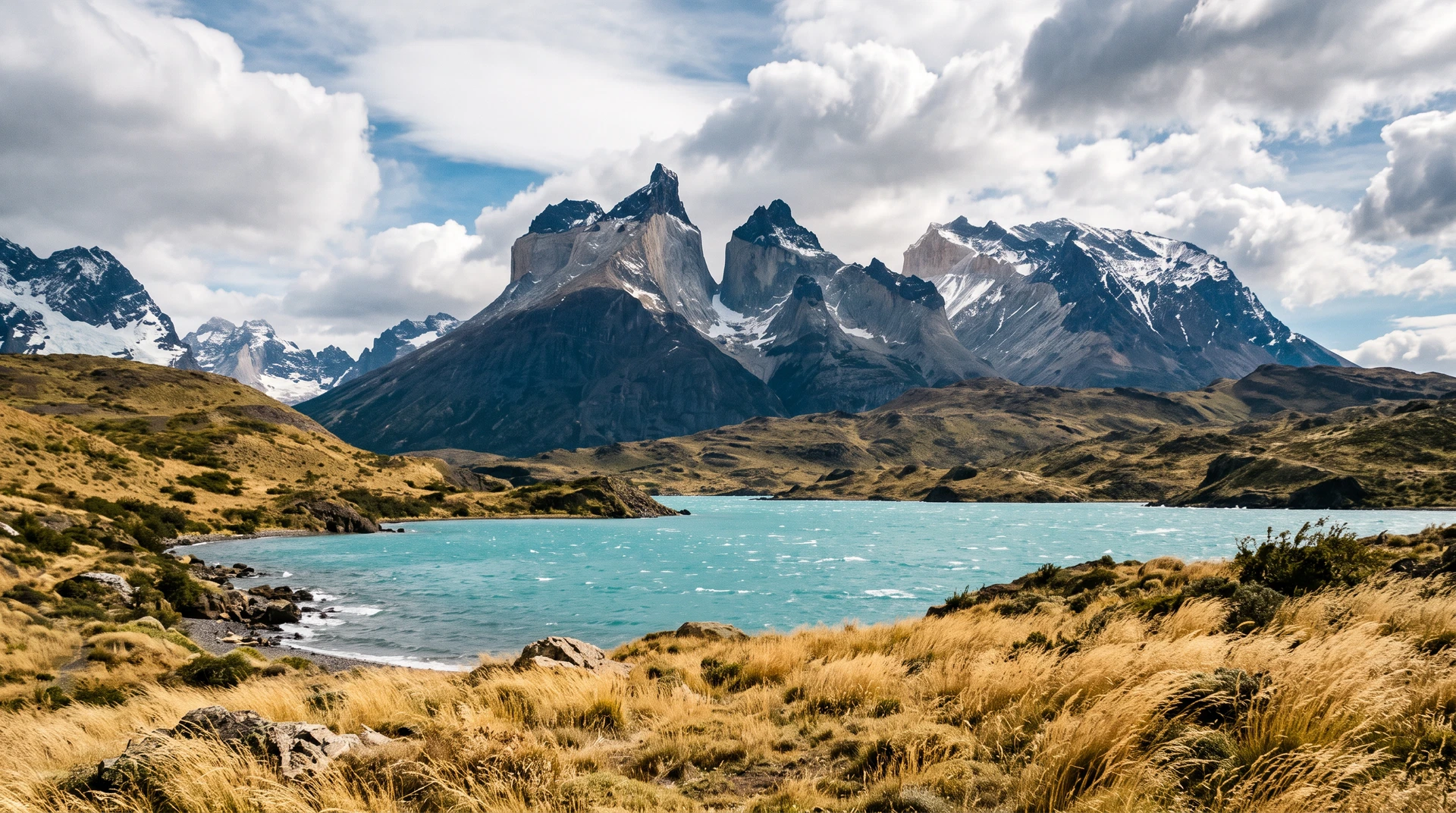
The wind in Chilean Patagonia is not merely a weather condition; it is a physical presence that shapes the land. As you enter Torres del Paine National Park in the Magallanes Region, the air carries the scent of ancient ice, rushing over the undulating steppe with a force that demands respect. This is a landscape defined by extremes, where the sky can shift from a bruised purple to a brilliant blue in minutes. Here, the elements are the primary architects, carving out a wilderness that feels both eternal and fragile, a place where the human presence is dwarfed by the sheer scale of the geological drama.
At the heart of this 227,000-hectare sanctuary lie the iconic granite towers that give the park its name. These three vertical monoliths, along with the multi-hued Cuernos del Paine, resulted from a complex geological process beginning roughly 12 million years ago. Deep beneath the earth's surface, molten rock cooled into hard granite, only to be thrust upward and meticulously sculpted by the relentless movement of glaciers. The result is a skyline of jagged peaks and sheer walls that seem to defy gravity, their surfaces polished by wind and ice into a smooth finish that glows with golden light during the long southern sunsets.
Water defines the park as much as the mountains, appearing in a spectrum of blues that seems almost artificial. The lakes, such as Pehoé and Nordenskjöld, are fed by the melting remnants of the Southern Patagonian Ice Field, carrying fine glacial silt known as rock flour. This suspended sediment scatters sunlight, creating the vivid turquoise and milky emerald hues that characterize the region’s waterways. Standing on the shores of Lago Grey, one can watch massive icebergs, calved from the face of the Grey Glacier, drift slowly across the water like silent, translucent ghosts, their deep blue interiors hinting at the immense pressure that formed them.
For those who traverse the legendary "W" or "O" circuits, the park offers a physical dialogue with the wilderness. The trails lead through a diverse mosaic of ecosystems, from the sheltered corridors of subantarctic forests to the exposed ridges of the high passes. In the woods, the twisted trunks of lenga and coigüe trees are draped in "old man's beard" lichen, a testament to the purity of the air. The path to the Base de las Torres is perhaps the most grueling, a steady ascent through moraine fields that culminates in a natural amphitheater where the three towers rise abruptly from a glacial tarn.
The transition from the lush forest to the open Patagonian steppe is abrupt and striking. On the plains, the vegetation clings low to the ground, adapted to the constant battering of the wind. Here, the landscape opens up to reveal vast horizons where herds of guanacos graze peacefully, their reddish-brown coats blending into the tawny grasses. These elegant camelids are the most visible residents of the park, though they are always on the lookout for the region’s apex predator: the puma. The interaction between these species, played out against the backdrop of the soaring mountains, provides a glimpse into a natural order that has remained largely unchanged.
Human history within the park is a relatively recent layer upon its ancient foundations. Established as a national park in May 1959, the area was once the domain of large sheep ranches, or estancias, which left their mark on the landscape. The transition to a protected area was solidified in 1978 when UNESCO designated it a Biosphere Reserve, recognizing the global importance of its unique biodiversity. Today, the park serves as a critical laboratory for understanding the impacts of climate change, as the receding glaciers of the Southern Patagonian Ice Field provide a visible and sobering record of a warming world, reminding us of the urgent need for stewardship.
The fragility of this environment is most poignantly felt in the history of its wildfires. Large swaths of the park still bear the scars of past blazes, where the silver skeletons of burnt trees stand as a grim reminder of human carelessness. Consequently, the stewardship rules are uncompromising: open fires are strictly prohibited throughout the park. Travelers must use only authorized, portable stoves within designated campsites, and during the harsh winter months, many trails require the accompaniment of a mandatory guide. These measures are not merely bureaucratic hurdles but essential protections for an ecosystem that, once damaged, takes decades to recover in these conditions.
As the sun dips below the horizon, the granite faces of the Paine Massif undergo a transformation, catching the final rays of light in a phenomenon known as alpenglow. The rock turns a deep, fiery orange, contrasting sharply with the darkening sky and the cold, pale blue of the glaciers. It is in these moments of stillness, when the wind finally drops and the only sound is the distant roar of a waterfall or the cry of a chimango caracara, that the true spirit of Torres del Paine reveals itself. It is a place that demands a certain wistfulness, a recognition of the fleeting nature of our own journeys.
Leaving the park involves a slow descent back into the lowlands, but the image of the granite towers remains etched in the mind long after the mountains have faded from view. The experience of Torres del Paine is not one of conquest, but of immersion—a reminder that there are still corners of the world where the wild remains sovereign. Whether watching the sunrise from a windswept ridge or finding shelter in a forest glade, the traveler is invited to witness a world in constant flux, shaped by the slow grinding of ice and the invisible hand of the wind, forever standing as the granite sentinels.