Travel
The Luminous Silence of the Blue Hole and Belize’s Great Marine Mosaic
Beyond the turquoise horizon of Belize lies the Northern Hemisphere’s largest barrier reef, a delicate labyrinth of limestone and life. From the sapphire depths of the Great Blue Hole to the sanctuary of Half Moon Caye, we explore a fragile, UNESCO-protected masterpiece of coral conservation.
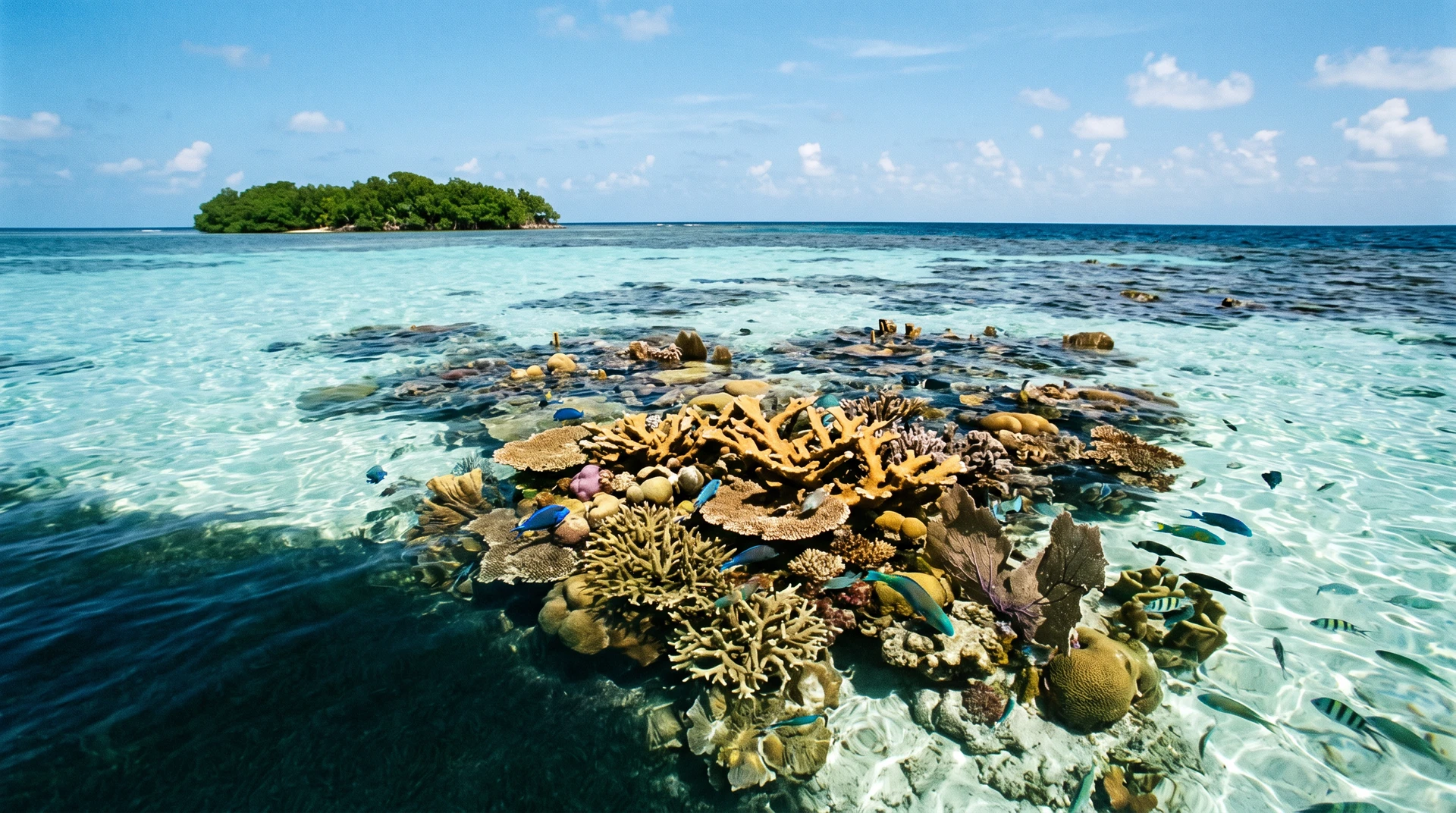
The light in Belize does not merely shine; it saturates, turning the Caribbean Sea into a shifting palette of cerulean and jade. As the boat pulls away from the mainland, the water begins to reveal the secrets of the Belize Barrier Reef Reserve System, the largest of its kind in the Northern Hemisphere. It is a structure of immense scale, yet its true majesty lies in its intimacy—the way a single polyps’ growth contributes to a wall of limestone that stretches for hundreds of miles. To arrive here is to enter a world where the boundary between air and water feels porous, and the horizon is defined by the breaking white foam of waves against the reef crest.
This is not a monolithic entity but a sophisticated marine mosaic, a network of seven distinct protected areas that together form a UNESCO World Heritage site. Each zone offers a different texture of the sea. There are the shallow, sun-drenched flats where seagrass sways in the current, and the deep, light-starved canyons where ancient corals have stood for centuries. Navigating this system requires a shift in perspective, moving from the broad strokes of the map to the minute details of the ecosystem. It is a place where the geological past and the biological present are inextricably linked, creating a sanctuary that feels both ancient and urgently alive.
At the heart of this aquatic wilderness lies the Blue Hole Natural Monument, a perfectly circular abyss that appears as a dark iris in the center of the Lighthouse Reef atoll. Descending into its sapphire depths is a lesson in geological history. The hole was once a terrestrial cave system, its massive stalactites now submerged hundreds of feet below the surface. The transition from the vibrant, fish-heavy shallows to the still, monochromatic silence of the sinkhole is jarring. Here, the water is cool and the light fades into a haunting indigo, offering a rare glimpse into the subterranean architecture that once existed above the waves.
In contrast to the vertical drama of the Blue Hole, Half Moon Caye provides a horizontal sanctuary of white sand and lush vegetation. This caye is one of the oldest protected areas in the country, serving as a critical nesting site for the red-footed booby and a habitat for the magnificent frigatebird. Standing on the observation deck, one can watch the birds wheeling through the salt-scented air, their silhouettes sharp against the clouds. The island serves as a reminder that the reef system is not just an underwater wonder; it is a vital bridge between the sea and the sky, supporting life that transcends the water’s surface.
The biodiversity here is staggering, a testament to the reef’s role as a global refuge. Beneath the surface, the system supports hundreds of fish species, from the translucent darting of gobies to the slow, majestic patrol of reef sharks. Perhaps most poignant is the presence of the West Indian manatee. These gentle herbivores find safety in the calm lagoons and seagrass beds, their rounded forms surfacing briefly for air before vanishing back into the green-tinted water. To see a manatee in the wild is to witness the reef’s success as a sanctuary, a place where vulnerable species can still find the space and resources they need to thrive.
Stewardship is the silent heartbeat of the Belize Barrier Reef. The site has become a global model for coral conservation, a necessary effort in an era of warming oceans. Local initiatives focus on the restoration of elkhorn and staghorn corals, nurseries where fragments are carefully tended before being outplanted onto the reef. This work is painstaking and quiet, performed by divers who understand that the reef’s survival depends on human intervention as much as natural resilience. The success of these programs offers a glimmer of hope, proving that with dedicated protection, the fragile limestone cathedrals of the sea can endure.
Access to this fragile world is strictly regulated, a practical necessity to ensure its longevity. Visitors must travel with authorized boat operators who are trained to minimize anchor damage and manage the human footprint on the reef. There is a profound sense of responsibility that comes with diving or snorkeling here. The "leave no trace" principle is not just a suggestion; it is a survival mandate for the limestone and coral structures that are easily shattered by a stray fin or a careless anchor. This controlled access fosters a deeper appreciation for the environment, turning every visitor into a temporary guardian of the reef’s integrity.
As the sun begins to dip toward the mainland, casting long, golden shadows across the water, the reef seems to exhale. The wistful beauty of this place lies in its vulnerability—the knowledge that such a vast and complex system depends on the delicate balance of temperature, light, and human care. Leaving the reef behind, one carries the memory of its luminous silence and the vibrant chaos of its life. It is a reminder that the most precious parts of our world are often the ones we must work hardest to protect, ensuring that the great marine mosaic of Belize remains a living legacy for generations to come.