Travel
The Deep Resonance of Water and Fire Within the Highland Heart of Guatemala
Ringed by three sentinel volcanoes, Lake Atitlán serves as a profound intersection of ancient Mayan heritage and geological grandeur. Here, the Tzutujil and Kaqchikel people maintain vibrant traditions beside Central America’s deepest waters, where history remains anchored in the depths.
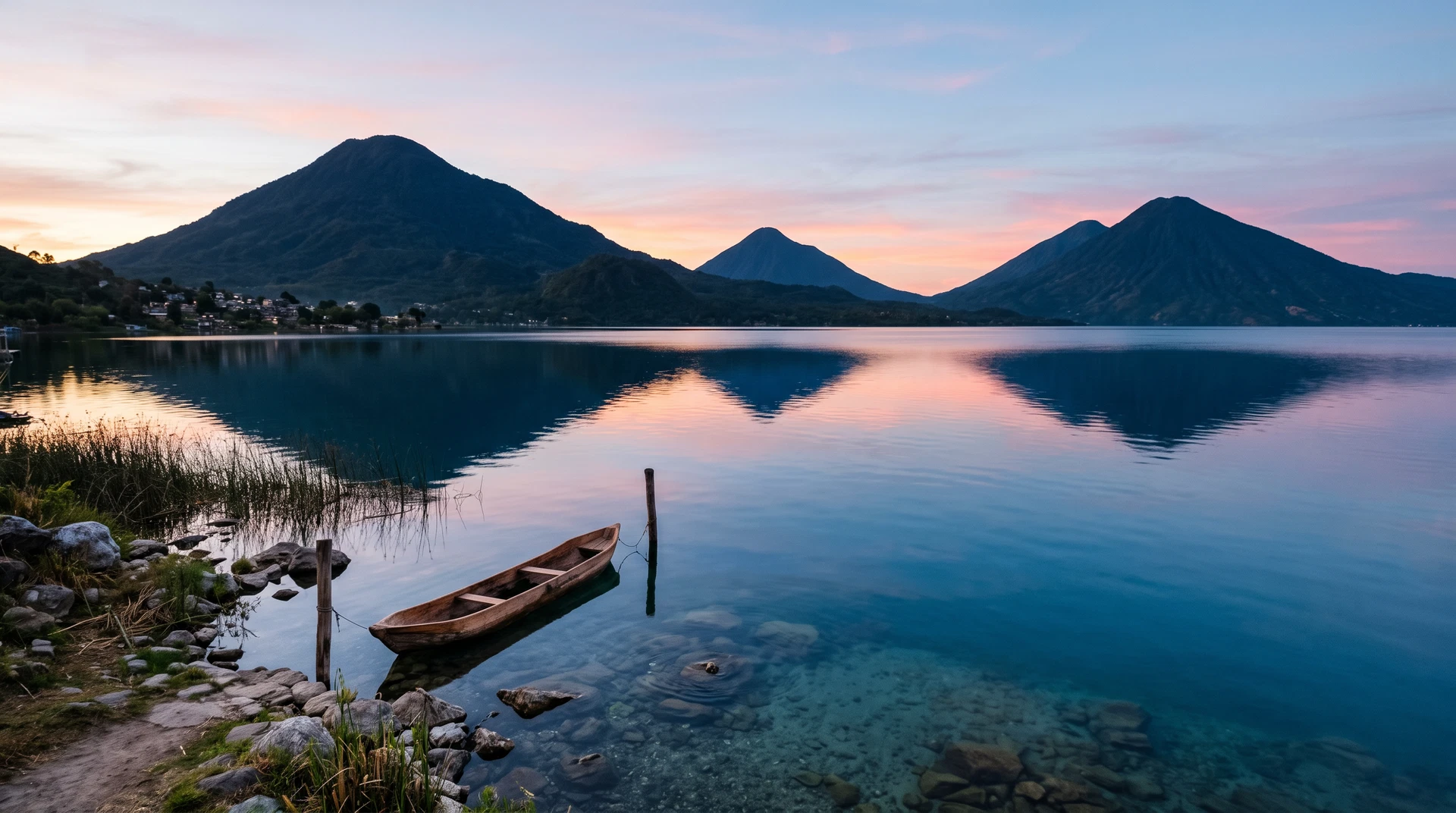
The morning mist on Lake Atitlán does not merely rise; it seems to exhale from the very earth, a slow and deliberate awakening of a landscape forged in cataclysm. Roughly 84,000 years ago, the Los Chocoyos eruption collapsed the ground into a massive caldera, leaving behind a void that the rains eventually filled. Today, this high-altitude basin in Guatemala’s Sololá Department stands as a testament to the sheer transformative power of volcanic activity. The water is a shifting palette of cobalt and slate, reflecting the steep, verdant slopes that rise abruptly from its shores. To stand at the water's edge is to feel the weight of deep time, a silent reminder that the serenity of the present is built upon a foundation of ancient fire.
Plunging to a depth of 340 meters, Atitlán is the deepest lake in Central America, a statistic that translates into a sense of profound, almost intimidating mystery. Beneath the surface, the water conceals more than just geological history. In the late 1990s, divers discovered Samabaj, a submerged Mayan archaeological site that once sat on an island before rising water levels claimed it. This "Mayan Atlantis" serves as a poignant physical link to the Preclassic period, where ceremonial structures and residential buildings remain preserved in the cold, dark depths. It is a reminder that the lake is a living entity, one that has both sustained and consumed the civilizations that have sought its protection over the millennia.
The lake’s horizon is dominated by the majestic trio of the Atitlán, Tolimán, and San Pedro volcanoes. These symmetrical giants serve as the lake’s permanent guardians, their peaks often shrouded in a crown of clouds. The interplay of light across their ridges creates a dynamic visual narrative that changes by the hour. In the early afternoon, the Xocomil—a fierce wind whose name translates to "the wind that carries away sin"—frequently whips across the surface, churning the calm waters into white-capped waves. This daily meteorological event dictates the rhythm of life for those who navigate the lake, signaling a time for small boats to seek harbor and for the villages to turn inward.
Dotted along the shoreline are the ancestral homes of the Tzutujil and Kaqchikel Maya, communities that have maintained a continuous presence here for centuries. Each village possesses a distinct character and specialized craft, from the intricate weaving of San Juan La Laguna to the bustling market energy of Santiago Atitlán. The residents navigate their world with a quiet resilience, their lives intertwined with the lake’s cycles. In these highlands, the Mayan language is the primary cadence of conversation, and the traditional dress, or traje, remains a proud expression of identity. The vibrant purples, reds, and blues of the hand-woven textiles are not just decoration; they are a coded history of lineage and place.
Walking through the narrow, winding paths of a lakeside village like Santa Cruz or Jaibalito, one is struck by the sensory richness of the environment. The scent of woodsmoke from cooking fires mingles with the fragrance of blooming jasmine and coffee blossoms. Coffee is a vital part of the local economy, with small-scale farmers tending to shade-grown beans on the steep volcanic inclines. The harvest is a communal effort, a labor-intensive process that yields some of the finest highland coffee in the world. Observing the meticulous care given to these crops offers a practical insight into the deep connection between the people and the fertile, albeit challenging, terrain they inhabit.
However, the beauty of Atitlán is currently shadowed by significant environmental challenges that demand urgent stewardship. The lake is an endorheic basin, meaning it has no natural surface outlet, making it particularly sensitive to changes in water levels and nutrient runoff. In recent decades, the influx of phosphorus and nitrogen from agricultural activities and untreated wastewater has led to periodic cyanobacteria blooms, threatening the clarity of the water and the health of the aquatic ecosystem. Local conservation efforts are increasingly focused on implementing sustainable waste management and reforestation projects. Supporting these initiatives is not merely a gesture of goodwill but a necessity for the long-term survival of this unique highland sanctuary.
Transportation between the villages is primarily conducted via lanchas, the sturdy public motorboats that crisscross the lake throughout the day. A journey from Panajachel to the western shores provides a panoramic perspective of the caldera’s scale, with the volcanoes looming larger as one moves further from the main hub. The experience is visceral; the spray of the water, the hum of the engine, and the sight of local fishermen in their traditional cayucos (dugout canoes) casting nets into the deep. It is a practical reminder that despite the influx of modern influences, the lake remains a vital highway and a primary source of sustenance for the thousands who live along its rim.
As the sun sets behind the San Pedro volcano, casting long, golden shadows across the water, a stillness returns to the highlands. The vibrant activity of the day gives way to a reflective silence, broken only by the distant sound of a church bell or the lapping of water against the docks. Atitlán is a place that invites contemplation, a destination where the boundaries between the past and the present, the physical and the spiritual, seem to blur. To visit is to participate in a delicate balance, a witness to a landscape that is simultaneously enduring and fragile, forever shaped by the forces of nature and the enduring spirit of its people.