Travel
The Turquoise Veins of Xibalba: Exploring the Subterranean Labyrinth of the Yucatán Peninsula
Beneath the sun-scorched limestone of Mexico’s Yucatán Peninsula lies a hidden network of crystalline pools. These cenotes, once sacred to the Maya, offer a surreal descent into a prehistoric underworld where geological history and ancient spiritualism converge in silence and light.
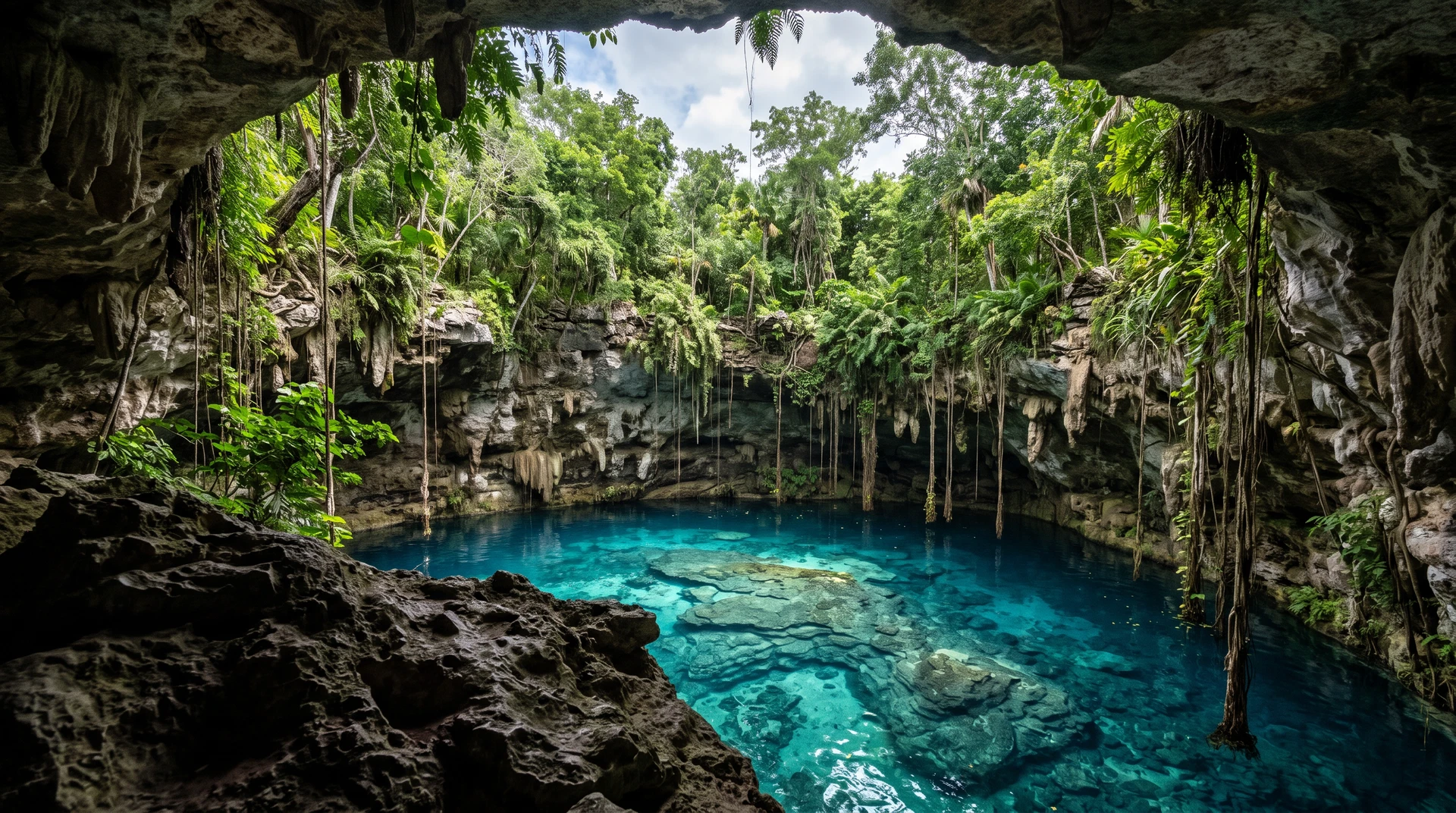
The Yucatán Peninsula is a deceptively flat expanse of scrubby jungle and low-lying limestone stretching toward the Caribbean horizon. Yet, beneath this parched and porous crust, a secret geography breathes in the dark. To travel here is to realize that the most profound landscapes are not found by looking up at mountains, but by looking down into the earth. The cenotes—thousands of natural sinkholes scattered across the peninsula—are the only windows into a subterranean world that remains one of the most complex and least explored aquatic systems on the planet. Stepping off the dusty jungle path and into the cool, humid shadow of a cenote entrance is an act of transition, a sudden departure from the blinding Mexican sun into a realm of muted echoes and emerald depths.
These geological marvels are the result of a slow, patient dialogue between water and stone that has spanned millions of years. The peninsula is essentially a giant limestone platform, and because limestone is soluble, the relentless tropical rains have gradually dissolved the rock, carving out a labyrinthine network of caves and tunnels. When the roof of one of these subterranean chambers eventually grows too thin to support its own weight, it collapses, exposing the groundwater beneath. The resulting pools are fed by vast underground rivers that flow silently toward the sea. The air inside these caverns carries a heavy stillness, where the rhythmic drip of water from stalactites marks a geological clock far slower than our own.
Perhaps the most startling aspect of this geography is its celestial origin. Scientists have discovered that a significant number of the Yucatán’s cenotes are arranged in a massive, semicircular arc that aligns perfectly with the buried rim of the Chicxulub impact crater. This is the site where a massive asteroid struck the Earth sixty-six million years ago, triggering the extinction of the dinosaurs. The impact shattered the underlying limestone, creating the structural weaknesses that would eventually become the Ring of Cenotes. Floating in these waters means drifting above the scar of a planetary cataclysm, where serene beauty is inextricably linked to the cosmic violence that reshaped life on Earth.
For the ancient Maya, these pools were far more than just a vital source of fresh water in a land without surface rivers; they were the sacred portals to Xibalba, the underworld. The Maya believed that the cenotes were the dwelling places of gods and the spirits of the ancestors, serving as gateways between the physical world and the divine. Archaeological excavations have recovered ritual offerings from the depths, ranging from pottery and jewelry to human remains, suggesting that these sites were the focus of intense spiritual devotion. Standing on the edge of these deep pools today, it is easy to understand why they were revered; the water does not just reflect the sky but pulls the gaze into a watery abyss.
The experience of visiting a cenote varies wildly depending on its form. Some are "open" cenotes, resembling lush, circular ponds surrounded by vertical walls of rock draped in hanging vines and tropical ferns. Others are "semi-open," where a small hole in the ceiling allows a single, dramatic shaft of sunlight to pierce the gloom, illuminating the water like a spotlight in a darkened theater. Then there are the "cavern" cenotes, which require a descent into total darkness, where the only light comes from the torches of explorers. In these enclosed spaces, the water is so clear that it becomes invisible, creating the dizzying sensation of floating in mid-air above a forest of submerged stalagmites. The transition from jungle heat to the water’s constant, cool temperature is a physical shock that sharpens every sense.
Life within these sunless environments has adapted in extraordinary ways. In the deeper recesses of the cave systems, one might encounter the Yucatecan blind cavefish, a pale, sightless creature that navigates the darkness through touch and vibration. Above the water, the ceilings are often home to colonies of bats, whose chittering provides a constant, rhythmic soundtrack to the subterranean silence. Long, rope-like roots of motmot trees and giant banyans reach down from the surface, stretching dozens of feet through the air to drink from the life-giving water below. These roots act as organic pillars connecting the sunlit world to the dark depths, creating a vertical ecosystem that feels like a scene from a prehistoric era.
However, the very clarity that makes the cenotes so enchanting is also a sign of their extreme vulnerability. Because the limestone is so porous, the groundwater system is highly susceptible to contamination from the surface. The delicate balance of these aquatic ecosystems is easily disrupted by human presence. One of the most significant threats is the use of chemical sunscreens and insect repellents, which can introduce harmful oils and toxins into the water, damaging the unique flora and fauna that call the cenotes home. Travelers are now asked to shower before entering and avoid all chemical products, a small sacrifice to ensure these ancient pools remain pristine for the future.
Leaving a cenote is always a bittersweet experience. As you climb the wooden stairs or scale the limestone walls back toward the surface, the humidity of the jungle hits you like a physical weight, and the vibrant colors of the tropical birds seem almost too bright after the cool blues and grays of the underworld. You emerge blinking into the light, carrying the damp scent of stone and the memory of a silence so profound it felt like a presence. The cenotes are not just swimming holes; they are reminders that the world is deeper than it appears. They remain the quiet, turquoise heart of the Yucatán, beating beneath the forest floor.