Travel
Walking Among Giants in the Mist of California's Ancient Emerald Cathedrals
Beneath the towering canopy of the world’s tallest living beings, Redwood National and State Parks offer a profound encounter with deep time, where ancient coastal forests meet the raw power of the Pacific in a fragile, fog-drenched sanctuary of Northern California.
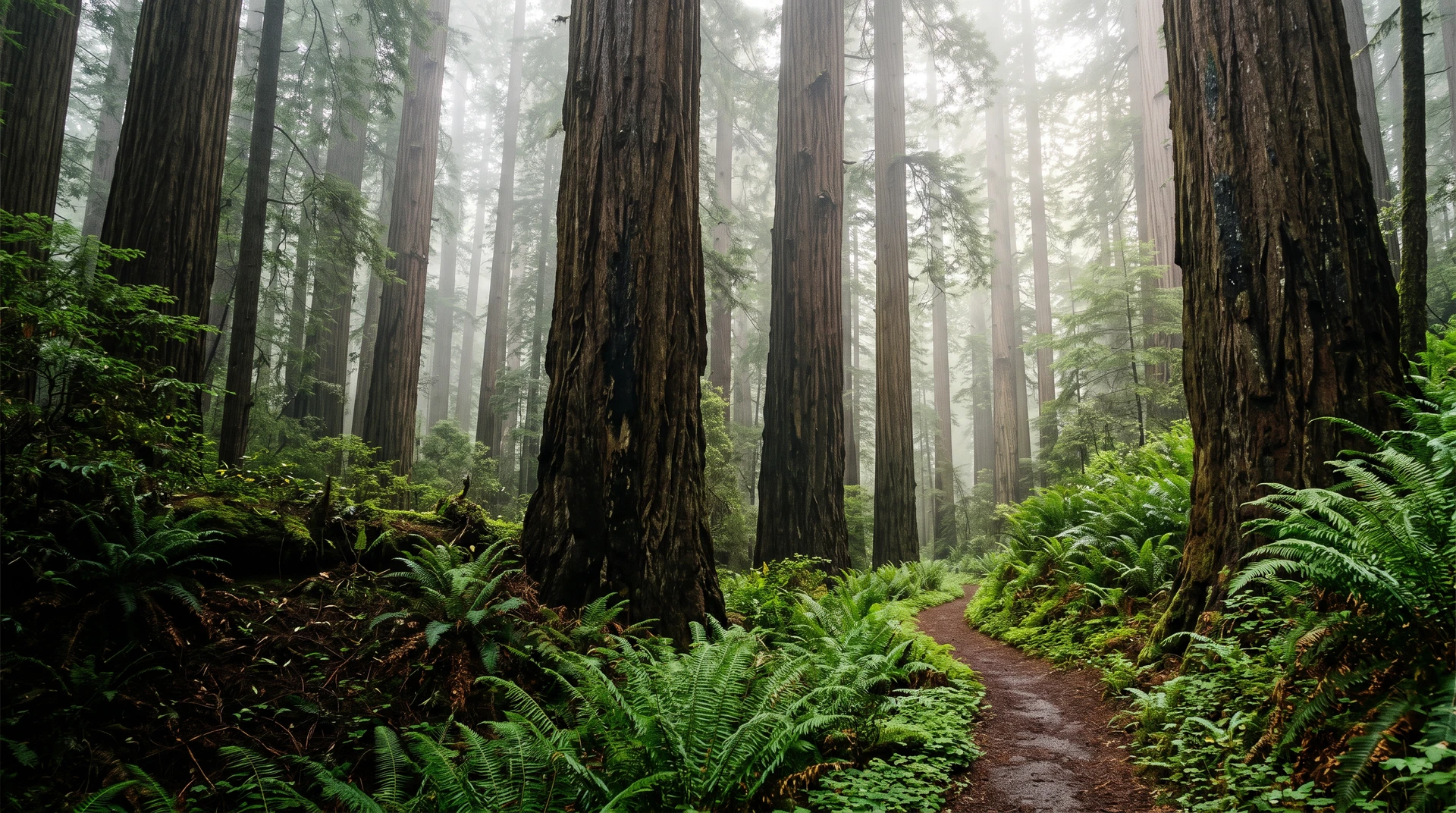
To step into Redwood National and State Parks is to cross a threshold into a realm where the vertical dimension dominates every sensory experience. Here, the Sequoia sempervirens, or coast redwoods, reach toward the heavens with a staggering ambition, some exceeding three hundred and eighty feet in height. These are not merely trees; they are living monuments that have stood for centuries, their thick, cinnamon-colored bark serving as armor against the elements. The air is cool and heavy with the scent of damp earth and decaying needles, a fragrance that speaks of a cycle of life and death that has remained largely unchanged for millennia. Looking upward, the canopy becomes a complex mosaic of green against the gray coastal fog, creating a cathedral-like atmosphere that humbles every traveler.
The fog is the lifeblood of this ancient ecosystem, a silver veil that rolls in from the Pacific to sustain the giants during the dry summer months. It clings to the needles of the redwoods, condensing into droplets that fall like a gentle, perpetual rain onto the forest floor. This moisture is essential, providing up to half of the water these massive organisms need to survive. Walking through the groves in the early morning, when the mist is thickest, feels like moving through a dream. The world is hushed, the sound of your own footsteps muffled by a thick carpet of fallen needles and vibrant moss. In these quiet moments, the true scale of the forest reveals itself, not just in height, but in the profound stillness that only an old-growth forest can possess.
Beneath the grand scale of the canopy lies a forest floor that is equally intricate and vital. Lush carpets of sword ferns and redwood sorrel spread across the ground, thriving in the dappled light that filters through the branches far above. It is here that the redwoods reveal their surprising vulnerability. Despite their immense height, their root systems are remarkably shallow, extending only six to twelve feet deep but spreading out hundreds of feet to intertwine with the roots of their neighbors. This subterranean network provides the stability needed to withstand coastal storms, yet it makes the trees highly sensitive to the impact of human footsteps. Staying on designated trails is a critical act of stewardship to protect these delicate foundations from compaction and long-term damage.
The preservation of this landscape is the result of a unique joint-management partnership between the National Park Service and California State Parks. This collaborative effort ensures that nearly half of the world's remaining old-growth redwood forest is protected for future generations. The history of these parks is one of hard-won conservation, a reaction to the intensive logging that once threatened to erase these giants from the map. Today, as a UNESCO World Heritage site, the parks serve as a global symbol of environmental resilience. Visitors can witness the fruits of this labor in the pristine condition of the groves, where the ecological integrity of the temperate rainforest is maintained with meticulous care and a deep respect for the natural processes at work.
For those seeking an intimate encounter with the park's unique geology, Fern Canyon offers a prehistoric landscape that feels plucked from another era. This narrow ravine, its walls draped in five different species of ferns, creates a verdant corridor where moisture drips from every surface. To walk through the canyon is to follow the path of a shallow stream, the sound of trickling water echoing off the steep, mossy cliffs. Because of its popularity and the fragility of its environment, the park now requires seasonal permits to enter this specific area, a necessary measure to ensure that the quiet beauty of the canyon remains unmarred by overcrowding. It is a place where time seems to stand still, and the modern world feels distant.
The majesty of the redwoods is perfectly complemented by the rugged, untamed beauty of the Northern California coastline. The parks encompass miles of wild beaches and rocky headlands where the Pacific Ocean crashes against the shore with relentless energy. Here, the forest meets the sea in a dramatic intersection of ecosystems. Massive driftwood logs, stripped white by the sun and salt, litter the sand like the bones of giants, while sea stacks rise from the surf, providing nesting grounds for countless seabirds. The transition from the sheltered, silent groves to the wind-swept cliffs is a reminder of the diversity of this landscape, offering a broader perspective on the natural forces that shape this remote and beautiful corner of the world.
Accessing the most remote sections of the forest, such as the legendary Tall Trees Grove, requires a commitment to both planning and physical effort. The permits needed for these areas are a testament to the park's dedication to preserving the solitude and quiet that the original legislation promised. The hike down to the grove is a descent into a hidden world, where the largest of the giants reside in the sheltered river flats. The experience of standing among these specific individuals, some of which are among the tallest living things on the planet, is a powerful reminder of the importance of wilderness. It is a space where the noise of contemporary life is replaced by the rustle of wind in the high branches.
As the sun begins to set, casting long, golden shadows across the forest floor, the redwoods take on an even more ethereal quality. The light catches the texture of the bark and the delicate fronds of the ferns, highlighting the layers of life that exist within this single ecosystem. To visit Redwood National and State Parks is to participate in a legacy of appreciation and protection. It is an invitation to slow down, to breathe deeply of the oxygen-rich air, and to reflect on our place within the natural world. The enduring presence of these ancient trees offers a sense of continuity and hope, a living bridge between the distant past and an uncertain future, standing tall against the shifting mists.