Travel
Where the desert meets the sky in the vast silence of West Texas
Spanning over eight hundred thousand acres of the Chihuahuan Desert, Big Bend National Park offers a profound encounter with the raw beauty of the Chisos Mountains and the winding Rio Grande. It is a sanctuary of biodiversity and ancient limestone canyons along the international border.
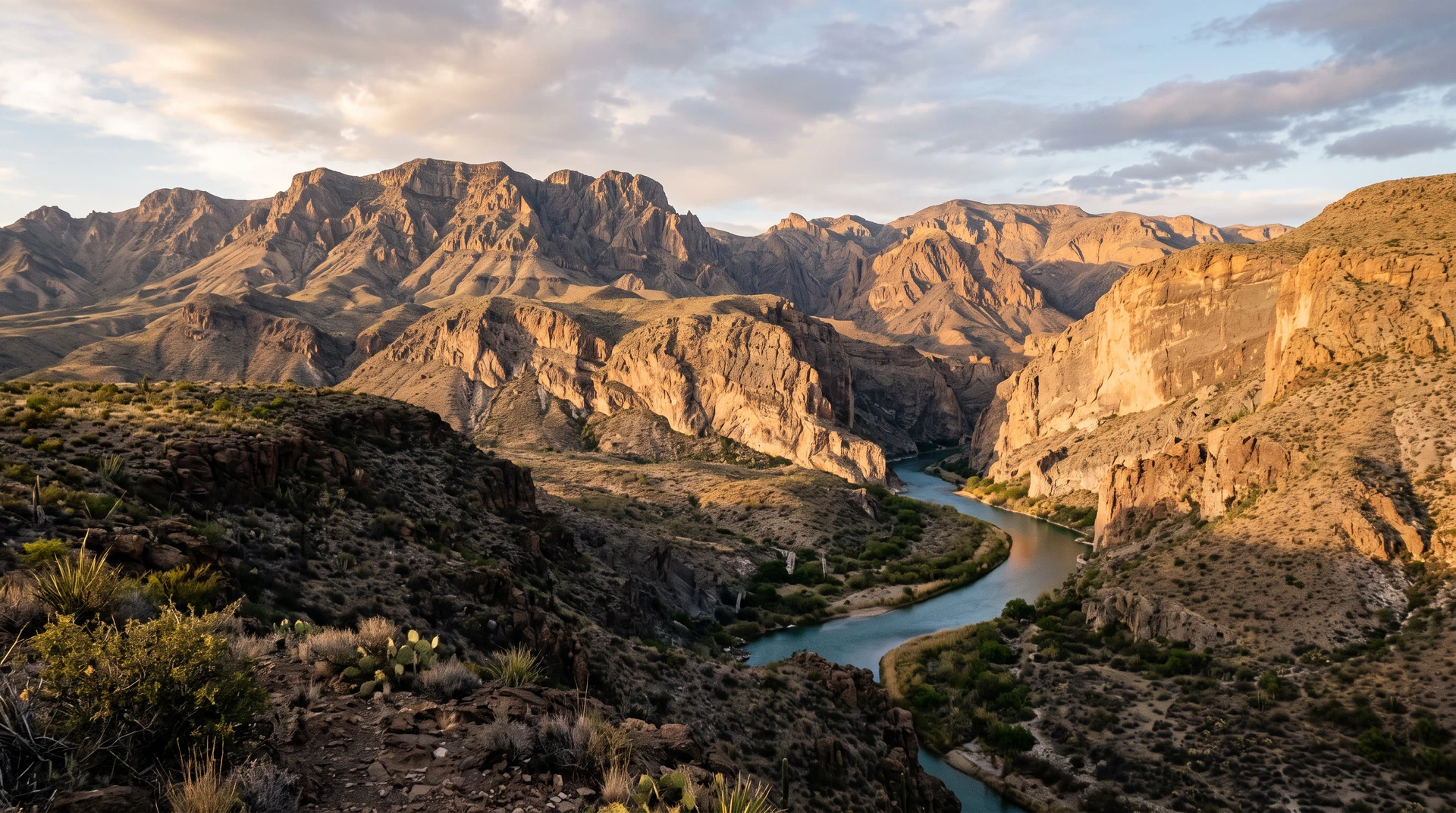
There is a specific kind of silence that exists only in the high desert of West Texas, a quiet so profound it feels like a physical weight against the ears. Big Bend National Park, spanning more than eight hundred thousand acres of rugged terrain, is not merely a destination but a vast, living testament to the endurance of the natural world. Here, the Chihuahuan Desert stretches toward the horizon, its parched flats interrupted by the sudden, jagged rise of the Chisos Mountains. It is a place where the scale of the landscape dwarfs the human presence, demanding a slow, observant pace from anyone who ventures into its sun-bleached interior.
The Chisos Mountains serve as the park's dramatic centerpiece, remarkably being the only mountain range in the United States fully contained within the boundaries of a single national park. Rising thousands of feet above the desert floor, these peaks offer a startling transition from the arid lowlands to cool, forested heights. Pinyon pines and junipers cling to the rocky slopes, providing a stark contrast to the cacti and creosote bushes below. The basin itself feels like a hidden fortress, a verdant bowl protected by volcanic ramparts that catch the first and last light of the day in a display of deep ochre and violet.
Descending from the heights, the Chihuahuan Desert reveals its own intricate beauty, one that requires a keen eye to fully appreciate. This is an ecosystem defined by scarcity, yet it supports an astonishing array of life, including more than twelve hundred species of plants. The iconic agave and the spindly ocotillo stand as resilient sentinels, while the lechuguilla, a plant found nowhere else on earth outside this desert, carpets the rocky ground. In the heat of the afternoon, the landscape may appear dormant, but it is teeming with specialized creatures, from the elusive javelina to the mountain lions that roam the high ridges.
The lifeblood of this arid expanse is the Rio Grande, which winds for one hundred and eighteen miles along the park’s southern edge. This historic river does more than just sustain the local flora and fauna; it serves as the frontier between the United States and its southern neighbor, Mexico. Standing on its muddy banks, one is struck by the fluidity of the border, where the water flows through narrow gaps in the limestone as it has for millennia. The river is a corridor of green in a world of brown, a ribbon of cottonwoods and reeds that provides a vital sanctuary for migrating birds.
Nowhere is the power of the Rio Grande more evident than at Santa Elena Canyon. Here, the river has sliced a deep, narrow trench through the limestone, creating vertical walls that soar fifteen hundred feet into the air. Entering the canyon by boat or on foot feels like stepping into a cathedral of stone. The sheer scale of the cliffs creates a natural echo chamber, where the sound of the water against the rocks becomes a rhythmic pulse. It is a place of shadow and cool air, a dramatic geological rift that underscores the slow, relentless force of erosion over millions of years.
Big Bend is a premier destination for birdwatchers, boasting a record of more than four hundred and fifty distinct avian species, a number that surpasses any other national park in the country. The park’s unique position at the intersection of several migratory paths makes it a crossroads for winged life. During the spring, enthusiasts flock to the high Chisos to catch a glimpse of the rare Colima Warbler, which nests nowhere else in the United States. The variety of habitats, from the riverine thickets to the high-altitude forests, ensures that every corner of the park offers a different encounter with the natural world’s diversity.
However, the beauty of Big Bend is matched by its fragility. The desert is a sensitive environment where a single footstep off a marked trail can damage biological soil crusts that take decades to recover. Stewardship is not just a suggestion here; it is a necessity for survival, both for the ecosystem and the visitor. The park-wide ban on all wood and ground fires is a critical measure to prevent devastating wildfires in this dry climate. Carrying ample water is the most fundamental rule of the trail, as the desert sun can be unforgiving to those who underestimate its intensity.
As the sun dips below the horizon, Big Bend reveals its final, perhaps most awe-inspiring, attribute: its darkness. Certified as an International Dark Sky Park, it offers some of the most pristine stargazing opportunities in North America. Away from the light pollution of major cities, the Milky Way appears as a brilliant, glowing river of light across the sky. The sheer number of visible stars is overwhelming, a celestial display that reminds one of the park’s isolation. In this vast silence under a canopy of light, the boundaries between the earth and the infinite seem to dissolve entirely.