Travel
The Ancient Collisions and Deep Earth Secrets of Gros Morne’s Stark Wilderness
On the edge of the North Atlantic, Newfoundland’s Gros Morne National Park offers a rare glimpse into the planet’s internal architecture. From the rust-colored mantle of the Tablelands to the sheer cliffs of Western Brook Pond, this landscape tells a billion-year story of continental upheaval and glacial carving.
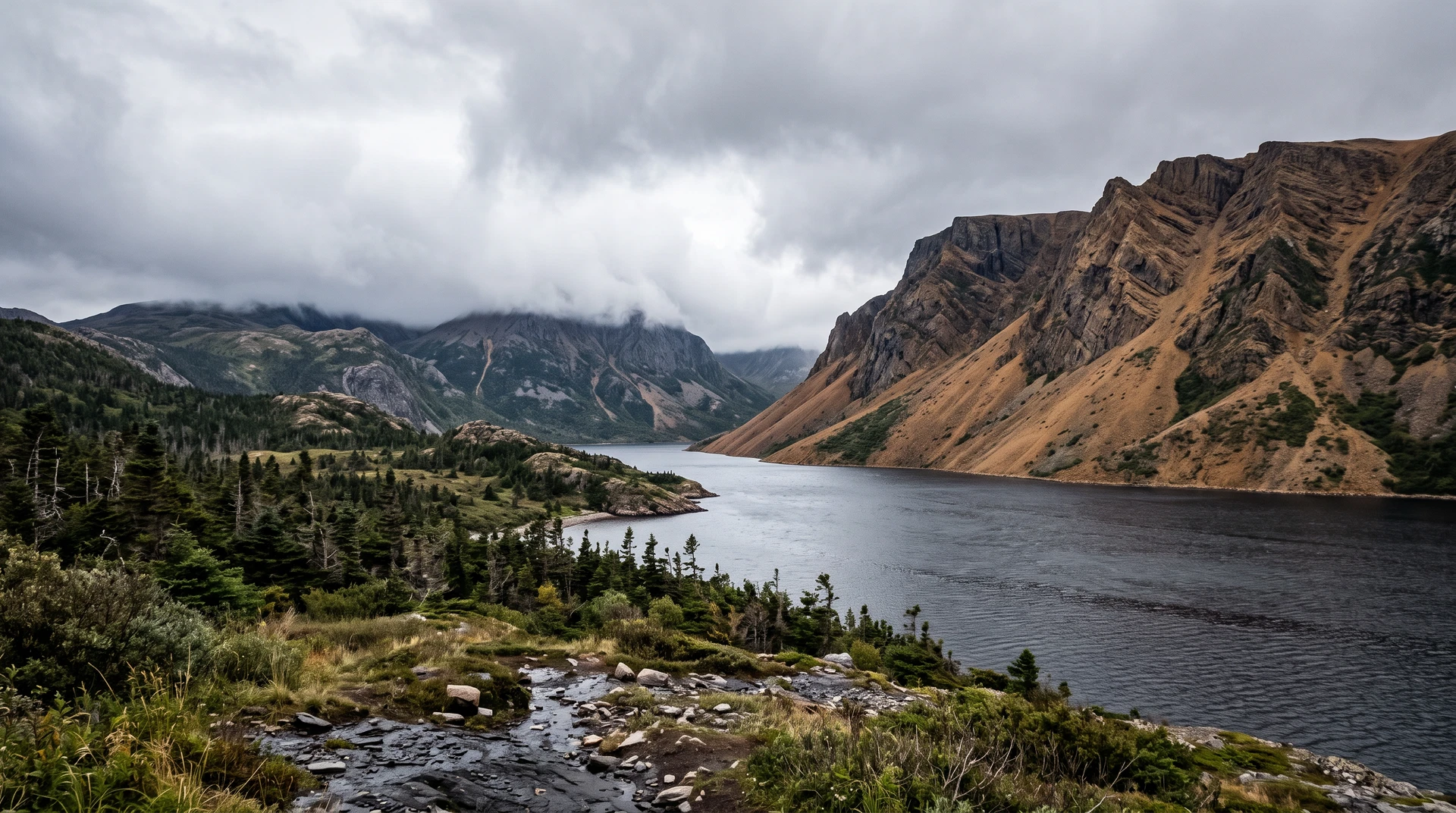
To arrive at the western edge of Newfoundland is to step into a landscape that feels fundamentally different from the rest of the continent. Here, the air carries the sharp bite of the Labrador Current, and the horizon is dominated by the Long Range Mountains, an extension of the Appalachians sheared off by the sea. Gros Morne National Park is not merely a collection of scenic vistas; it is a profound geological record. The park’s designation as a UNESCO World Heritage site in 1987 recognizes how it illustrates the monumental forces of plate tectonics. Standing on its rocky shores, one feels the weight of deep time, realizing the ground is a living history of a planet in constant motion.
The most striking evidence of this planetary upheaval is found in the Tablelands, a vast, barren plateau that looks more like the surface of Mars than the lush forests of Canada. This is one of the few places on Earth where the mantle—the layer that usually sits miles beneath the crust—is exposed to the open air. Millions of years ago, the collision of tectonic plates forced this slab of peridotite upward, creating a landscape chemically hostile to most life. The rock is rich in magnesium and iron, which oxidizes into a vibrant, rusty orange. Walking across the Tablelands is a surreal experience; the ground is metallic, and the absence of trees creates an eerie, silent expanse.
Despite the harsh chemical composition of the peridotite, life has found a way to cling to the Tablelands in stunted forms. The soil lacks essential nutrients like calcium, yet specialized species have adapted to this ultramafic environment. Tiny, carnivorous pitcher plants—Newfoundland’s provincial flower—lurk in damp crevices, supplementing their diet with insects to survive. Dwarf birches and wind-swept conifers, known locally as tuckamore, are twisted into fantastic shapes by relentless Atlantic gales. This resilient flora serves as a reminder of the fragility of the arctic-alpine ecosystem. Visitors must stay on marked trails, as a single footstep can destroy mosses and lichens that have taken decades to establish.
Moving away from the orange barrens, the landscape shifts toward the water-carved canyons of the park’s interior. Western Brook Pond is a massive landlocked fjord that defies easy description. Though it was once an arm of the sea, the land rose after the weight of the last glaciers was lifted, cutting the fjord off from the ocean and turning its water fresh. Today, it is a pristine basin of ultra-pure water, surrounded by granite cliffs that soar 600 meters straight up. To reach the boat traversing the pond, one must hike across peat bogs and forested ridges, a journey that builds anticipation for the immense scale of the ancient cliffs ahead.
The cliffs of Western Brook Pond are a masterclass in glacial architecture. During the last Ice Age, massive sheets of ice carved these deep U-shaped valleys into the ancient granite, leaving behind walls so steep that vegetation struggles to find a foothold. Waterfalls cascade down the rock faces like silver threads, some disappearing into mist before they reach the dark waters below. The scale is so immense that it distorts one’s sense of distance; a bald eagle soaring near the rim looks like a mere speck against the grey stone. There is a profound stillness here, a quiet only broken by the occasional cry of a gull or a distant stream.
The weather in Gros Morne is as much a part of the experience as the geology. The North Atlantic is a fickle neighbor, and the park is often shrouded in a thick fog that can transform a sunny afternoon into an ethereal dreamscape in minutes. This unpredictability is a hallmark of the Newfoundland wilderness, where snow can persist in mountain gullies well into July. Hikers on the Long Range Traverse must be prepared for sudden shifts in temperature and visibility, navigating by compass through terrain that is as treacherous as it is beautiful. Yet, there is magic in the mist; it softens the harsh edges of the mountains and adds mystery.
Beyond the dramatic cliffs and orange barrens, the human element of Gros Morne adds warmth to the rugged surroundings. The park is punctuated by small coastal villages, or outports, like Woody Point and Norris Point, where life remains tied to the sea. The brightly colored wooden houses and sturdy fishing wharves provide a stark contrast to the grey granite of the mountains. Here, the local culture is as resilient as the tuckamore, shaped by centuries of isolation and a deep respect for the ocean. Engaging with the people of the outports offers a practical grounding to the park’s geological wonders, reminding us that these communities are vibrant and enduring.
As one leaves Gros Morne, the lasting impression is not just of the scenery, but of the perspective it provides. In a world dominated by the ephemeral, this corner of Newfoundland stands as a monument to the enduring forces of nature. It is a place where you can touch the deep earth, walk through valleys carved by ice, and witness the slow dance of the continents. The park challenges our sense of scale and time, reminding us that we are but brief visitors to a planet with a long and tumultuous memory. To visit Gros Morne is to be humbled by the raw power of the Earth and find peace in its silence.