Travel
The Emerald Heart of the Atlantic Where Volcanic Fire Meets the Sea
Rising from the Atlantic’s triple junction, São Miguel offers a raw encounter with Earth’s internal rhythms. From the subterranean kitchens of Furnas to the restricted shores of Lagoa do Fogo, this Portuguese sanctuary balances volcanic drama with a fragile, lush serenity that demands deep respect.
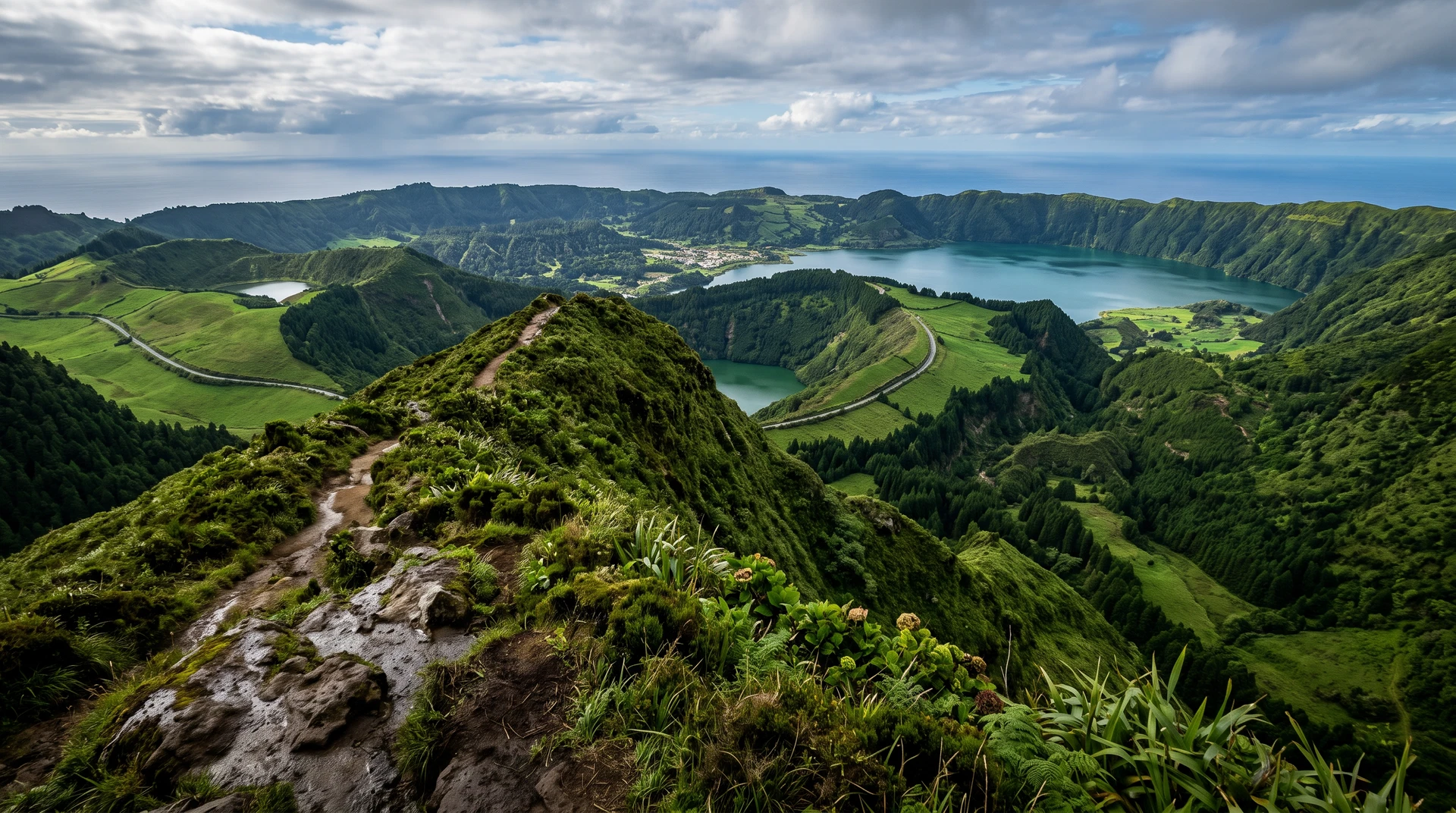
To arrive in São Miguel is to witness the sudden beauty of the Atlantic’s center. As the largest island in the Azorean archipelago, it covers 744 square kilometers of land that feels like a living organism. The air is thick with moisture and the scent of crushed ferns, a humidity that clings to the skin as one moves through a landscape dominated by vibrant, almost aggressive greens. It is a place where weather changes with a fickle speed, shifting from blinding sun to mist-heavy clouds in minutes. Here, geological history is not buried but is the very foundation of daily life, visible in every jagged cliff and steaming fumarole.
The island’s topography results from its position at the triple junction of the North American, Eurasian, and African tectonic plates. This seismic crossroads birthed sixteen polygenetic volcanoes, their peaks defining the island’s silhouette. Walking across São Miguel is walking atop a planetary pressure cooker. The earth is thin, and the mantle’s heat feels remarkably close. In the village of Furnas, the ground is a source of both industry and awe. Fumaroles hiss with sulfurous steam, and the soil is warm to the touch, a constant reminder that the fires that forged these islands have never truly gone cold.
Nowhere is this volcanic legacy more arresting than at Sete Cidades. The massive caldera houses iconic twin lakes that reflect the island’s spirit. One lake mirrors the deep blue of the sky, while the other takes on a startling emerald hue from the surrounding vegetation and mineral composition. Standing at the Vista do Rei viewpoint, the scale of the volcanic collapse becomes apparent. The crater walls rise steeply, draped in hydrangeas and cedar trees, creating a natural amphitheater that feels ancient and untouchable. It is a landscape that demands silence, where the geological past and botanical present exist in breathtaking equilibrium.
In the Furnas Valley, the relationship between islanders and their volcanic home takes a practical, culinary turn. The Furnas Volcano Caldera is not merely a site for observation but a communal kitchen. Here, the traditional "Cozido das Furnas" is prepared using natural geothermal heat. Large metal pots filled with beef, pork, chicken, and root vegetables are lowered into holes dug directly into the steaming ground. Covered with wooden lids and mounds of soil, the pots slow-cook for six to seven hours. No flame or electricity is used; only the steady, subterranean breath of the volcano provides the energy.
The ritual of the Cozido is a spectacle of patience. Around midday, workers haul the heavy pots from their earthen ovens, releasing clouds of fragrant, mineral-scented steam. The resulting dish is infused with a subtle, earthy flavor that cannot be replicated by conventional methods. It is a meal that tastes of the island itself—dense, hearty, and profoundly grounded. Eating a Cozido in a local tavern, surrounded by the mist-shrouded hills of Furnas, one feels a strange intimacy with the geology of the Azores. It is a reminder that fundamental human needs can still be met by the primal forces of the planet.
Beyond the kitchens, volcanic heat offers a therapeutic embrace in the island’s thermal baths. At the Terra Nostra Garden, a massive outdoor pool is filled with iron-rich water that glows with a distinct orange hue. The water is naturally heated to a constant 35 to 40 degrees Celsius, creating a bathing experience that is both relaxing and slightly surreal. The minerals are said to have healing properties, and as one floats in the warm liquid, the surrounding botanical gardens create a sense of being in a prehistoric Eden. The contrast between cool Atlantic air and intense mineral warmth is a quintessential Azorean sensation.
However, the beauty of São Miguel is fragile, requiring careful stewardship. Lagoa do Fogo, the most pristine of the island’s lakes, serves as a poignant example. Tucked into the center within the Agua de Pau Massif, the lake is surrounded by steep cliffs and often shrouded in fog. To protect this delicate ecosystem from overtourism, access is strictly regulated. Between June and September, visitors must use a shuttle bus system to reach the viewpoints, preventing congestion. Furthermore, swimming is strictly prohibited to maintain the exceptional clarity and purity of its waters, ensuring this volcanic sanctuary remains undisturbed.
This ethos of preservation is woven into the fabric of life. Azoreans understand their home is a finite resource, a small speck of green in a vast blue wilderness. Visitors are encouraged to move with a light touch, respecting boundaries set by nature and local authorities. Whether following marked trails through laurel forests or adhering to seasonal restrictions at popular sites, there is a collective effort to maintain the island’s raw character. It is this commitment to sustainability that allows São Miguel to remain a sanctuary for both endemic species and travelers seeking a connection to the wild.
As the sun sets over the Atlantic, casting golden light across terraced fields, a sense of wistfulness takes hold. To leave São Miguel is to feel a detachment from the earth’s core. The island leaves a mark—a lingering memory of sulfur, the taste of volcanic stew, and the sight of emerald lakes within ancient craters. It is a place that humbles the spirit, reminding us of the immense power and beauty of the natural world. In a globalized society that often feels disconnected from physical reality, São Miguel stands as a vibrant, volcanic testament to the enduring rhythms of the Earth.