Travel
Walking Through the Tertiary Age Along the Ancient Waterways of Madeira’s Laurel Forest
High above the Atlantic, Madeira preserves a mist-shrouded relic of a lost European era. By following the 15th-century levada irrigation channels, travelers can penetrate the primary Laurisilva forest, where endemic pigeons soar through ancient laurel groves that have remained unchanged for millions of years.
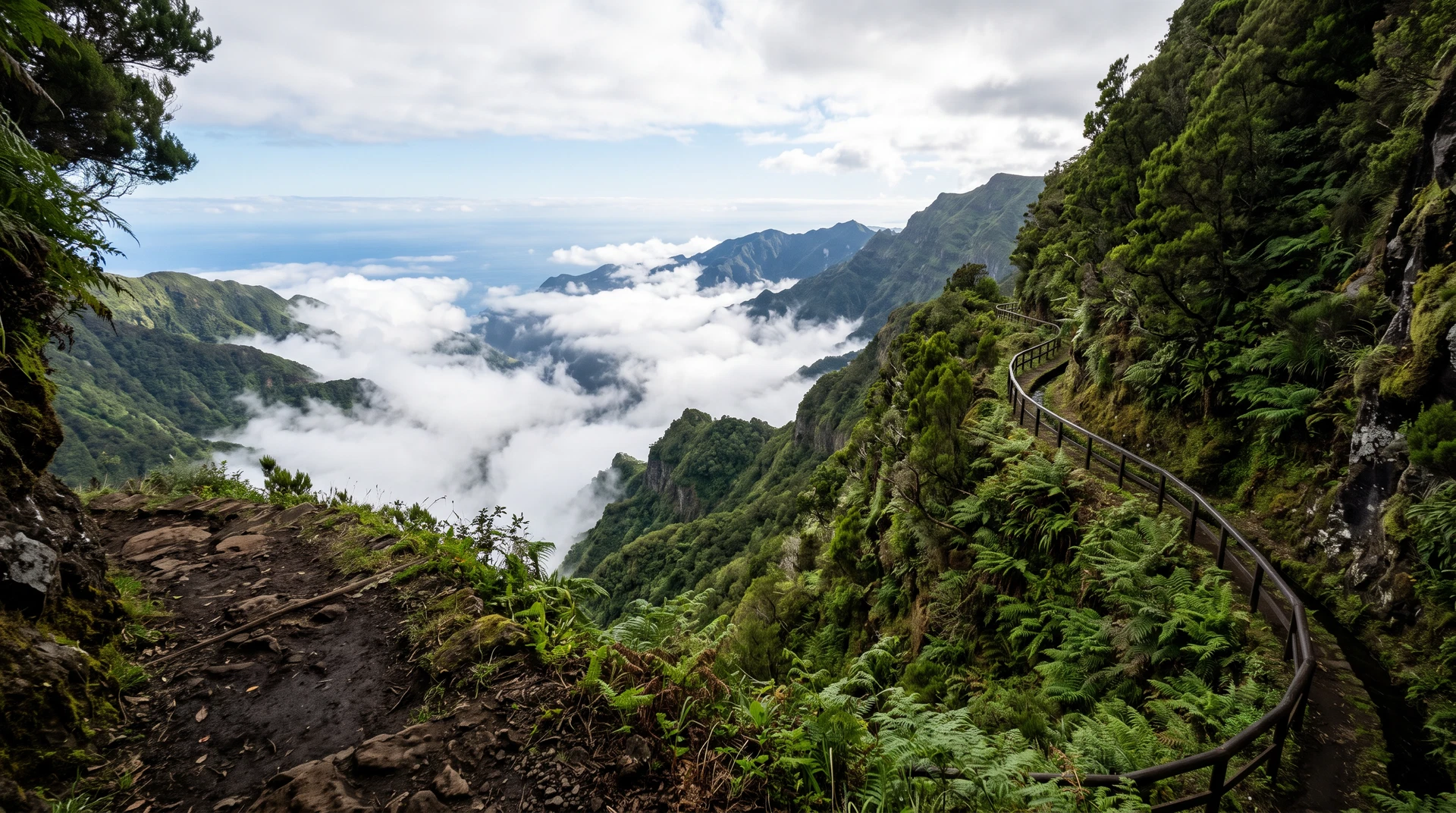
The island of Madeira rises from the Atlantic with a verticality that defies the logic of settlement. From Funchal’s pebble shores, the land climbs steeply into a realm of jagged basalt peaks and emerald ravines. It is a volcanic fortress that for centuries remained impenetrable to all but the most determined explorers. Yet, etched into these slopes is a delicate, silver thread: the levadas. These historic irrigation channels, dating back to the 15th century, carry water from the rain-drenched north to the sun-parched southern terraces. Today, these narrow conduits serve as the primary arteries for those wishing to explore the island’s most precious treasure, the ancient Laurisilva forest.
To enter the Laurisilva is to step back into a geological epoch long vanished from the European mainland. Between fifteen and forty million years ago, vast swaths of Southern Europe were covered in this subtropical laurel forest. As the climate shifted and the ice ages took hold, these forests disappeared from the continent entirely. Madeira, however, served as a biological lifeboat. Protected by its isolation and the ocean's tempering influence, the island preserved the largest surviving primary laurel forest in the world. Approximately ninety percent of this UNESCO-listed area is primary forest, remaining virtually undisturbed by human activity since before the first Portuguese sailors sighted the island’s dark silhouette.
Walking a levada path is an exercise in sensory immersion. The air is thick with moisture, often manifesting as an ethereal mist that clings to the twisted limbs of Til and Louro trees. These ancient giants are draped in thick coats of moss, their roots gripping the volcanic soil with a tenacity born of survival. The sound of the forest is dominated by the constant, rhythmic trickle of water in the channel—a steady pulse that guides your progress through the dense undergrowth. Unlike traditional mountain hiking, the levadas follow the natural contours of the land with a gentle gradient. This engineering marvel allows for accessibility in a vertical environment, turning a treacherous wilderness into a contemplative gallery.
The biodiversity of the Laurisilva is both subtle and profound. As you move deeper into the interior, the canopy tightens, creating a cathedral-like atmosphere where light filters through waxy leaves in dappled patterns. This is the exclusive domain of the Madeiran laurel pigeon, a shy, endemic bird that serves as a living symbol of the forest’s antiquity. The forest floor is equally rich, home to a dizzying array of endemic flora, including the delicate Madeiran orchid and the vibrant Pride of Madeira. These species have evolved in isolation, creating a closed ecosystem as fragile as it is beautiful. Every step on the designated path is a commitment to preserving this balance, as the thin topsoil is highly susceptible to erosion.
The history of the levadas is inextricably linked to the human story of Madeira. When the first settlers arrived, they found an island of two halves: a fertile but dry south and a mountainous, water-rich north. The construction of the irrigation system was a monumental undertaking, involving laborers who were often suspended by ropes over dizzying precipices to chisel the channels directly into the rock face. This 15th-century ingenuity created over two thousand kilometers of waterways that remain vital to the island’s agriculture today. Walking these paths, one feels a deep respect for the hands that carved them. The levadas are functional monuments to human perseverance and the clever management of natural resources, bridging the gap between community and the wild.
As the trail winds around a sharp basalt outcropping, the forest often gives way to sudden, breathtaking vistas. You might find yourself on a narrow ledge, looking down into a valley where clouds are caught like tufts of wool in the treetops. These moments reveal the true scale of Madeira’s interior—a labyrinth of ridges and canyons stretching toward the island's center. The contrast between Funchal’s manicured gardens and this raw, prehistoric wilderness is startling. In the Laurisilva, time slows down, replaced by the slow growth of lichens and the steady drip of condensation from the canopy. It is a place that demands patience, rewarding the observant traveler with glimpses of a world that existed long before the dawn of civilization.
Stewardship of this unique environment is a responsibility the island takes seriously. The UNESCO designation is a mandate for protection, and visitors are reminded at every trailhead to stay on marked paths. This is not merely for safety—though the drops are sheer—but to protect the integrity of the forest. The introduction of invasive species or soil disturbance could have catastrophic effects on the endemic species that call this forest home. There is a palpable sense of reverence among those who walk the levadas, a collective understanding that we are temporary guests in a landscape that has endured for millions of years. This culture of respect ensures that the "Green Heart" of Madeira will continue to beat for generations to come.
Leaving the forest and descending toward the coast, the transition is almost jarring. The cool, damp air of the highlands is replaced by the warmth of the Atlantic breeze, and the silence of the laurel groves is broken by the distant surf. Yet, the experience of the Laurisilva lingers, a persistent memory of green and gray. Madeira is often called the "Island of Eternal Spring," but for those who have traversed its ancient waterways, it is something more significant. It is a bridge to the past, a living museum of the Tertiary Age, and a testament to the enduring power of nature. To walk the levadas is to participate in a journey that is both physical and temporal, witnessing the world as it once was.