Travel
The limestone towers of Picos de Europa rise as timeless sentinels over Spain's northern heartland.
In the rugged north of Spain, the Picos de Europa National Park offers a dramatic sanctuary of jagged limestone peaks and verdant valleys. This historic wilderness, established as the nation's first protected park, invites travelers to explore a landscape where ancient traditions and rare wildlife endure amidst soaring heights.
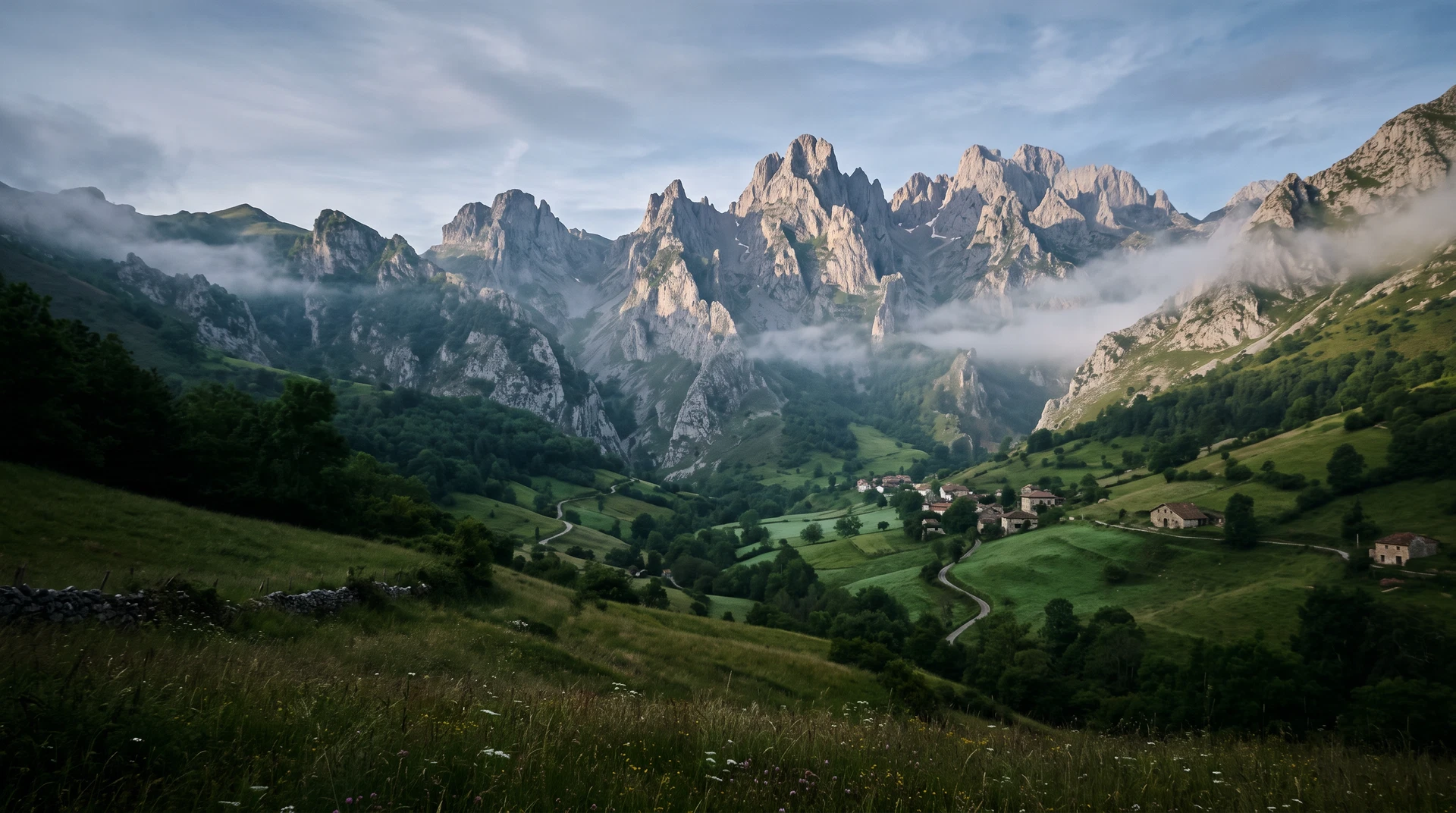
The transition from the salt-sprayed coast of Asturias to the vertical world of the Picos de Europa is startlingly abrupt. These mountains, the "Peaks of Europe," were famously the first sight of land for sailors returning across the Atlantic, their pale, jagged summits serving as a lighthouse of stone. Today, they remain commanding, a 67,000-hectare expanse of high-altitude wilderness straddling the provinces of Asturias, Cantabria, and León. To enter the park is to step into a realm where the verticality of the landscape dictates the pace of life, and where the air carries the scent of damp earth and the ancient silence of the high peaks.
History runs deep here, anchored by the sanctuary of Covadonga. In 1918, King Alfonso XIII inaugurated Spain’s first national park, originally named the Mountain of Covadonga. The site is steeped in legend, marking the beginning of the Reconquista, but for the modern traveler, it serves as the gateway to a geological masterpiece. The park’s designation as a UNESCO Biosphere Reserve in 2003 confirmed its exceptional ecological value. The limestone is a living record of time, carved by glaciers and water into a labyrinth of deep shafts and soaring spires. Stewardship is a delicate balance, requiring visitors to respect seasonal vehicle restrictions at the Lakes of Covadonga and to tread lightly in sensitive glacial zones.
At the heart of the Picos lies a collection of more than 200 peaks exceeding 2,000 meters. The most iconic is the Naranjo de Bulnes, or Picu Urriellu. This orange-hued limestone monolith rises 2,519 meters, its sheer West Face standing as a legendary challenge for climbers worldwide. Even for those who prefer the trail, the sight of the Picu catching the last light of the sun is transformative. The rock seems to glow from within, turning from a pale grey to a fiery amber against the darkening sky. It is a reminder of the park's raw power, a place where the geology feels almost sentient, watching over the valleys below with a stony, indifferent grace.
Ascending toward the Lakes of Covadonga, the landscape softens, though the drama remains. Lakes Enol and Ercina sit like emerald jewels in a setting of grey limestone and vibrant pasture. These glacial lakes are the focal point of the Cornión Massif, and their beauty is matched by their fragility. To protect the high-altitude ecosystem, access is strictly regulated during peak seasons, with shuttle buses replacing private cars to minimize the human footprint. Standing on the banks of Lake Enol, one can hear the rhythmic clanking of cowbells—the "music of the Picos." High among the limestone spires, the silence of the Picos is broken only by the distant chime of cowbells and the cry of soaring vultures. This sound is the heartbeat of the mountains, a reminder that this wilderness is also a working landscape for traditional shepherds.
The biodiversity of the Picos is as varied as its topography. The park serves as a bastion for the Cantabrian brown bear, a shy resident of the dense beech and oak forests clinging to the lower slopes. While a sighting is rare, the knowledge of their presence adds a layer of wildness to every hike. Higher up, the Cantabrian chamois, or rebeco, skips effortlessly across impossible scree slopes. This is a sanctuary in the truest sense, a place where the fragmentation of the modern world is replaced by a continuous, thriving ecosystem that demands both awe and protection. It is a landscape where every niche is filled by life that has adapted to the rigorous demands of the high mountains, from the smallest alpine flower to the largest predator.
Human culture here is inextricably linked to the mountains' harsh demands. Small villages tucked into the valleys, such as Bulnes or Sotres, are bastions of traditional life. For centuries, these communities were accessible only by steep footpaths, and even today, a sense of isolation persists. This isolation has preserved unique culinary traditions, most notably the production of artisanal cheeses. The blue-veined Cabrales and the smoky Gamoneu are aged in natural limestone caves, where the constant temperature and humidity allow the molds to develop their pungent, complex flavors. Tasting these cheeses in the very landscape that produced them is a practical lesson in terroir, a connection between the rock, the pasture, and the cheesemaker.
For the hiker, the Cares Gorge offers one of the most spectacular traversals in Europe. Known as the "Divine Gorge," the trail follows the Cares River as it cuts a deep path between the central and western massifs. The path is a marvel of engineering, carved into the side of the cliffs, with vertical walls rising hundreds of meters on either side. Walking the Cares is an exercise in perspective; the sheer scale of the limestone makes one feel small, yet the intimacy of the trail—passing through tunnels and over bridges—creates a profound connection to the landscape. It is a place of constant movement, where the rushing water below competes with the whistling wind.
As the sun sets, the mountains take on a wistful quality. The jagged edges of the limestone soften in the twilight, and the valleys fill with a cool, blue mist. It is a time for reflection on the enduring nature of this wilderness. The Picos de Europa are not just a destination; they are a testament to the resilience of both nature and culture. Whether you are navigating the high-altitude karst or sharing a simple meal in a stone-walled tavern, the park leaves an indelible mark. It is a reminder that there are still places where the earth speaks in the language of stone and sky, and where the most rewarding journey is upward.