Travel
The Living Architecture of Water: A Journey Through Plitvice Lakes National Park
In the heart of Croatia, a dynamic karst landscape reveals a series of sixteen terraced lakes connected by a relentless symphony of waterfalls. Here, the very ground grows beneath your feet, as ancient mosses and calcium carbonate weave a turquoise masterpiece of geological evolution.
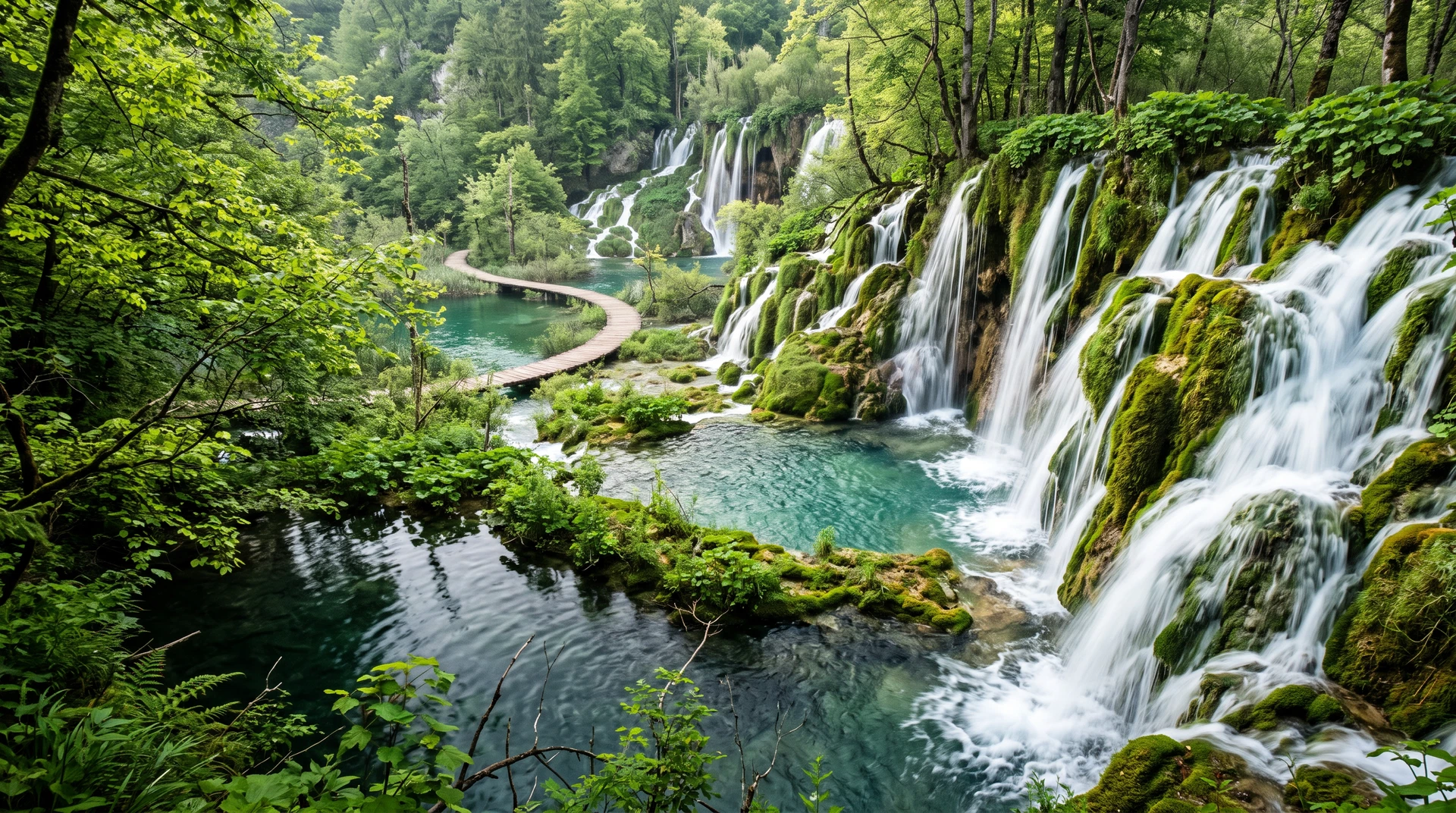
The sound reaches you long before the water comes into view—a deep, resonant hum vibrating through the limestone bedrock of central Croatia. Spanning nearly 30,000 hectares, Plitvice Lakes National Park is a realm where the distinction between land and liquid is perpetually blurred. As you descend into the canyon, the air grows cool and heavy with mist, carrying the scent of damp earth and crushed pine. The landscape does not merely sit still; it breathes and expands, driven by a geological clock that has been ticking since the park’s establishment in 1949. It is Croatia’s oldest sanctuary, a place where the map is redrawn every day by the patient, persistent hand of the water itself.
At the heart of this aquatic labyrinth is the creation of tufa, a process as delicate as it is powerful. Unlike the static rock of the surrounding Alps, the barriers here are alive. Through a complex chemical dance, calcium carbonate is pulled from the water and deposited onto specialized mosses and algae. This biological scaffolding hardens into travertine, forming natural dams that rise incrementally over centuries. To walk along the lakes is to witness a construction site managed by nature, where the foundations of the cascades are built by the interaction of minerals and microorganisms. It is a fragile equilibrium, requiring the water to remain pristine, a fact that underscores why the park’s UNESCO status is guarded with such devotion.
The sixteen named lakes are organized into two systems, the Upper and Lower, each defined by its underlying geology. The twelve Upper Lakes sit atop dolomite rock, creating wider, shallower basins surrounded by dense forests. Here, the water is a soft emerald, filtered through the thick canopy of beech and fir trees. In contrast, the four Lower Lakes are carved into a steep limestone canyon, where the water takes on a piercing, crystalline turquoise. The transition between these worlds is marked by a series of dramatic drops, where the gentle seepage of the upper basins accelerates into the thundering plumes of the Great Waterfall, a seventy-eight-meter plunge that serves as the park’s most resonant exclamation point.
Navigating this landscape requires a surrender to the wooden boardwalks that snake across the water’s surface. These paths are intimate vantage points that allow you to hover directly above the shoals of trout drifting like shadows in the clear depths. The boards creak underfoot, a rhythmic accompaniment to the splashing of nearby rills. There is a specific silence here, found in the pockets of air between the falls, where the only sound is the rustle of reeds and the distant call of a woodpecker. You are encouraged to move slowly, noticing how the color of the water shifts from silver to cobalt depending on the angle of the sun and the concentration of minerals suspended in the flow.
The protection of this ecosystem is a matter of both national pride and global necessity. Because the tufa barriers are so sensitive to chemical changes, visitor rules are uncompromising. Swimming and fishing are strictly prohibited, a mandate that preserves the clarity of the water and the health of the mosses that build the dams. While the urge to plunge into the inviting turquoise pools is strong, the sight of the untouched lakebeds—littered with fallen trees encrusted in white calcium, looking like submerged marble sculptures—is a compelling argument for restraint. By remaining on designated trails, travelers ensure that these delicate karst processes can continue their work for another millennium, unburdened by human interference.
Beyond the water’s edge, the park’s vast forest serves as a vital buffer. This is a true wilderness, a karst landscape that supports a staggering diversity of life within its hidden caves and high ridges. The dense woods are home to the brown bear, the wolf, and the lynx—creatures that roam the periphery of the tourist paths, rarely seen but always present in the stillness. The forest acts as a giant sponge, filtering the rainfall that eventually feeds the lake system. It is a reminder that Plitvice is not just a collection of waterfalls, but a holistic organism where the health of the mountain peak is directly tied to the clarity of the lowest basin.
The character of Plitvice shifts dramatically with the turning of the seasons. In the spring, melting snow from the surrounding mountains turns the cascades into a roaring torrent, white and furious against the new green of the leaves. Summer brings a slower, more contemplative pace, as the water levels drop and the lakes become mirrors for the high Balkan sun. Autumn is perhaps the most wistful time, when the beech forests turn a fiery copper, casting a warm glow over the cool blue of the pools. Even in winter, the park does not sleep; the waterfalls freeze into jagged curtains of ice, and the silence of the snow-covered canyon creates a cathedral-like atmosphere that feels entirely removed from the modern world.
Leaving Plitvice Lakes is a slow process of sensory withdrawal. The sound of the water lingers in your ears long after you have climbed back up to the canyon rim. You carry with you the image of a landscape in motion, a place where the earth is literally growing and changing beneath the weight of its beauty. It is a rare privilege to witness a geological process occurring in real-time, to see how the patient accumulation of minerals can create something so grand yet so fragile. In an age of rapid change, the lakes offer a different kind of progress—one measured in the slow growth of a moss-covered barrier and the steady, eternal descent of water toward the sea.