Travel
Shadows and Stone: Navigating the Volcanic Majesty of Scotland’s Ethereal Isle of Skye
From the jagged basalt spires of the Trotternish Peninsula to the ancient hearths of Dunvegan Castle, the Isle of Skye offers a profound encounter with deep time. This Inner Hebridean sanctuary blends dramatic volcanic geology with centuries of resilient Gaelic heritage and maritime tradition.
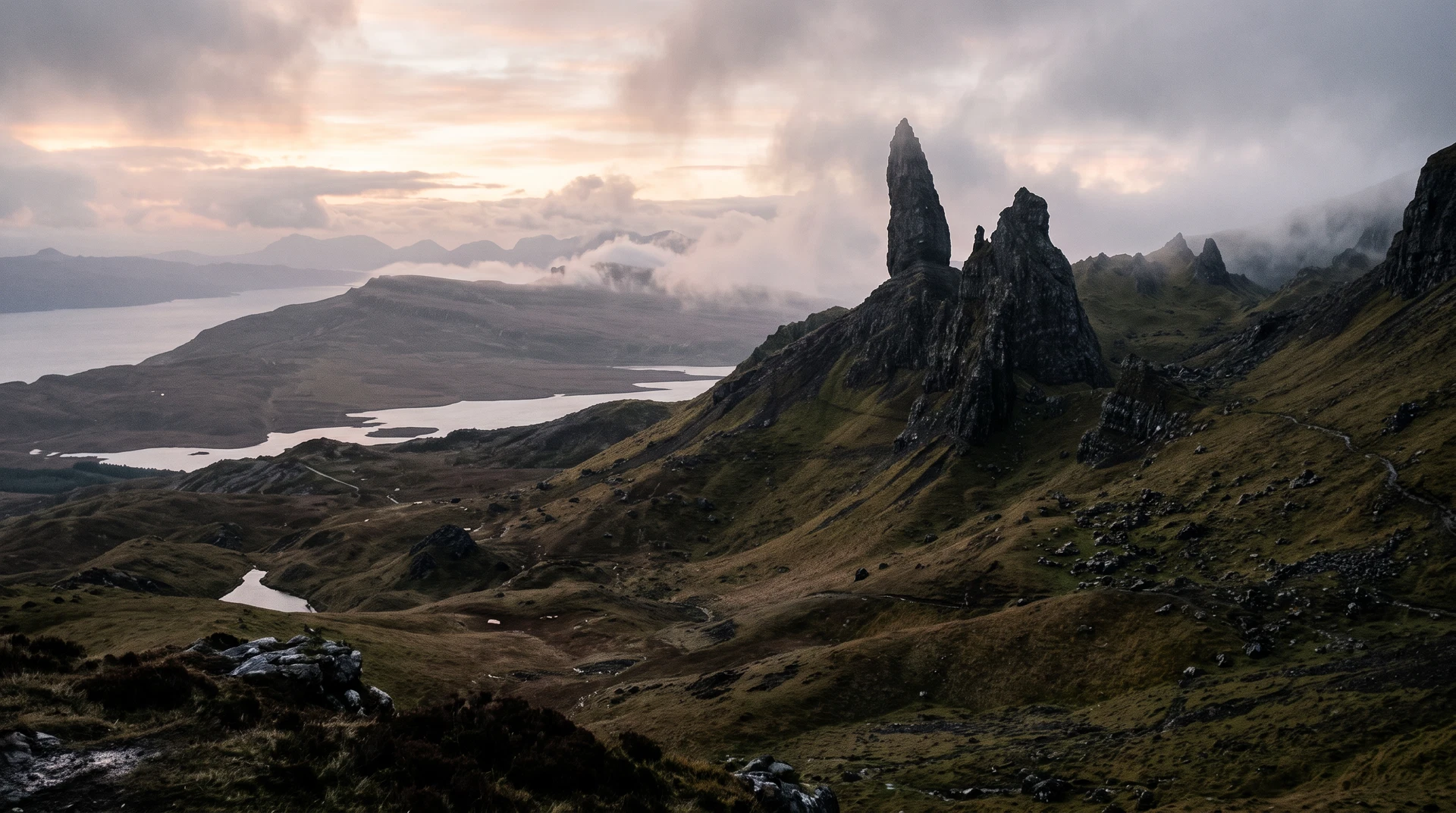
Crossing the bridge to Skye is less a physical transition and more a psychological crossing into a realm where the terrestrial and the celestial seem to blur. The air here carries a specific weight—a mixture of salt spray from the Minch and the earthy, damp scent of ancient peat. It is a landscape that demands a slower pace, one dictated by the shifting weather patterns that can see a bright morning dissolve into a mist-shrouded afternoon in the span of a single breath. The light here is never static, dancing across hillsides and retreating behind charcoal clouds with a drama that has captivated travelers for generations.
The island’s dramatic profile is the result of a violent birth approximately sixty million years ago. During the Paleogene period, as the North Atlantic began to tear itself open, massive volcanic activity reshaped the Earth’s crust here. This was a time of fire and upheaval, where molten rock surged through the surface, cooling into the dark, crystalline structures that define the island today. Walking here is an act of navigating deep time, where the ground is a relic of tectonic shifts that sculpted the Inner Hebrides into their jagged form. It is a place where the geological narrative is not buried but laid bare for all to see.
Nowhere is this geological drama more evident than on the Trotternish Peninsula. Here, the UK’s largest landslip has created a surreal landscape of basalt pinnacles and hidden plateaus. The Old Man of Storr, a solitary spire standing sentinel over the Sound of Raasay, serves as a visual anchor for the entire peninsula. To stand at its base is to feel small in the face of nature’s architectural whims. The surrounding terrain, characterized by steep cliffs and slumped masses of rock, continues to shift—a reminder that the island is a living, breathing entity, still responding to the forces that created it millions of years ago.
However, the beauty that draws thousands to Skye’s iconic sites also places them under immense pressure. The island’s peatlands and Site of Special Scientific Interest (SSSI) habitats are incredibly fragile, serving as vital carbon sinks and homes to rare flora. As visitor volumes increase, the impact on these sensitive ecosystems becomes more pronounced. Stewardship is a necessity; following designated trails and respecting ranger guidance is essential to maintain the landscape's delicate balance. The goal is to leave the land as one found it, preserving the integrity of the peat and the rare mosses that have thrived here for millennia against the encroaching tide of human footprints.
While the geology of Skye speaks to the ancient past, its human history is equally enduring. Dunvegan Castle, perched on a rocky outcrop overlooking Loch Dunvegan, holds the distinction of being the oldest continuously inhabited castle in Scotland. For eight centuries, it has served as the seat of Clan MacLeod, weathering sieges, social upheavals, and the harsh Atlantic climate. Its architecture reflects the changing fortunes and tastes of clan chiefs through the generations. Inside its thick stone walls, the history of the Highlands is preserved in artifacts and heirlooms, offering a tangible connection to the warriors and weavers who once called this rugged island home.
The cultural heart of Skye beats to the rhythm of the Gaelic language and its deep-rooted traditions. Despite the pressures of the modern world, the island remains a stronghold for this ancient tongue, which colors the names of every hill, glen, and village. To hear Gaelic spoken is to understand the intimate relationship between the people and their environment; it is a language born of the wind and the sea. These traditions extend beyond speech into the island’s music and storytelling, where the myths of the Cuchullin Hills and the legends of the faerie folk continue to be told. This resilience is as much a part of Skye as its vistas, adding a human layer to the volcanic landscape.
Skye’s identity is inextricably linked to the sea. The island’s maritime heritage is visible in the small fishing villages that dot the coastline, where colorful houses huddle together against the elements. For centuries, the surrounding waters provided the primary means of transport and the main source of sustenance for the islanders. The ocean remains central, from small-scale creel fishermen to the modern ferries connecting the island to the mainland. The maritime influence is felt in the local cuisine, where the freshness of the catch is a point of pride, and in the resilient character of the people who have learned to thrive in a place where the sea is both a provider and a formidable adversary.
Ultimately, the Isle of Skye is a place of contradictions—at once rugged and fragile, ancient and alive. It is a destination that rewards the patient observer, those willing to look beyond the famous viewpoints and engage with the island’s deeper narratives. From mist-covered moors to pubs filled with traditional fiddles, Skye offers an increasingly rare sense of perspective. It reminds us of the enduring power of nature and the resilience of human culture in the face of time. To visit Skye is to be reminded that we are but temporary guests in a landscape that has seen the birth of oceans and the rise and fall of empires.