Forest systems
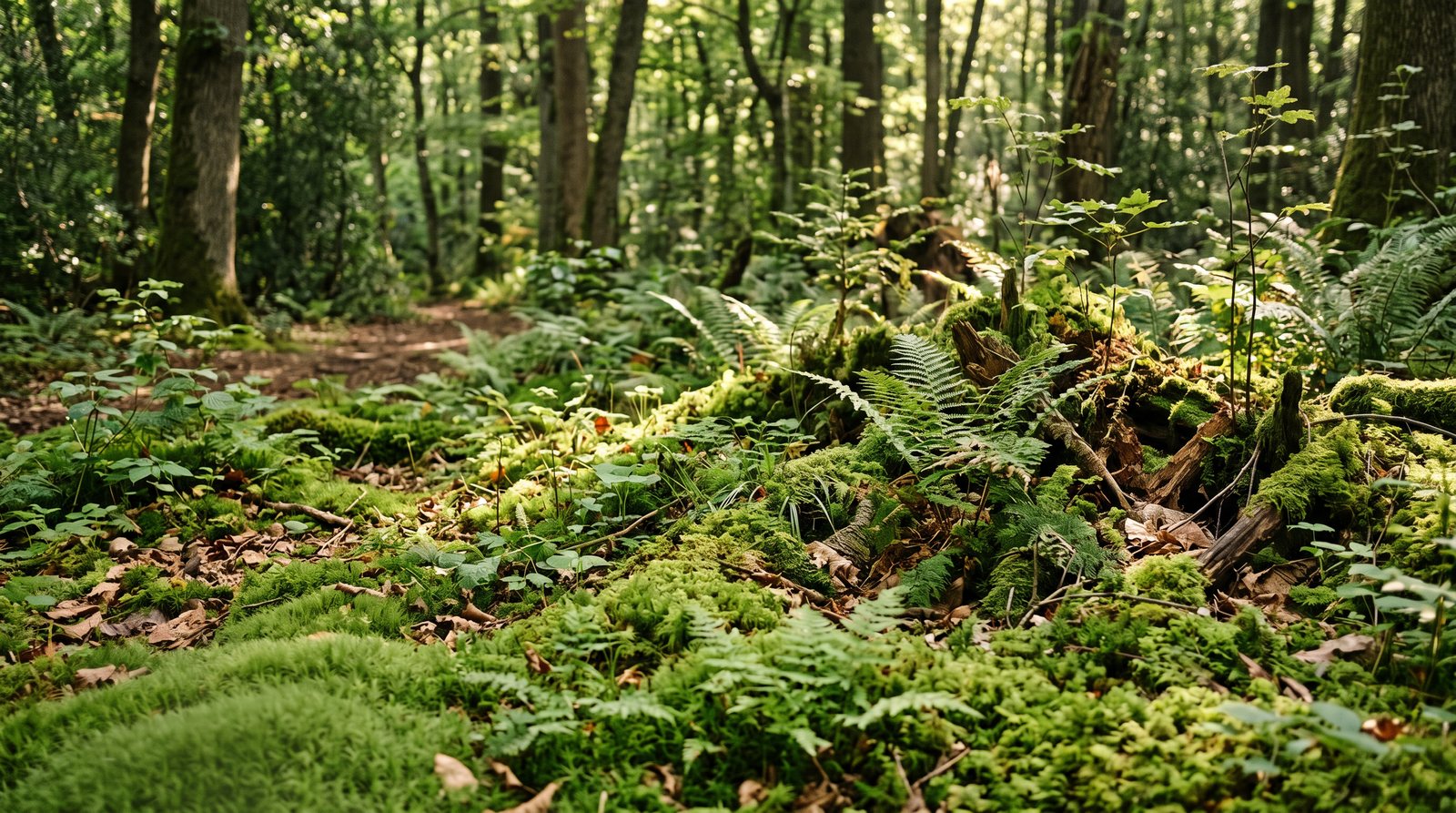
The forest floor is becoming a living environmental instrument.
Wider than the Grand Canyon, the Capertee Valley is a geological sanctuary where ancient sandstone cliffs enclose a vital wilderness. From the ruins of Glen Davis to rare woodland birds, it offers a profound connection to the Blue Mountains' deep heritage.
The Capertee Valley, a vast and ancient geological formation in New South Wales, Australia, presents a landscape of such immense scale that it challenges the human perception of distance and time. Often cited as the world’s widest canyon, it surpasses even the Grand Canyon in breadth, stretching across a distance of thirty kilometres from one sandstone escarpment to the other. This spectacular chasm, carved into the heart of the Blue Mountains, is not merely a topographical anomaly but a profound sanctuary where the forces of erosion and the resilience of life have coexisted for millions of years. For the visitor standing at the edge of the valley, the sheer horizontal expanse creates a sense of stillness that is rare in the modern world, offering a window into the deep history of the Australian continent.
The geological narrative of the Capertee Valley began with the deposition of sediment hundreds of millions of years ago, long before the first primitive plants began to colonize the land. The valley is part of the Sydney Basin, a massive structural depression filled with layers of sediment that have been compressed into the characteristic sandstone and shale of the region. Over eons, the relentless flow of the Capertee River, combined with the slow but steady movement of the Earth's crust, began the patient work of excavation. The river acted as a liquid saw, cutting through the Permian and Triassic strata, exposing the multi-hued layers of rock that now form the valley’s towering walls. This process of vertical incision and lateral retreat has resulted in the current majestic profile, where sheer cliffs drop hundreds of metres to a fertile floor.
The sandstone escarpments that flank the valley are perhaps its most dramatic feature, acting as a natural frame for the wilderness within. These cliffs are composed of Narrabeen Group sandstones, which are renowned for their durability and their ability to hold the light of the sun in a way that changes throughout the hour. At dawn, the rock faces catch the first rays of light, glowing with a pale gold that slowly deepens into a rich ochre as the sun rises. By late afternoon, the shadows of the western rim begin to stretch across the valley floor, turning the distant cliffs into silhouettes of deep violet and charcoal. This daily cycle of light and shadow emphasizes the verticality of the landscape, reminding the observer of the immense volumes of rock that have been removed by the patient hand of time.
Rising from the center of the valley floor like a silent sentinel is Pantoneys Crown, a majestic mesa that serves as the visual and spiritual anchor of the Capertee. This flat-topped mountain, isolated from the surrounding escarpments by the same erosive forces that created the valley, is a remnant of a once-continuous plateau. Its name honors the early European explorers who traversed this rugged terrain, but its presence in the landscape is much older, holding significance for the Wiradjuri people who have long inhabited the region. To hike toward the base of Pantoneys Crown is to move through a series of micro-climates, from the dry sclerophyll forests of the valley floor to the more sheltered gullies where moisture lingers, each step revealing a different facet of the valley’s complex ecology.
Beyond its geological grandeur, the Capertee Valley is a vital sanctuary for some of Australia’s most endangered avian species. The valley’s unique combination of fertile soils and diverse vegetation, particularly the yellow box and white box eucalypts, provides a critical habitat for the Regent Honeyeater. This striking black and gold bird, whose numbers have dwindled dangerously in recent decades, finds one of its last remaining strongholds here. The valley acts as a seasonal refuge, where the flowering of the ironbarks and gums offers a reliable source of nectar. Birdwatchers and conservationists from around the world are drawn to the Capertee, not only for the chance to spot the honeyeater but to experience the rich chorus of woodland birds that fills the air in the early morning, a sound that has remained largely unchanged for thousands of years.
The human history of the Capertee Valley is as layered as its geology, containing stories of both ancient tradition and industrial ambition. At the northern end of the valley lie the ruins of Glen Davis, a site that once hummed with the activity of a bustling shale oil mining operation. Established in the late 1930s to bolster Australia’s fuel security during the Second World War, the town was a marvel of remote engineering, featuring a massive retort complex and a community of over two thousand people. Today, the rusted ironwork and crumbling brick chimneys of the works stand as a testament to the fleeting nature of industrial enterprise. Nature is slowly reclaiming the site, with vines and saplings weaving through the skeletal structures, creating a wistful atmosphere where the echoes of the past meet the silence of the wilderness.
For those seeking the most comprehensive view of this immense landscape, Pearsons Lookout along the Castlereagh Highway offers an unparalleled vantage point. From this elevated position, the true scale of the Capertee Valley is revealed, with the horizon stretching away in a series of blue-hued ridges. The lookout provides a perspective that is both humbling and clarifying, allowing the eye to trace the winding path of the Capertee River as it meanders through the green expanse below. It is a place where the complexity of the valley’s geography—the interplay of mesa, cliff, and river—becomes a single, coherent image. Visitors are often struck by the silence at this height, a quiet that is only broken by the occasional call of a raven or the rustle of the wind through the stunted heaths.
As part of the Greater Blue Mountains World Heritage Area, the Capertee Valley represents a commitment to the preservation of Australia’s most significant natural landscapes. Its inclusion in this prestigious list acknowledges not only its geological uniqueness but its role as a repository of biodiversity and cultural heritage. The valley remains a place where the modern world feels distant, where the pace of life is dictated by the seasons and the slow movement of the sun across the sandstone. To visit the Capertee is to engage in a form of slow looking, where the details of the landscape—the texture of the bark, the flight of a honeyeater, the shimmer of the heat haze—emerge gradually, rewarding the patient observer with a profound sense of connection to the natural world. In the quiet depths of the world’s widest canyon, the story of the Earth continues to unfold.