Microbiology
Microbial maps are making the invisible ecosystem easier to see.
Microbial mapping is transforming our understanding of the invisible world, revealing the complex spatial networks and metabolic exchanges that sustain life in the soil, the oceans, and the human body by making hidden ecosystems visible for the first time.
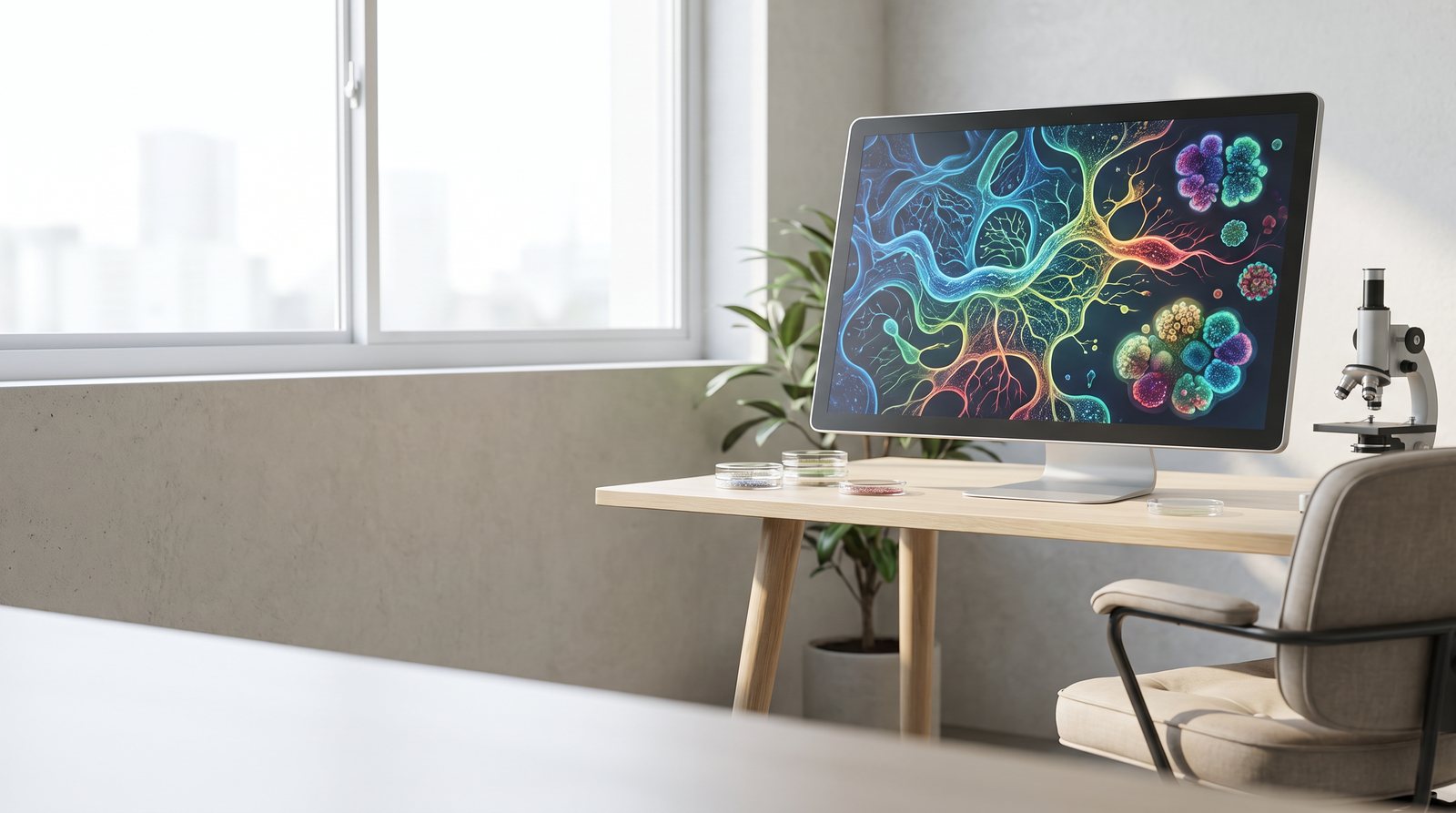
The world we inhabit is not merely a collection of visible landscapes, but a dense, overlapping series of microbial territories that define the very limits of life. For centuries, microbiology was a science of isolation, focused on the individual cell or the single colony grown in a petri dish. This approach provided only a keyhole view of a vast reality. Today, a new generation of researchers is moving beyond isolated organisms to create comprehensive microbial maps. These maps chart the spatial relationships, metabolic exchanges, and environmental dependencies that govern the invisible ecosystems of our planet. By visualizing these hidden networks, scientists are beginning to understand how microbes function as a collective, transforming our perception of everything from the fertility of soil to the resilience of the human body.
The challenge of mapping the microbial world lies in its sheer scale and diversity. A single gram of soil may contain a staggering number of individual organisms and a diverse array of species, many of which cannot be grown in a laboratory. Traditional sequencing methods often lose spatial context, blending the DNA of an entire community into a single genetic soup. To overcome this, researchers employ advanced techniques like spatial transcriptomics and high-resolution imaging that preserve the physical architecture of microbial communities. These tools allow scientists to see which microbes live next to each other and how they interact in real time. The resulting maps are dynamic representations of a living system, showing how a change in one part of the network can ripple through the entire ecosystem.
In the oceans, microbial mapping is revealing the intricate choreography of the carbon cycle. Phytoplankton and bacteria are not randomly distributed; they form distinct layers and clusters that respond to light, temperature, and nutrient availability. By mapping these distributions across vast oceanic regions, researchers can track how energy moves through the marine food web. These maps show that the ocean’s microbial inhabitants are highly organized, with different species occupying specific niches that allow them to maximize their efficiency. Understanding these spatial patterns is crucial for predicting how marine ecosystems will respond to a changing climate, as even small shifts in microbial distribution can have profound effects on the ocean’s ability to sequester carbon and support larger life forms.
The human microbiome is perhaps the most personal frontier of this mapping revolution. Every surface of the body, from the skin to the gut, is a complex landscape inhabited by trillions of microbes. Mapping these internal ecosystems has revealed that the distribution of microbes is highly specific, with different communities occupying the unique environments of the mouth, the lungs, and the digestive tract. These maps are helping researchers identify the "geography of health," showing how the spatial arrangement of microbes can influence the development of the immune system and the progression of diseases. By visualizing the microbial landscape of the human body, scientists are developing more targeted therapies that aim to restore balance to the ecosystem rather than simply eliminating individual pathogens.
In agricultural science, microbial maps are being used to redraw the future of food security. The rhizosphere—the narrow zone of soil surrounding plant roots—is one of the most microbially active places on Earth. By mapping the interactions between plants and their microbial partners, researchers are discovering how certain bacteria and fungi help plants absorb nutrients, resist pests, and tolerate drought. These maps show that a healthy soil ecosystem is a sophisticated network of communication and exchange. By understanding the spatial dynamics of the rhizosphere, farmers can move away from heavy reliance on chemical fertilizers and pesticides, instead using microbial mapping to manage the soil as a living, self-sustaining system that supports crop growth through natural ecological processes.
The technology used to create these maps is also becoming more accessible, allowing for a broader range of environmental monitoring. Portable DNA sequencers and automated imaging systems are being deployed in remote areas to track the health of ecosystems in real time. From the melting glaciers of the Arctic to the deep-sea vents of the Pacific, microbial maps are providing an early warning system for environmental change. These maps allow researchers to detect shifts in microbial diversity before they become visible in larger organisms, offering a more sensitive measure of ecosystem health. As these tools become more widespread, the ability to map the invisible world will become a standard part of conservation efforts, helping to protect the foundational layers of life.
Beyond the practical applications, microbial mapping is fostering a deeper philosophical shift in how we understand our place in the biological world. It challenges the notion of the individual as a discrete entity, suggesting instead that all life is fundamentally interconnected through microbial networks. The maps we create are a testament to the complexity and beauty of the invisible world, showing that even the smallest organisms are part of a grand and orderly design. By making the invisible ecosystem visible, we are gaining scientific knowledge and developing a new vocabulary for describing the world. This perspective encourages a more holistic approach to science and environmental stewardship, one that recognizes the vital importance of the microbial foundations that underpin the health of our entire planet. As we learn to read these maps, we begin to see the Earth not as a collection of separate species, but as a single, breathing tapestry of microbial life.
The future of microbiology lies in our ability to integrate these diverse maps into a global atlas of the invisible world. Such a resource would allow us to compare microbial ecosystems across different biomes, identifying common patterns and unique adaptations. This effort requires collaboration across disciplines, from computer science to ecology and medicine. The data generated by these maps will provide the foundation for new strategies to address global challenges like climate change and food scarcity. By investing in the tools to map the microbial world, we are ensuring that we can manage the hidden ecosystems that make life on Earth possible. This journey is only beginning, and the maps we draw today will guide the scientific discoveries of tomorrow.