Learn
The Silver Thread of Memory
As the Nile flows from the volcanic heights of Ethiopia and the Great Lakes of the south, it carries with it the weight of ten thousand years of human history, a journey that has transitioned from the sacred unpredictability of the annual flood to the calculated precision of modern hydroelectric dams and perennial irrigation networks. This transformation of the world's longest river reflects a broader shift in our relationship with the natural world, where the wistful memory of a landscape defined by the 'akhet' season now contends with the urgent demands of growing cities, fragile ecosystems, and the complex geopolitics of a shared water basin that remains the lifeblood of a continent.
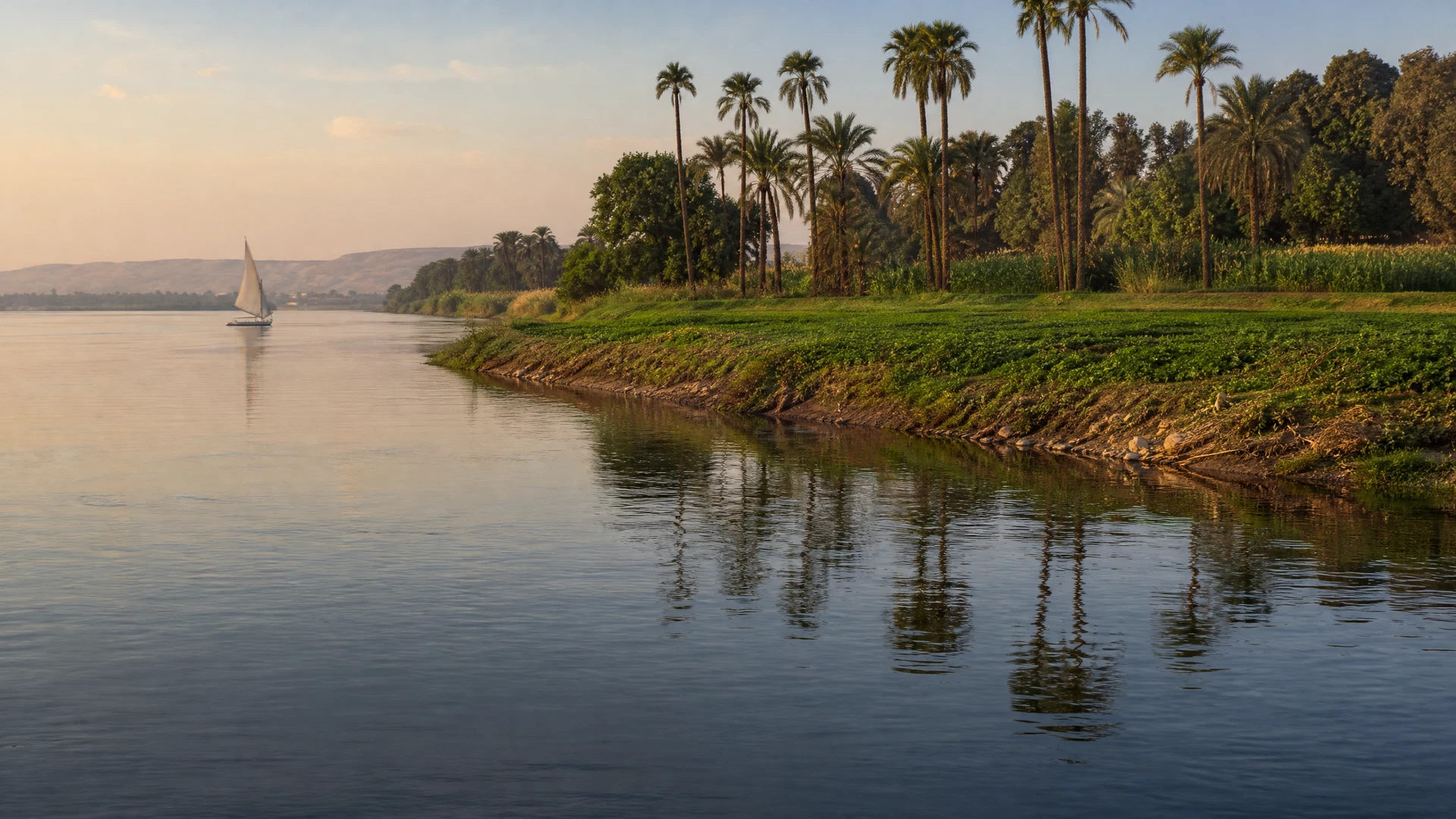
The river does not remember the names we give it, nor does it acknowledge the concrete barriers we have raised to domesticate its ancient, unruly heart. For millennia, the Nile was a seasonal ghost, a pulse of dark water and volcanic silt that arrived with the predictability of a heartbeat, transforming the parched bones of the desert into a verdant ribbon of life. This was the 'akhet', the season of inundation, a time when the boundaries between land and water dissolved, and the rhythm of human existence was dictated by the whim of the monsoon rains falling thousands of miles away in the Ethiopian Highlands. Today, that pulse has been steadied into a flatline of controlled releases, a triumph of engineering that has traded the dramatic uncertainty of the flood for the reliable monotony of perennial irrigation. Yet, in the quiet reaches of the Upper Nile, where the papyrus still bows to the north-wind, one can almost hear the echo of the old water, a wistful reminder of a time when the river was not a resource to be managed, but a deity to be appeased.
Where the Blue and White Niles converge at Khartoum, the 'Mogran' creates a swirling marriage of colors—one a heavy, silt-laden ochre and the other a translucent, ethereal teal. This meeting is a silent dialogue between two worlds: the rugged, torrential energy of the Ethiopian mountains and the slow, meditative journey from the Great Lakes of the south. To stand at this confluence is to witness the river’s dual nature, a paradox of violent birth and patient endurance. The city of Khartoum itself seems to exhale a dusty breath, caught between the modern aspirations of a capital and the timeless gravity of the water that flows past its banks. Here, the river is a witness to the shifting sands of political boundaries, yet it remains indifferent to the maps drawn in ink, preferring the paths it carves in the earth through centuries of erosion. It is a place of transit, where the water gathers its strength for the long, solitary trek across the Sahara, a journey that defies the very logic of the desert.
Along the banks, the 'fellahin' still work the soil with a devotion that transcends the introduction of diesel pumps and chemical fertilizers. There is a specific kind of silence in the fields at dusk, a heavy, humid stillness where the scent of wet earth mingles with the smoke of cooking fires. For these farmers, the river is not a series of cubic meters per second recorded in a government ledger, but a tangible presence that dictates the texture of their days. They remember, perhaps only through the stories of their grandfathers, the way the silt used to feel between their toes—a rich, black gift that required no artifice to bloom. Now, the soil is hungrier, deprived of the natural replenishment that the floods once provided, and the relationship between the farmer and the river has become one of negotiation rather than grace. There is a wistful quality to the way they look at the water now, seeing it as both a lifeline and a stranger, a force that has been tamed but never truly understood.
Luxor and Aswan stand as stone sentinels, their temples reflecting in the glassy surface of the water like memories that refuse to fade. In these reaches, the Nile feels most like a corridor of time, where the colossal statues of Rameses II gaze out over a landscape that has changed in every way except for the presence of the river itself. The granite cataracts at Aswan once marked the boundary of the known world, a place of turbulent rapids and sacred mysteries. Now, they are overshadowed by the High Dam, a wall of rock and clay that holds back the weight of a continent’s tears. The creation of Lake Nasser was an act of both creation and destruction, a drowning of history to power the future. While the temples of Philae and Abu Simbel were hoisted to safety, countless smaller stories and ancestral lands were lost to the rising blue, leaving behind a haunting landscape of submerged memories and displaced communities who still sing songs of the river that used to be.
Cairo is a fever dream of concrete and current, a city that has grown so large it seems to be trying to swallow the river that gave it birth. At night, the Nile becomes a ribbon of reflected neon, carrying the sound of 'feluccas' and the distant thrum of traffic into the heart of the metropolis. It is here that the river’s modern burden is most visible, a waterway strained by the demands of millions, yet still possessing a quiet majesty that hums beneath the noise of the city. The bridges that span the water are like stitches holding together two halves of a restless soul, while the houseboats moored along the banks offer a glimpse into a slower, more contemplative way of life that is being crowded out by the vertical reach of skyscrapers. Cairo is a testament to the Nile’s endurance, a place where the ancient water must navigate a labyrinth of urban ambition, reflecting the faces of a people who are as much a product of the river as the crops in the fields.
The Delta is a fragile lace of distributaries, a place where the river finally surrenders its identity to the Mediterranean Sea. Once a sprawling fan of seven branches, it has been reduced by time and human intervention to two main arms, the Rosetta and the Damietta. This is a landscape of soft horizons and salt-tinged air, where the land is losing its battle with the encroaching waves. Without the annual delivery of silt to bolster the coast, the sea is slowly reclaiming what the river once built, a process that feels like a slow, inevitable goodbye. The towns of the Delta exist on the edge of this transition, their future tied to the complex calculations of water management and climate change. There is a profound wistfulness in the sight of an old lighthouse standing watch over a coastline that is no longer where it was built, a symbol of a world in flux where even the most enduring landmarks are subject to the whims of a changing climate.
Modern water management has turned the Nile into a giant machine, a system of dams, barrages, and canals that attempt to wring every drop of utility from the flow. The Grand Ethiopian Renaissance Dam represents the latest chapter in this saga of human ambition, a project that promises light and progress for some while casting a shadow of uncertainty for others. The river, once a shared heritage that flowed freely across borders, has become a source of geopolitical tension, a prize to be divided and contested. Yet, the water itself continues to flow, oblivious to the treaties and the disputes, following the path of least resistance toward the sea. There is a need for a new language of cooperation, a way of seeing the river not as a single resource, but as a living organism that requires the care of all who dwell within its basin. The wistfulness of the present moment lies in the realization that we have the power to break the river, but we have yet to prove we have the wisdom to sustain it.
In the marshes of the Sudd, the river loses itself in a vast, emerald labyrinth of reeds and water hyacinth. This is one of the world’s largest wetlands, a place where the Nile’s flow is slowed to a crawl and much of its water is lost to evaporation. It is a wilderness of profound beauty and isolation, a refuge for birds and wildlife that have largely vanished from the more developed reaches of the river. The communities who inhabit these marshes have a relationship with the water that is almost symbiotic, their lives following the seasonal rise and fall of the swamps. There is a timelessness here that is increasingly rare, a sense that the river is still allowed to be its wild, unpredictable self. Yet even here, the shadow of modern engineering looms, with periodic proposals to bypass the marshes and 'save' the water for downstream use—a plan that would destroy a unique ecosystem in the name of efficiency, a reminder that the river’s soul is often sacrificed at the altar of its utility.
As the sun sets over the Nile, casting a long, golden path across the water, it is easy to forget the dams, the pollution, and the politics that define its modern existence. In this light, the river is simply a presence, a constant companion that has watched the rise and fall of empires and the slow evolution of the human spirit. The wistfulness that permeates the Nile today is not just a longing for the past, but a recognition of the river’s vulnerability in an age of unprecedented change. We have inherited a legacy of awe and a responsibility of stewardship, a delicate balance between our immediate needs and the river’s eternal nature. The Nile is a reminder that we are all connected by the water that flows through our lands and our history, a thread of continuity in a world that often feels fragmented and fleeting. In the end, the river remains a story of survival, a silver ribbon through the dark velvet of the desert, carrying with it the memories of all that has been and the promise of all that is yet to come.