Learn
The Long Memory of the Blue Danube
Flowing across the fractured heart of Europe as a living ledger of human ambition and ecological resilience, the Danube serves as both a highway for empires and a sanctuary for the prehistoric sturgeon, winding from the Black Forest to the sprawling reeds of the Delta where its waters have been both bound by concrete and liberated by vision. This exploration of the river’s corridor traces the delicate balance between the iron necessity of navigation and the urgent work of restoration that seeks to return the pulse of the wild to ancient floodplains, revealing a waterway that is slowly remembering its own name amidst the changing tides of a new century while moving through the wetlands that breathe for a continent and the engineering marvels that once sought to tame them.
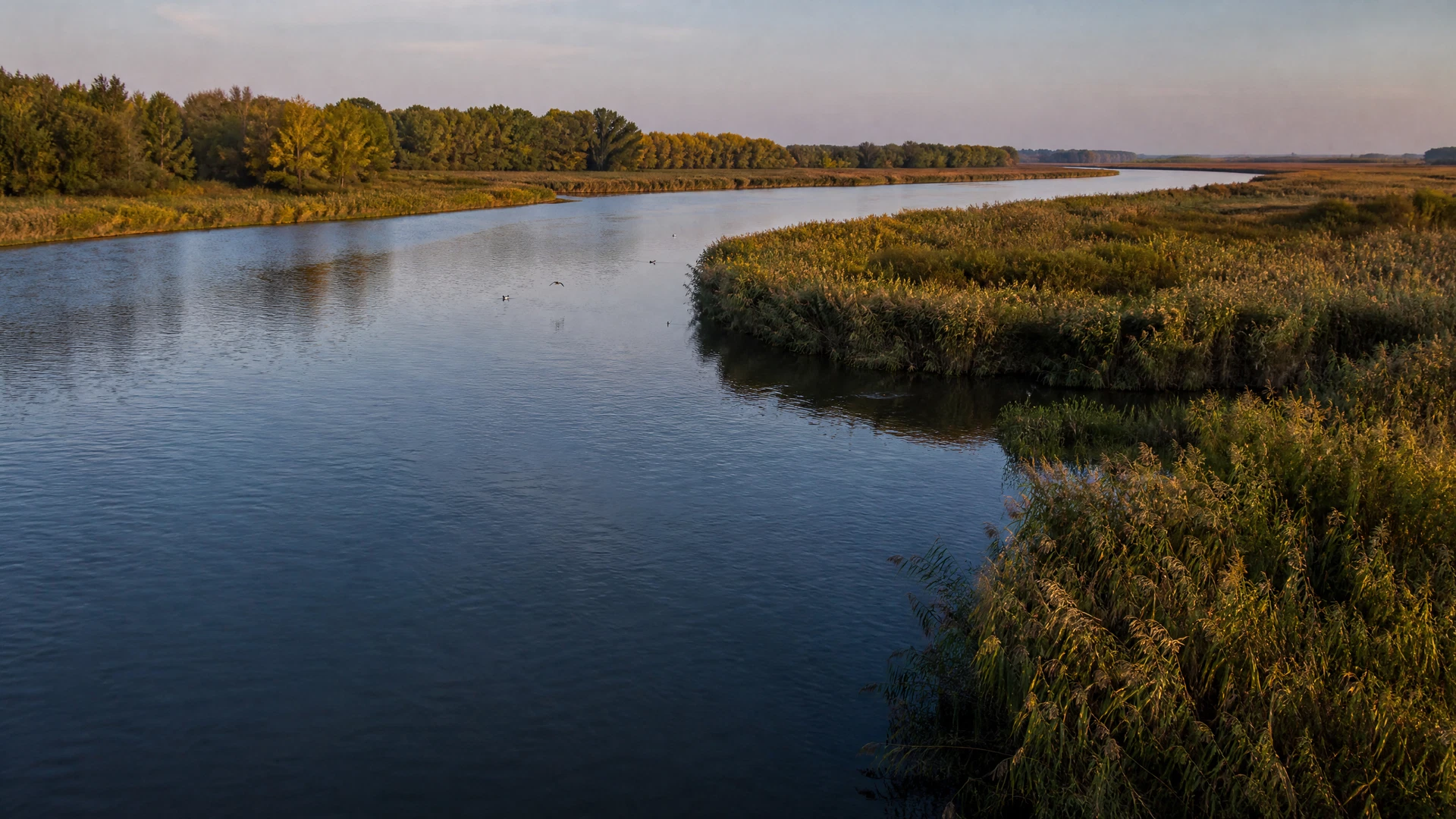
The Danube begins not with a roar, but with a quiet conspiracy of springs in the Black Forest, where water gathers strength before embarking on a journey spanning ten nations and three millennia. To speak of the Danube is to invoke the romanticized "Blue" of a waltz, yet the river’s true color is a shifting palette of silty grey, deep emerald, and the reflective silver of a mirror that has seen too much. It is a waterway that does not merely flow; it carries the weight of empires and the quiet hope of a continent that has often tried to break it. As it winds eastward, the river becomes a silver thread stitching together disparate cultures, a liquid spine supporting a hundred cities while whispering of the untamed wilderness that once defined its banks before the first surveyor’s stake was ever driven into the mud.
During the industrial expansion of the nineteenth century, the Danube was viewed as a problem to be solved, a wild beast to be caged within rigid stone and concrete. Great engineering projects, like the Vienna regulation, sought to strip the river of its meandering whimsy, straightening curves to facilitate steamships and trade. In the name of progress, vast networks of side arms and seasonal floodplains were severed from the main channel, turned into stagnant backwaters or drained for the plow. This was the era of the "regulated" river, where the Danube was treated as a two-dimensional line on a map rather than a living system. The echoes of this era still resonate in high stone embankments and deep channels that prioritize iron hulls over the soft belly of the wetland, leaving a legacy of efficiency that came at the steep price of the river’s ecological soul.
Nowhere is the desire to dominate the Danube more evident than at the Iron Gates, the gorge where the river once thundered through mountains in treacherous rapids. Today, that thunder is replaced by the industrial hum of massive dams that transformed the wild water into placid, man-made lakes. Beneath these waters lies the sunken history of Ada Kaleh, a Turkish island of minarets sacrificed to the demand for power, a modern Atlantis whose memory surfaces only in the stories of those who remember the scent of its roses. The dams brought light to cities, but they also created an insurmountable wall for creatures that had traversed these waters for millions of years, effectively ending the ancient dialogue between the upper river and the sea.
Beyond the concrete, the Danube remains a corridor of profound connection, a biological highway linking Alpine highlands to the vast eastern steppes. In its natural state, the river was a pulsing organism that expanded with the seasons, its floodplains acting as the lungs of the continent. These riparian forests and marshes are not merely scenic backdrops; they are vital organs that filter water, temper floods, and provide sanctuary for life that finds no home in the sterile reaches of a regulated channel. To walk along the river corridor today is to move through a mosaic of landscapes—from the limestone cliffs of the Wachau to the sun-drenched Bulgarian plain—each bend revealing a facet of a shared European heritage that is as much about the water as it is about the land.
The tragedy of the modern Danube lies in the disconnection of its floodplains, the low-lying lands that once absorbed seasonal overflows and nurtured the cycle of life. In places like the Inland Delta of Slovakia and the Gemenc forest, the river’s heartbeat has been muffled by dikes that keep water strictly within its banks. When the river is separated from its wetlands, it loses its ability to regenerate; groundwater drops, ancient oaks wither, and the vibrant nurseries for fish fall silent. There is a profound wistfulness in standing upon a levee and looking down at a dry forest that should be underwater, a landscape physically present but ecologically absent. These are the forgotten places of the Danube, where the river’s memory of its own boundaries is most painfully at odds with the reality of the modern map.
Deep within the silt-laden currents of the Lower Danube, a prehistoric drama continues to unfold. The sturgeon, armored giants that outlived the dinosaurs, represent the river’s most ancient lineage, their long migrations once taking them from the Black Sea to the headwaters in Germany. For these fish, the river is a map of scent and temperature, a path to the gravel beds where they have spawned for eons. However, the Iron Gates dams effectively cut their world in half, stranding populations and blocking the way to ancestral homes. The plight of the sturgeon is the plight of the river itself—a magnificent, enduring presence being slowly strangled by the fragmentation of its habitat. To save the sturgeon is to acknowledge that the river must be more than a shipping lane; it must be a continuous, unbroken thread of life.
In recent decades, a new narrative has emerged along the Danube, one that speaks of healing rather than harnessing. Across the basin, visionary projects are working to tear down dikes and reconnect the river to its long-lost side arms. This is not a simple return to the past, but a sophisticated effort to integrate modern needs with the requirements of a healthy ecosystem. When dikes are breached and water rushes back into a parched wetland, the transformation is almost instantaneous; birds return, fish spawn, and the land itself seems to exhale in relief. These restoration efforts are an act of ecological humility, a recognition that the river knows how to manage itself far better than we ever could, provided we give it the space to breathe and the freedom to wander once again.
The journey of the Danube concludes in the vast wilderness of the Delta, where the river dissolves into a thousand channels and reeds stretching toward the Black Sea. Here, in Europe’s largest wetland, the distinction between land and water becomes meaningless, and the river’s secrets are finally surrendered to the tides. The Delta is a place of constant transformation, where silt from the heart of the continent builds new islands even as the sea erodes the old. It is a sanctuary for millions of birds and a home to communities whose lives are governed by the rise and fall of the river rather than the ticking of a clock. In the Delta, restoration has found its most ambitious canvas, as former agricultural polders are reflooded, allowing the river to reclaim its final, triumphant flourish.
The future of the Danube rests in the hearts of the communities that call its banks home. For centuries, the relationship was one of extraction and defense—taking fish, using water for trade, and building walls against floods. Today, that relationship is shifting toward stewardship, as residents begin to see the river as a shared treasure rather than a resource to be exploited. From the fishermen of the Delta to the urban planners of Budapest, there is a growing awareness that a healthy river is the foundation of a healthy society. This cultural shift is perhaps the most important restoration project of all, for it ensures that the river’s value is measured not just in tons of cargo or megawatts of power, but in the beauty of its landscapes and the resilience of its life.
The challenge ahead is the search for a middle way, a balance between the necessity of navigation and the requirement for ecological integrity. As Europe moves toward a greener future, the river’s role as a low-carbon transport artery is vital, yet this cannot come at the expense of the nature that makes the river worth protecting. The "Green Danube" initiatives aim to harmonize these interests, developing smart navigation strategies that respect natural dynamics and minimize destructive dredging. It is a delicate dance, a negotiation between the iron and the water, requiring international cooperation as unprecedented as the river’s own length. The goal is a waterway that is both a functional highway and a vibrant wilderness, a river that serves the needs of the present without mortgaging the heritage of the future.
As the sun sets over the broad expanse of the river, reflecting the silhouettes of ancient castles and modern bridges, one feels a sense of wistful continuity. The Danube has outlasted empires, and it will likely outlast the current structures of our own age, its patient currents slowly wearing away the stone and steel we have imposed upon it. To care for the Danube is to participate in a long-term act of faith, a belief that the damage of the past can be undone and that the river’s wild spirit can be coaxed back. It is a reminder that we are not the masters of the water, but its temporary guardians, tasked with ensuring that the silver thread of the old continent remains unbroken. In the end, the Danube is a promise of renewal, a living testament to the fact that even the most scarred landscapes can find their way back to grace.