Learn
The Pulse of the Mother of Waters
As the great Mekong winds its way from the high, frozen silences of the Tibetan Plateau down through the verdant heart of Southeast Asia, it carries with it not just the silt and sediment of a continent, but the very soul of the millions who dwell along its shifting banks, living in a delicate, ancient synchrony with the annual monsoon floodpulse that transforms the landscape into a shimmering, temporary sea. This narrative explores the profound, wistful intersection of ecological wonder and human endurance as the river’s legendary rhythms—the miraculous reversal of the Tonle Sap, the migration of the ghost-like giant catfish, and the quiet persistence of floating villages—face the encroaching shadows of modern hydropower development, which threatens to silence the heartbeat of a region that has for centuries defined itself by the rise and fall of these sacred, silt-laden waters.
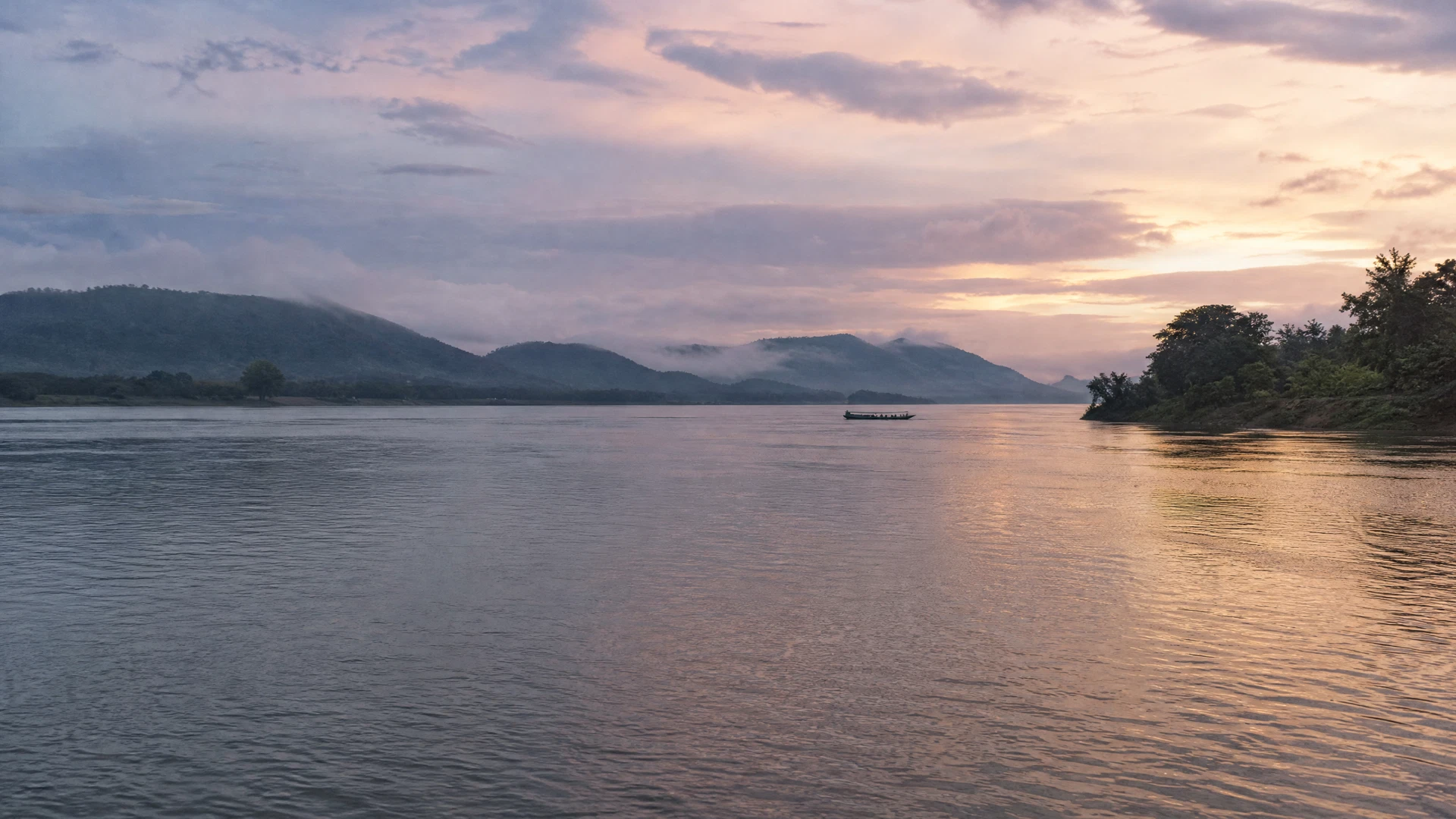
When the first heavy clouds of the southwest monsoon gather over the Annamite Mountains, a palpable tension settles across the Lower Mekong Basin. For months, the river has been a modest thread of coffee-colored water, but now, the sky opens, and the Mother of Waters—the Mae Nam Khong—begins to swell with a beautiful purpose. This is the awakening of a giant, a seasonal surge carrying the melted snows of the Himalayas and the torrential rains of the tropics into the lowlands. The air grows thick with the scent of damp earth, and the sound of the river changes to a low, guttural roar that vibrates in the chests of those who live upon its surface. It is a rhythmic return that has defined the spiritual architecture of this region for millennia, yet today, that rhythm feels increasingly like a haunting echo of a world being quietly reconfigured by the hands of men.
The most miraculous expression of this rhythm occurs near Phnom Penh, where the Mekong meets the Tonle Sap River. As the Mekong’s volume reaches its zenith, the sheer pressure of its discharge forces the Tonle Sap River to halt and eventually turn back upon itself, flowing upstream into the great lake. This flow reversal is the beating heart of the basin, a hydraulic marvel that expands the lake to five times its dry-season area, drowning forests in a nutrient-rich soup that serves as the planet’s most productive nursery. To witness the river turning backward is to see time itself become fluid, a moment where the natural world asserts its own logic over linear geography. The lake becomes a vast, inland sea where the pulse of the monsoon is translated into the literal expansion of life, providing the promise that sustains an entire nation’s soul.
Deep within these turbid, silt-laden depths, the ghosts of the Mekong move in a silent, ancient parade. The Mekong giant catfish, a creature of mythic proportions that can weigh as much as a grizzly bear, represents the river’s hidden majesty, a silver-skinned titan that migrates hundreds of miles to spawn. Alongside them, the Irrawaddy dolphins, with their blunt faces and sighing breaths, haunt the deep pools of Kratie, serving as spiritual guardians for communities who believe they embody the spirits of ancestors. These creatures are the living barometers of the river’s health, their survival intricately tied to the connectivity of the floodpulse. Yet, as the water grows clearer and the seasonal peaks shallower, these giants are becoming increasingly spectral, their numbers dwindling into a wistful memory of an era when the river was an unbroken highway of scales and fins before the silence of the dams.
Life on the floodplain is an exercise in fluid adaptation, where the concept of a fixed home is traded for a life lived in accordance with the gauge. In the floating villages of the Tonle Sap, houses are built on towering bamboo stilts or lashed to buoyant rafts, rising and falling with the water like living organisms. There is a quiet, rhythmic dignity to this existence, where children learn to paddle before they can walk and the market is a flotilla of canoes laden with dragon fruit and silver fish. The architecture of these communities is a testament to a deep relationship with the environment, a recognition that to live with the Mekong is to accept its moods without the arrogance of permanent conquest. However, this way of life is now shadowed by anxiety as the predictability of the floods wavers, forcing a culture of water to confront an uncertain future.
In the emerald expanses of the Delta, the agricultural cycle is a dance with the rising tide, most vividly captured in the cultivation of floating rice. This extraordinary grain possesses the ability to elongate its stem by several inches in a single day, keeping its flowering head above the encroaching floodwaters even as they rise to depths of several meters. It is a miracle of biological engineering, a crop that thrives on the very inundation that would drown modern varieties, providing a harvest that is as much a gift of the silt as it is of the sun. The fields are a shimmering green tapestry that moves with the current, representing a society that has learned to rise with the water. Yet, as the sediment that nourishes these fields is trapped behind concrete walls upstream, the golden silt is being replaced by clear, hungry water that erodes the banks and starves the soil.
The spiritual landscape of the Mekong is presided over by the Naga, the great serpent deity whose coils form the bed of the river. In the villages along the Thai-Lao border, the Naga is a present reality, a guardian of the waters who must be appeased with festivals and offerings of marigolds. Every year, at the end of the Buddhist Lent, the mysterious Naga fireballs are said to rise from the depths near Nong Khai, glowing red orbs that ascend into the night sky as a tribute to the Buddha. This reverence fosters a sense of stewardship that is increasingly at odds with the utilitarian view of the river as a mere source of kilowatts. There is a wistful tension between the sacred pulse of the Naga and the cold efficiency of the turbine, a conflict between a world of mystery and one of managed mechanics.
Today, the Mother of Waters is facing a transformation as a cascade of massive hydropower dams in the upper reaches begins to exert a strangulating grip on the river’s natural flow. These concrete giants, though miles away, act as silent regulators of the monsoon, trapping the vital sediment that has built the Mekong Delta over millennia. The water that reaches the lower basin is increasingly starved, stripped of the nutrients that fuel the food web and the silt that reinforces the riverbanks against the sea. To the fishermen, the change is felt in the weight of the nets and the clarity of the water; a clear river is a dying river, a beautiful but hollow shell of the life-giving torrent it once was. The loss of this sediment is a slow-motion catastrophe, a thinning of the river’s blood that threatens to unravel the delicate ecological tapestry.
Further downstream, the fragmentation of the river continues with new dams like the Xayaburi, which stand as formidable barriers across the migratory corridors of the world’s most diverse inland fishery. While these projects are framed as the batteries of Southeast Asia, they represent a fundamental disruption of the river’s connectivity, severing the link between northern spawning grounds and southern feeding grounds. Even with fish ladders, the scale of the disruption to the larval drift and adult migrations is a gamble with the food security of an entire region. The wistful irony is that in the pursuit of modern energy, we risk extinguishing a natural engine of productivity that requires no fuel, only the rhythmic movement of silver bodies. The river is being transformed into a managed plumbing system that lacks the wild, unpredictable vitality of a living waterway.
The rhythm of the Mekong is becoming erratic, a syncopated version of its former self that leaves the basin’s inhabitants in a state of constant apprehension. The traditional markers of the seasons—the arrival of certain birds or the specific smell of the air before the first rise—are no longer the reliable guides they once were. Flash floods occur in the dry season when dams release water for power, while the monsoon rains sometimes fail to trigger the Tonle Sap reversal until weeks later than expected. This disruption of flow memory is a profound blow to a culture built on the cycles of the sun and rain. There is a wistful quality to the conversations in riverside cafes, a shared mourning for the predictability of the past and a realization that the river that was a mother and a clock is being replaced.
As the Mekong reaches its final destination in the Delta, the pressures of the entire basin converge in a fragile landscape increasingly under siege from the rising sea. Without the seasonal push of the freshwater flood and the constant replenishment of silt, the Delta is literally sinking and shrinking, allowing saltwater to creep inland and poison the soil. The rice bowl of Asia is becoming a frontline in the struggle against a changing climate and a managed river, a place where the wistful beauty of the sunset over the paddies is tinged with the bitterness of salt. The farmers here are resilient, switching to shrimp farming, but each adaptation is a step away from the ancient rhythm of the freshwater flood, a slow retreat from the abundance that the Mother of Waters once guaranteed with effortless regularity.
Ultimately, the story of the Mekong is not one of simple tragedy, but of a complex relationship that continues to evolve even in the face of unprecedented pressure. The river remains a silver ribbon that ties together six nations and countless cultures in a shared destiny as fluid as the water itself. To walk along its banks at dusk, as the fishing boats light their lamps, is to feel the weight of history and the persistent pulse of a world that refuses to be entirely silenced. We are called to listen more closely to the river’s remaining rhythms and to honor the knowledge of the communities who have lived in harmony with its flow. It is a wistful call to stewardship, a reminder that while we can build walls to hold back the water, we can never truly replace the soul of a river that has been the source of our life.