Learn
The Slow Pulse of a Sunken World
In the heart of the Amazon, time is not measured by the ticking of clocks but by the steady, inevitable rise and fall of the seasonal waters that redefine the very concept of land, as the Várzea forests surrender to the flood and the Ribeirinho communities navigate a world that shifts between solid ground and liquid mirror. As the rains descend from the Andes and turn the forest into a vast, slow-moving highway for the traditional gaiola boats, this feature explores the profound scale of a landscape that breathes with the tide of the sky, reminding us that in the presence of such immense geological momentum, all human movement is but a gentle ripple on an eternal and ever-changing surface.
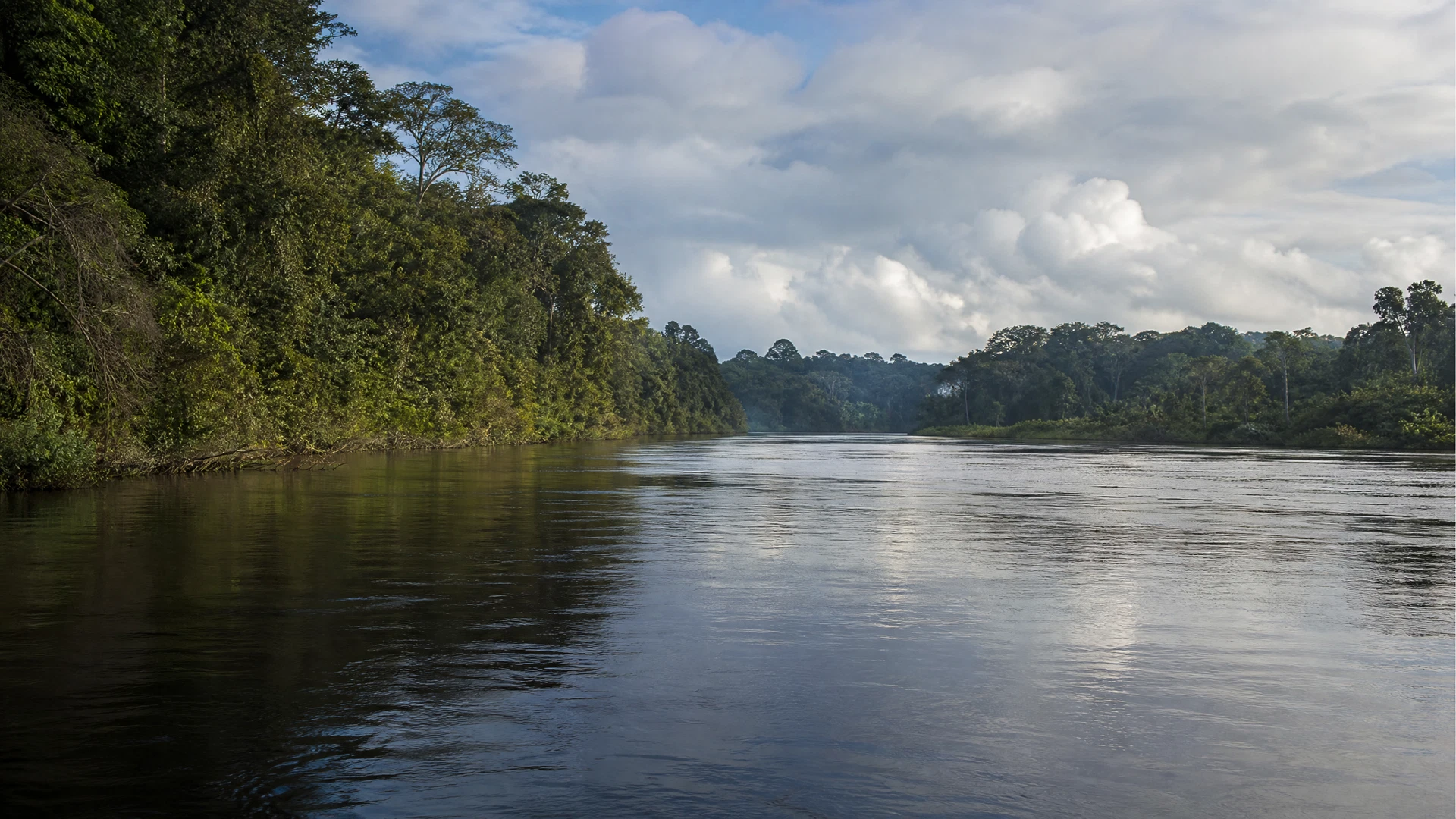
The arrival of the flood pulse is a slow, heavy transformation of the air, a shift in the scent of the wind carrying the weight of distant Andean rains. Long before the banks of the Solimões begin to blur, the sky takes on a bruised, pearlescent quality, and the forest exhales a humidity so thick it feels as though the trees are already breathing through water. There is a profound, wistful patience in the way the landscape prepares for its seasonal drowning, a quiet surrender practiced for millennia. As the first fingers of the rising river reach into low-lying hollows, the distinction between earth and sky dissolves, and the forest floor, once a carpet of decaying leaves, prepares to become a dark, liquid mirror reflecting the canopy above. It is a time of waiting, a suspension of the terrestrial world as the great pulse of the basin begins its inevitable, upward climb.
To stand at the edge of the river during this transition is to confront a scale that defies the human eye, a vastness that makes the concept of a "river" feel inadequate. The Amazon does not merely flow; it expands, pushing against its boundaries until the horizon melts into a hazy line of grey-green water. In the height of the season, the river can stretch so wide that the opposite bank vanishes, leaving a disorienting sensation of being at sea in the middle of a continent. This is a landscape where distance is measured in days, and where the sheer volume of the water—a churning, sediment-rich whitewater carrying the pulverized remains of mountains—creates a sense of geological momentum. It is a slow, relentless movement that reminds the observer of their own transience, a reminder that here, the water is the only true architect of the land.
The Várzea forests, nutrient-rich floodplains bordering the whitewater rivers, are the most evocative expression of this liquid existence. Unlike high-ground forests, the Várzea is defined by its dual nature, a place that is as much an aquatic garden as it is a terrestrial wood. When the flood arrives, the water rises ten, fifteen, sometimes forty feet, swallowing the trunks of the trees and turning the forest into a labyrinth of submerged columns. The silt-laden water brings a wealth of minerals, a gift from the mountains that fuels a frantic, seasonal productivity. In this sunken world, the rules of biology bend; trees that spend half their lives underwater have developed specialized resilience, their bark and leaves adapted to long, lightless months of immersion. It is a haunting sight to see the tops of the canopy emerging from the surface, like masts of a ghost fleet anchored in a silent sea.
Among these resilient giants, the Samaúma stands as a sentinel of the flood, its massive, buttressed roots anchored deep in the soft mud of the riverbank. Known as the "Queen of the Forest," the Samaúma reaches far above the surrounding canopy to touch the open sky. During dry months, its roots are exposed like the walls of an ancient fortress, providing shelter for a multitude of creatures, but as the water rises, the tree becomes a vertical island, a bridge between the drowned earth and the aerial world. There is something deeply moving about the sight of a Samaúma in full flood, its trunk partially submerged but its spirit untouched by the rising tide. It stores the memory of the water within its fibers, acting as a living reservoir that sustains the forest through the eventual drought, a silent witness to the endless cycle of inundation and retreat.
As the forest floor disappears, a secret geography is revealed beneath the surface, where the shadows of the trees create a cathedral of shifting light and sediment. In this temporary aquarium, the boundaries between the terrestrial and the aquatic are erased; fish weave between branches of the lower canopy, feeding on fallen fruits of rubber trees and palms. The water is thick with life, a slow-moving soup of nutrients where pink river dolphins navigate by sound, their ethereal forms gliding through submerged undergrowth like ghosts. It is a world of muffled sounds and filtered sunlight, where the decay of the old season provides fuel for the new. There is a strange, wistful tranquility in this underwater forest, a sense that the land has not been lost, but merely tucked away for a time, resting in the cool, dark embrace of the river.
For the Ribeirinho communities, the arrival of the flood is a familiar, rhythmic homecoming. Their houses, the palafitas, are elevated on high wooden stilts, standing like long-legged birds above the rising tide. As the water inches closer to their floorboards, the rhythm of daily life shifts from the soil to the surface; garden paths are replaced by wooden walkways, and hand-carved canoes become the only means of travel. There is a remarkable grace in this adaptation, a refusal to fight against the river's will. Instead, the people flow with it, their lives dictated by a liquid calendar that determines when to plant, when to fish, and when to simply watch the debris of the upper basin float toward the sea. It is a lifestyle of profound connection, where the house is not a fortress against nature, but a part of its breathing cycle.
Transport in this vast, roadless interior is a matter of patience and the steady thrum of the gaiola, the traditional wooden riverboats that serve as the lifeblood of the Amazon. To travel on a gaiola is to enter a different dimension of time, one where the urgency of the modern world is replaced by the slow, meandering pace of the current. The decks are a vibrant tapestry of hammocks, where travelers swing in close proximity, sharing stories and meals as the forest walls slide past. There is no haste here; the river dictates the schedule, and the boat stops at every small cluster of houses, delivering supplies and news. The sound of the engine, a rhythmic heartbeat, becomes the soundtrack to a long, wistful journey through the heart of the continent, a reminder that in a world of such immense scale, the only way to move is to surrender to the flow.
This immense network of water is a single, integrated organism linking the Andes to the Atlantic, where the transpiration of billions of trees creates "flying rivers" that feed the distant plains. The soundscape of the flooded forest is a complex symphony; the usual rustle of the forest floor is replaced by a liquid silence, broken only by the splash of a fish or the distant, mournful call of a howler monkey. When the rains come, they arrive with a roar that turns the river's surface into a field of dancing silver needles. Every drop of water that flows past a Ribeirinho porch has a history, a journey that began as snow on a mountain pass. To witness the scale of the river is to understand the fragility of this connection, the way a change in one part of the system ripples through the whole, threatening the ancient pulse of the basin.
As the season turns and the water begins its long, slow retreat—the vazante—the landscape undergoes a second, more melancholy transformation. The riverbanks emerge as vast, slick expanses of mud, encrusted with the white skeletons of drowned branches and discarded shells. The forest floor, recently a playground for dolphins, is now a graveyard of sediment, a place where the trees must once again learn to stand on solid ground. There is a certain sadness in this receding tide, a sense of loss as the liquid mirror shatters and the world returns to its terrestrial constraints. Yet, this is also a time of frantic renewal, as the nutrient-rich mud becomes a fertile bed for seeds. The Ribeirinhos return to their gardens, participating in a cycle of life that is as ancient as the river itself, a testament to the enduring resilience of a world that knows how to bloom in the wake of the flood.
In the end, the Amazon remains a place of eternal, wistful flow, a landscape where concepts of beginning and end are lost in the sheer scale of the cycle. To look upon the river is to see a reflection of time itself—slow, relentless, and indifferent to the fleeting concerns of the human world. It is a reminder that we are but temporary guests in a system that operates on a geological clock, a pulse that will continue to beat long after our own movements have faded. As the sun sets over the Solimões, casting a long, golden light across the water, there is a sense of peace in this realization, a quiet acceptance of our place within the great, liquid heart of the continent. The river flows on, carrying the memories of the mountains and the dreams of the forest toward an infinite horizon, a timeless witness to the beauty of a world that is always changing.