Learn
Shadows of the Last Primeval
In the deep, moss-laden silence of the Białowieża Forest, where the borders of Poland and Belarus dissolve into a shared tapestry of ancient oak and hornbeam, the European bison wanders as a living relic of a continent that has elsewhere forgotten its own wild origins. This sprawling sanctuary represents the final, fragile fragment of the great lowland wilderness that once draped across Europe, now serving as a poignant testament to the enduring power of old-growth processes and the complex, often fractured necessity of international cooperation in the face of modern geopolitical divisions that threaten to sever the very lifelines of this ten-thousand-year-old ecological masterpiece.
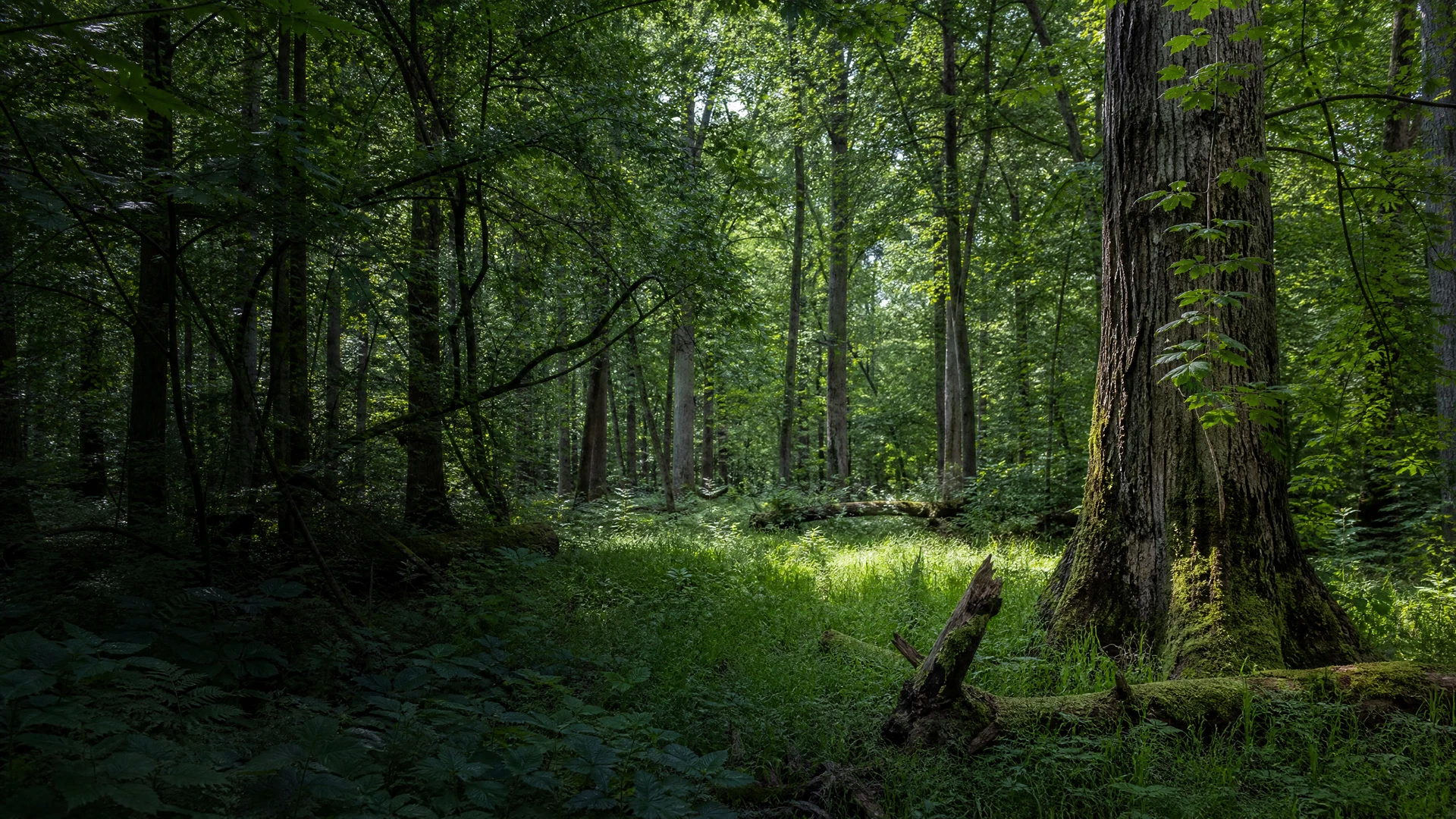
There is a particular kind of silence that exists only where the ground has not been turned by a plow for ten millennia, a heavy, damp stillness that feels like the presence of a vast, breathing memory. In the Białowieża Forest, straddling the border between Poland and Belarus, the air is thick with the scent of damp earth and the slow, sweet rot of fallen giants, creating an atmosphere profoundly indifferent to the passage of human centuries. Here, light filters through a multi-layered canopy of oak, lime, and hornbeam, arriving at the forest floor in emerald shafts that illuminate a world governed by the patient laws of old-growth ecology. To step into this wilderness is to experience a temporal shift, where the frantic ticking of the modern world is replaced by the geological pace of a forest that has remained essentially unchanged since the retreat of the last glaciers, a place where time stretches and warps.
Moving through these shadows, the European bison, or żubr, appears as a ghost made flesh, a shaggy remnant of the Pleistocene that survived the expansion of human civilization. Once erased from the wild and reduced to a handful of individuals in zoos, a visionary effort brought them back to their ancestral home. Today, watching a bull move through the thicket is a lesson in quiet power; they are the heavy-footed engineers of the forest, their grazing creating the clearings that allow light to reach the floor and new life to take root. Their survival is a fragile miracle, a reminder of the vast herds that once roamed from the Pyrenees to the Caucasus, now concentrated in this final stronghold. It is a testament that the land retains the memory of how to hold them if only we grant them the space to exist.
The true architecture of Białowieża is found in its dead trees, for in a true primeval forest, death is the most vibrant stage of life. Unlike managed woodlands where fallen branches are cleared, Białowieża is a beautiful graveyard of timber in every stage of decomposition. Huge oaks lie where they fell, their trunks becoming nurseries for rare fungi, mosses, and specialized beetles that exist nowhere else. This process of natural decay is the heartbeat of the forest, a slow-motion explosion of biodiversity that fuels the entire ecosystem, providing nesting sites for woodpeckers and shelter for lynx. There is a haunting beauty in a standing snag, a bleached pillar of wood that continues to serve the forest long after its leaves have ceased to catch the sun, illustrating a philosophy of utility that transcends human definitions of productivity and embraces the infinite transition back to earth.
This ecological continuity is divided by a line on a map, a geopolitical boundary separating the Polish Białowieża National Park from the Belarusian Bielaviežskaja Pušča. For decades, shared protection was a rare example of environmental diplomacy, recognizing that bison and wolves require a landscape transcending national sovereignty. However, the recent introduction of a massive steel border fence has cast a troubling shadow over this unified wilderness, physically severing migration routes and fragmenting a habitat contiguous for thousands of years. There is a deep irony in building walls through the places we claim to treasure most, a wistful reflection on the fragility of our commitment to nature when it collides with the anxieties of the state. The fence stands as a stark intrusion, a reminder that while the forest is ancient, its future is tied to the volatile whims of human politics and the difficult work of maintaining a shared heritage.
Within the Polish heart of the forest, individual trees have attained the status of legends, their names whispered by guides like the names of old kings. The Oak of Jagiełło stood for centuries as a symbol of the forest’s connection to royal history, while the Great Mamamuszi’s height once challenged the sky. Even when these giants succumb to age, their presence remains palpable in the gaps they leave in the canopy, holes in the ceiling of the world that allow sunlight to stimulate the next generation of saplings. Walking among these elders, one feels the weight of a history that predates the rise and fall of empires. The trees are silent witnesses to human development, having stood through wars and occupations, offering a perspective of endurance that is both humbling and deeply comforting to those who seek refuge in their ancient, mossy shade.
Across the border in Belarus, the forest takes on a different character, becoming a vast expanse where the primeval quality feels even more pronounced and the human footprint lighter. The Belarusian side, Bielaviežskaja Pušča, encompasses a larger portion of the forest area, offering a scale of wilderness rare in a developed Europe. Here, the floodplains of the Narewka and Hwoźna rivers create a shifting mosaic of wet meadows and alder carrs, where spring floods bring a seasonal rebirth that has occurred since time immemorial. The shared protection of these two halves is a delicate dance of management and non-interference, a commitment to letting the forest be itself. In these quiet, cross-border marshes, one understands the forest as a single, living organism, a green lung that breathes for a continent and requires the cooperation of two nations to keep its pulse steady and its air clean.
The seasons in Białowieża are shifts in the very soul of the landscape, each bringing a new layer of wistful beauty. In winter, the forest is a monochrome world where bison appear as dark, steaming boulders against the snow and the only sound is the sharp crack of freezing wood. The silence of a snowy Białowieża is absolute, a heavy blanket that turns the forest into a sanctuary of introspection. Then comes spring, a violent eruption of life as the snow melts and the forest floor is carpeted in anemones before the canopy closes and plunges the world back into a green twilight. This cyclical rhythm is the forest’s greatest strength, an ancient heartbeat providing stability in an unpredictable world, reminding us that there are still places where the fundamental laws of nature operate with a magnificent and terrifying independence.
To speak of Białowieża as a primeval forest is to use a word carrying the weight of everything we have lost elsewhere, for it is the last place to see Europe as it was before the axe and the plow. The wistfulness permeating the forest is a grief for the vast wildernesses that once covered the Earth, now reduced to these precious, isolated islands of old-growth. We look at Białowieża and see a museum of the past, but the forest itself is a living entity constantly reinventing itself through the choreography of birth and decay. It challenges our desire for control, offering instead a vision of a world that is messy, complex, and infinitely more resilient than anything we could manufacture. The lesson of the forest is one of humility, a reminder that our sophisticated technology is nothing compared to the self-sustaining wisdom of a ten-thousand-year-old ecosystem.
As the sun sets over the western edge of the woods, casting distorted shadows across the leaf litter, the forest pulls its secrets closer, the boundaries between trees and darkness beginning to blur. The bison retreat into the deeper thickets, their low grunts echoing through the cooling air, while owls begin their nightly vigil from the high branches of the ash trees. In this transitional hour, the modern world feels impossibly distant, a temporary hallucination compared to the solid, enduring reality of the wood. The shared protection of this place is more than just a policy; it is an act of hope, a declaration that some things are too precious to be sacrificed to the short-term demands of the present. We protect Białowieża for ourselves, so that we might always remember what it feels like to be small in the presence of something truly ancient.
In the end, the Białowieża Forest is a testament that the wild does not need us to survive, but we desperately need the wild to remain whole. It is a landscape of ghosts and giants, where the past and future are woven into a single, mossy carpet. The wistful beauty of the forest lies in its persistence, in its ability to keep growing and being reborn despite everything we have done to contain it. As long as the bison still roam through the mist and the ancient oaks still reach for the Polish and Belarusian sky, there is a chance that we might learn to live as the forest does—in a state of balance, respect, and enduring cooperation. The breath of the primeval is a slow, steady exhale, a reminder that the earth has a long memory and a profound capacity for healing, if only we are wise enough to let the old-growth processes continue their sacred, silent work.