Learn
The Architecture of Rain and Resilience
Deep within the emerald embrace of Yakushima, an island where the sky seems to weep thirty-five days a month, the ancient Yakusugi cedars stand as weathered monuments to a slow and deliberate existence that predates the rise and fall of countless civilizations. In this mist-shrouded realm where velvet moss carpets the jagged granite and the air is thick with the scent of wet earth and timelessness, one finds a sanctuary that humbles the spirit and invites a quiet reflection on the enduring beauty of a world that grows not in spite of its hardships, but because of them.
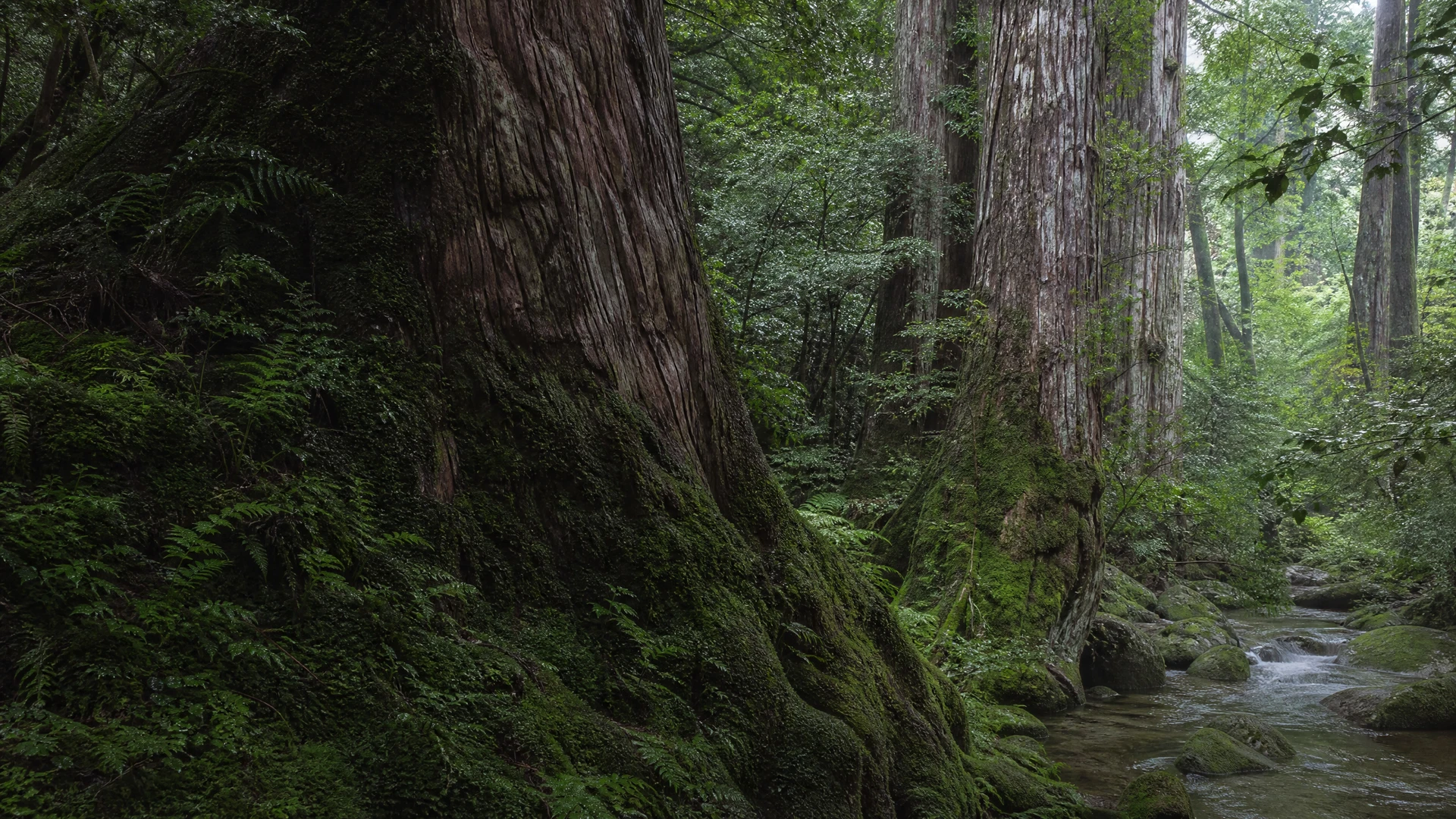
To step onto the shores of Yakushima is to enter a dialogue with water in all its multifaceted forms. The island, a jagged emerald tooth rising from the East China Sea, does not merely receive rain; it breathes it and eventually dissolves into it. Here, the air is a silvered weight that clings to the skin, carrying the sharp scent of high-altitude granite and the sweet perfume of fallen needles. It is a place where the concept of a clear sky feels like a half-forgotten myth, replaced by a shifting tapestry of mist that dances between the ancient boughs of trees that have watched the world change from their vertical fortress. The sound of the island is a constant hum of rushing streams and the rhythmic patter of droplets, a percussive symphony that dictates the slow, deliberate pace of everything that lives and dies within this verdant cathedral.
The island’s geography is a masterclass in compressed ecological diversity, a vertical journey that spans the distance from the subtropical to the subalpine in the space of a single afternoon’s climb. At the coast, the landscape is a riot of banyan trees and lush ferns, where the warmth of the Kuroshio Current fosters a vibrant, almost aggressive growth that feels immediate and ephemeral. Yet, as one ascends the steep, winding trails toward the interior peaks, the air thins and cools, and the vegetation undergoes a profound transformation. The broad-leafed evergreens give way to the somber, towering presence of the Japanese cedar, known locally as sugi. This transition is not merely a change in species but a shift in the very tempo of existence. The higher you climb, the older the world becomes, until you find yourself standing in the presence of giants that were already ancient when the first maps of these waters were being drawn by hand on parchment.
The secret to the longevity of these forests lies, paradoxically, in the poverty of the soil. Yakushima is essentially a massive dome of granite, a hard and unforgiving foundation that offers little in the way of nutrients to the life that clings to its surface. In most other environments, a tree would grow quickly, reaching for the sun with a soft, porous wood that would eventually succumb to the inevitable march of rot and decay. But on this island, the sugi are forced to grow with an agonizing slowness, adding mere millimeters to their girth each year as they struggle to extract sustenance from the thin layer of organic matter that blankets the stone. This hardship produces a wood of incredible density, saturated with a high concentration of resin that acts as a natural preservative against the constant moisture. It is this internal fortitude, born of scarcity and struggle, that allows the trees to endure for millennia, standing firm against the typhoons and the relentless passage of time.
To be classified as a Yakusugi, a cedar must have survived for at least a thousand years, a milestone that serves as the entry point into a fraternity of elders. Those that have not yet reached this venerable age are known as kosugi, or small cedars, though even they often possess a stature that would dominate any mainland forest. The distinction is more than just a matter of chronology; it is a recognition of a specific kind of resilience forged through centuries of patient endurance. Walking among the Yakusugi, one is struck by the sheer physical weight of their history. Their trunks are not smooth but gnarled and twisted into fantastic shapes, covered in a thick armor of bark etched by the elements into a complex topography. They are not merely trees; they are living chronicles of every storm, every drought, and every season of plenty that has passed over the island since the dawn of recorded history.
If the cedars are the island’s bones, then the moss is its skin, a lush mantle that softens the harsh edges of the granite and weaves the forest into a single, cohesive whole. There are hundreds of species of bryophytes here, ranging from delicate plumes to thick, spongy cushions that hold many times their weight in water. In the ravines of Shiratani Unsuikyo, the moss is so pervasive that it seems to swallow the light, creating a world of deep, saturated greens that feels more like an underwater kingdom than a terrestrial forest. Every surface is claimed by this emerald tide—the boulders, the fallen logs, and even the trunks of the living trees are draped in velvet. This is the landscape that inspired ethereal visions of legendary animators, a place where the boundary between the real and the mythical feels thin. To walk here is to tread softly on a carpet of living history, where every step is cushioned by a layer of growth that has taken decades to form.
The forest floor is also a graveyard that doubles as a nursery, a testament to the island’s cyclical nature and its long, complicated relationship with humanity. During the Edo period, many of the great cedars were felled to produce roof shingles for the shogunate, their resinous wood prized for its ability to withstand the damp Japanese climate. Today, the massive stumps left behind by those ancient loggers remain, too large and heavy to be removed, slowly being reclaimed by the forest. These stumps, known as 'stump-homes,' often serve as the foundation for new life; seeds fall into the decaying wood, finding a rich source of nutrients that the granite soil cannot provide. Over time, these young trees grow their roots down and around the old stump, eventually straddling it like a wooden ghost. This phenomenon, known as 'stump-straddling,' creates a hauntingly beautiful architecture of interconnected generations, where the death of one giant provides the literal and metaphorical support for the next.
At the heart of this high-altitude sanctuary stands the Jomon Sugi, a tree so ancient that its exact age remains a subject of reverent debate. Estimates range from two thousand to over seven thousand years, a span of time that encompasses the entirety of modern human civilization. To reach it requires a grueling pilgrimage through the mist, a journey that strips away the distractions of the outside world and leaves the traveler alone with their own thoughts and the rhythmic sound of their breathing. When the tree finally emerges from the fog, it appears as a massive, convoluted mountain of wood, its surface a chaotic landscape of burls, knots, and deep hollows. Standing before it, one feels a profound sense of insignificance that offers a strange and comforting perspective. The Jomon Sugi has endured while empires have risen and crumbled, its silent presence a reminder that the true measures of time are not found in the ticking of a clock but in the slow, steady heartbeat of the earth itself.
The rain that feeds this ancient ecosystem is not a burden to be endured, but a life-giving force that defines the very essence of the island’s character. It is said that it rains thirty-five days a month on Yakushima, a poetic exaggeration that captures the reality of a place where moisture is the primary medium of existence. This constant downpour creates a landscape of ephemeral beauty, where thousands of temporary waterfalls cascade down the granite cliffs after a heavy storm, only to vanish as quickly as they appeared. The water flows through the forest in a complex network of crystal-clear streams and hidden subterranean channels, carving smooth basins into the rock and providing a constant, soothing soundtrack to the forest’s stillness. In this cycle of evaporation and precipitation, the island seems to be in a state of perpetual renewal, a closed loop where the sky and the earth are engaged in an endless, intimate embrace that sustains the ancient cedars and the delicate moss alike.
In the quiet intervals between the heaviest squalls, the forest reveals its more bashful inhabitants, the Yakushima macaques and the small, elegant sika deer that roam the misty slopes. These animals have evolved alongside the cedars, developing a unique relationship with the landscape that is characterized by a quiet, unhurried coexistence. The macaques, with their thick, silver-grey fur and expressive faces, can often be seen grooming each other on the mossy banks of the streams, their social bonds a stark contrast to the solitary grandeur of the trees. The deer, meanwhile, move through the undergrowth with a ghost-like grace, their slender legs navigating the tangled roots and slippery stones with an ease that seems almost supernatural. There is a profound sense of peace in watching these creatures navigate their world, a reminder that life, even in its most fleeting and fragile forms, finds a way to flourish in the shadows of the eternal.
As the trail finally leads back down toward the coast and the silver mist begins to thin, the weight of the forest does not lift so much as it settles into the bones of the traveler. Leaving Yakushima feels less like a departure and more like a slow awakening from a dream that was more real than the world to which one is returning. The memory of the rain, the scent of the resin, and the presence of the ancient cedars linger in the mind, a reminder of a place where time is measured in centuries rather than minutes. We live our lives in the frantic pursuit of the new and the immediate, yet here, in the heart of the moss-rich mountains, the true value of existence is found in the patient, enduring silence of the old. To have walked among the Yakusugi is to have glimpsed a version of the world that is both ancient and ever-changing, a sanctuary of resilience that continues to grow, one millimeter at a time, beneath the relentless, beautiful architecture of the rain.