Learn
The Green Memory of Gondwana
In the emerald twilight of the Daintree where the ancient breath of Gondwana still lingers among the primitive cycads and the heavy, humid air of the Queensland coast, we find a landscape that has stubbornly refused to surrender its primeval secrets to the march of modern centuries, standing instead as a living museum of deep time where the Eastern Kuku Yalanji people have walked for fifty thousand years as the rightful custodians of a kingdom that predates the very mountains themselves. This sanctuary of evolutionary endurance serves as a poignant reminder that while our human histories are but brief flickers in the darkness, the forest remembers the footsteps of giants and the slow, deliberate pulse of a planet that once looked entirely different, offering us a chance to listen to the whispers of ancestors who understood that to care for the land is to care for the soul of time itself.
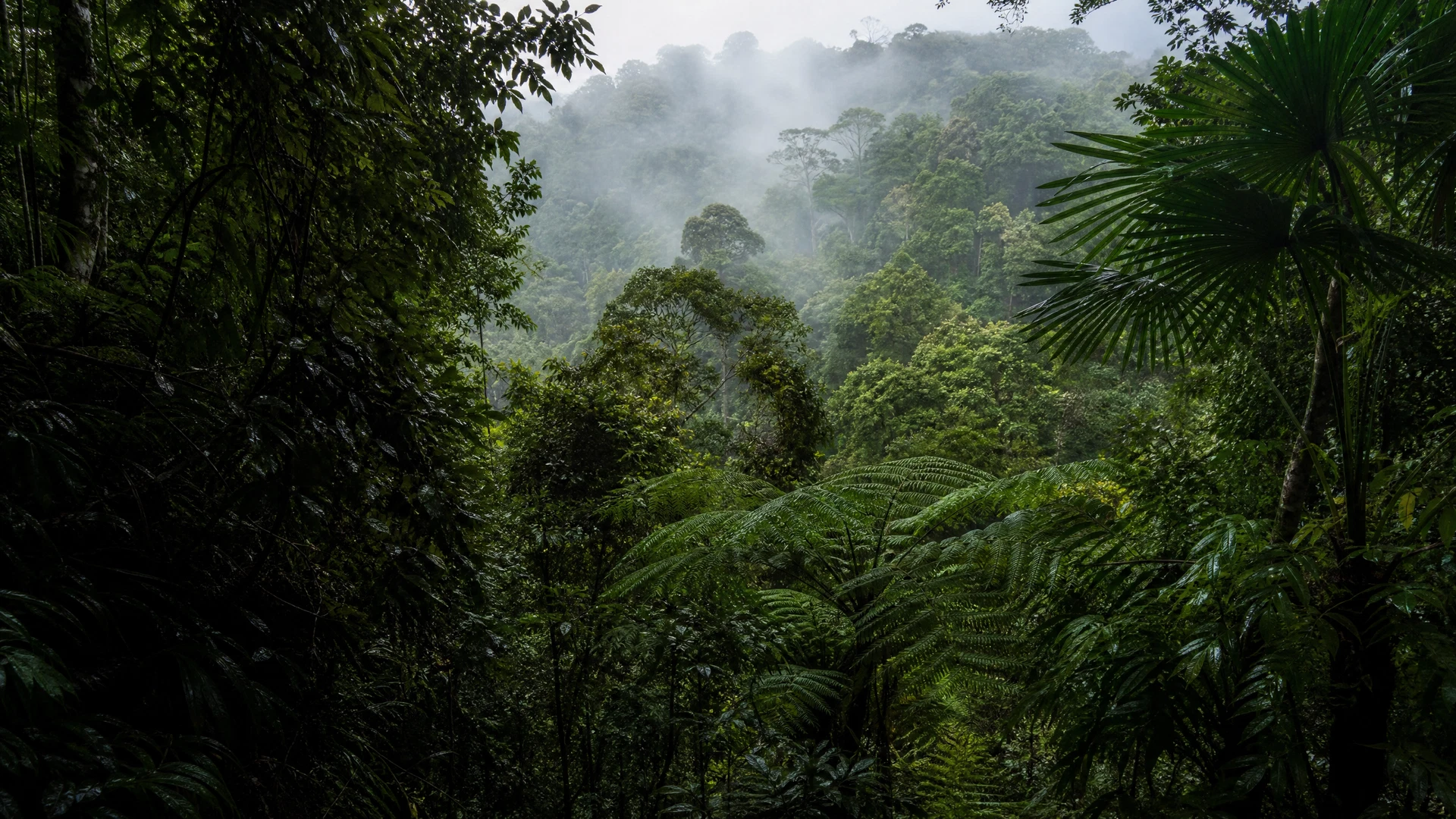
The air here does not just sit; it weighs, a thick and fragrant tapestry of damp earth and blooming epiphytes. To step into the Daintree is to abandon the linear progression of the twenty-first century and surrender to a vertical architecture of green that has remained largely unchanged for over one hundred and eighty million years. Sunlight arrives as a scattered, ethereal dust, illuminating the prehistoric ferns and the coiled fronds of cycads that look like Jurassic sketches. It is a place where deep time ceases to be an abstract theory and becomes a tangible reality. Here, the forest is a single, slow-breathing organism that has witnessed the dance of tectonic plates, holding its ground with a quiet dignity that makes the observer feel both infinitely small and profoundly connected to the lineage of the earth.
Beneath the towering silhouettes of the Bull Kauri, the forest floor is a nursery of evolutionary relics. The Idiospermum australiense, or Idiot Fruit, is a primitive flowering plant whose lineage stretches back to the dawn of the angiosperms, producing seeds so large they belong to a world of larger creatures. These botanical ancestors are living proof of the Daintree’s status as a refugium, a sanctuary where Gondwanan life persisted while the rest of the continent dried into the arid interior. To look upon these plants is to see the blueprints of the modern world. There is a wistful quality to their presence, a sense that they are the last keepers of a lost language, standing guard over a biological heritage that the rest of the planet has long since forgotten.
The ecology of the Daintree is a masterclass in interdependence, a web so tightly woven that every thread is vital. High above, the Bennett’s tree-kangaroo navigates mossy branches with a clumsy grace, embodying the forest’s ability to reshape life. On the ground, the musky rat-kangaroo, the smallest and most primitive macropod, scurries through the leaf litter, a living fossil unchanged since the Eocene. These creatures are active participants in the forest’s narrative, their lives linked to the fruiting cycles of the trees and the seasonal shifts of the tropical rains. The complexity is staggering, involving fungi that bridge root systems and insects that mimic dying leaves in a conversation that has been ongoing for millions of years, reminding us of the fragility of such ancient connections.
No figure is more emblematic of this continuity than the Southern Cassowary, a flightless sentinel whose azure neck evokes the specter of the theropod dinosaurs. As it moves through the undergrowth, the cassowary acts as the forest’s primary gardener, the only creature capable of dispersing the large seeds of over seventy species of rainforest trees. Without it, the Daintree would slowly lose its diversity, its grandest trees unable to cast their progeny beyond their own shadows. There is a haunting beauty in the bird’s booming call. To encounter a cassowary is to come face-to-face with the prehistoric, a reminder that the past is a persistent presence that continues to shape the trajectory of the living world through the simple, vital act of walking.
For the Eastern Kuku Yalanji people, the Daintree is not a wilderness but a living relative known as Bama, where the physical and spiritual realms are entwined. Their custodianship, spanning fifty thousand years, is built upon a profound understanding of the forest’s rhythms, recognizing the flowering of a tree as a sign of seasonal change. This relationship is governed by reciprocity, viewing the human presence as an essential component of the ecosystem’s health. The stories of the Kuku Yalanji are etched into the landscape, creating a cultural map that guides the community. There is a deep wisdom in this perspective, recognizing that the people belong to the forest, bound by a sacred duty to protect the bubul, the life-force that sustains all things and connects the ancestors to the living.
The Kuku Yalanji worldview sees time not as a line but as a circular reality where ancestors remain present in the rustle of leaves. This continuity was affirmed in 2021, when the Daintree National Park was formally returned to the Eastern Kuku Yalanji in a historic hand-back ceremony. This restoration was a formal acknowledgement that the rightful guardians were finally given the authority to manage their country according to their own laws. The wistfulness of the past century has begun to give way to a new era of collaborative management, where traditional knowledge is integrated with modern science. It is a testament to the resilience of a culture that has endured through the cataclysms of colonization just as the forest has endured through the shifts of geological ages, proving that justice and ecology can walk hand in hand.
Walking through Mossman Gorge, where clear waters tumble over ancient granite boulders, one can feel the weight of this restored balance. The granite itself is a reminder of the forest’s foundation, stone forged in the earth’s interior and pushed to the surface over hundreds of millions of years. The Kuku Yalanji believe the spirits of their ancestors reside in these rocks, watching over the Bama and ensuring the old ways are not forgotten. This spiritual geography is as vital to the forest’s health as the rain, providing a framework for interaction that prioritizes long-term sustainability. To listen to the stories told by elders in the shade is to realize the Daintree is a library of living history, where every plant is a character in a narrative that began long before the pyramids.
Despite its appearance of invincibility, the Daintree is a fragile kingdom, vulnerable to the pressures of climate change and invasive species that threaten its ancient equilibrium. Rising temperatures and shifting rainfall patterns pose a challenge to a forest that has relied on a stable environment for millions of years. Yet, there is a remarkable resilience in this landscape, a capacity for regeneration that has allowed it to survive previous upheavals. The forest’s ability to retreat into deep gullies where moisture lingers is a strategy that has served it well throughout the millennia. There is a quiet hope in the way a fallen giant becomes the foundation for new life, its decaying trunk providing nutrients for seedlings to reach toward the light, ensuring the cycle of growth remains unbroken even as the world around it changes.
The night in the Daintree brings a different magic, a world of bioluminescent fungi that glow with a ghostly light and nocturnal creatures that reclaim the forest floor. The Boyd’s forest dragon, a master of camouflage, becomes a silent hunter in the shadows, its prehistoric features illuminated by the silver glow of the tropical moon. The air is filled with the calls of owls and the rustle of flying foxes as they feast on seasonal fruits, their movements contributing to the constant exchange of energy that defines the rainforest. In the darkness, the boundaries between the self and the environment dissolve, leaving the observer with a sense of being part of something vast and ancient. This is the hour of the spirits, when the forest speaks in a language of clicks and whistles, inviting those willing to listen to step into the heart of the mystery.
The Daintree River, a winding ribbon of water, serves as both a boundary and a connector, carrying the lifeblood of the mountains down to the Coral Sea. Its banks are lined with mangroves, their roots providing a nursery for fish and a sanctuary for saltwater crocodiles that have patrolled these waters since the Gondwanan swamps. The river is a place of transition, where fresh water meets the salt of the ocean, creating a unique environment that supports a staggering diversity of life. For the Kuku Yalanji, the river is a source of food, a highway, and a sacred site holding stories of the Rainbow Serpent. The beauty of the river at dawn, when mist rises from the water and the first light turns the surface to gold, is a sight that stays with the traveler, a reminder of the enduring power of the natural world.
As one prepares to leave the Daintree, there is a lingering sense of reluctance, a desire to stay longer in the presence of such ancient wisdom. The forest does not give up its secrets easily, requiring patience and a willingness to see the world through a lens not centered on the human experience. It offers a perspective that is both humbling and exhilarating, a reminder that we are part of a much larger story, bound to the earth by ties of blood and memory. The wistfulness felt upon departure is not sadness, but a deep appreciation for the persistence of life and gratitude that such a place still exists in a world dominated by the ephemeral. The Daintree stands as a beacon of what is possible when we honor the past, a living testament to the enduring power of the green memory of Gondwana.
Ultimately, the Daintree is a reminder that the earth is a dynamic and living presence that requires our care and respect. The Eastern Kuku Yalanji have known this truth for fifty thousand years, and their return to custodianship is a hopeful sign that we are beginning to listen to the voices that understand the language of the land. As the sun sets over the canopy, casting long shadows, the Daintree settles into another night of growth and remembrance, its ancient pulse beating in time with the stars. We are but visitors here, flickers of light in the long dream of the forest, but if we are careful, we can carry a piece of that dream with us. The forest needs us to remember how to live in harmony with it, to honor the deep-time legacy it carries in every leaf, root, and breath.