Learn
The Resilient Silence of Lawetlatla
In the wake of the catastrophic 1980 eruption that fundamentally reconfigured the Pacific Northwest skyline and reduced a once-symmetrical volcanic peak to a hollowed-out monument of geological power, the subsequent decades have witnessed a quiet and persistent reclamation by the natural world, a process where the initial devastation has slowly transitioned into a vibrant mosaic of pioneering life forms that thrive amidst the pumice and ash. This enduring transformation serves as a poignant reminder that even the most violent geological upheavals are merely chapters in a much longer narrative of ecological resilience, where the ghosts of the old forest provide the necessary foundation for a new, unexpected wilderness to emerge from the gray remnants of the past.
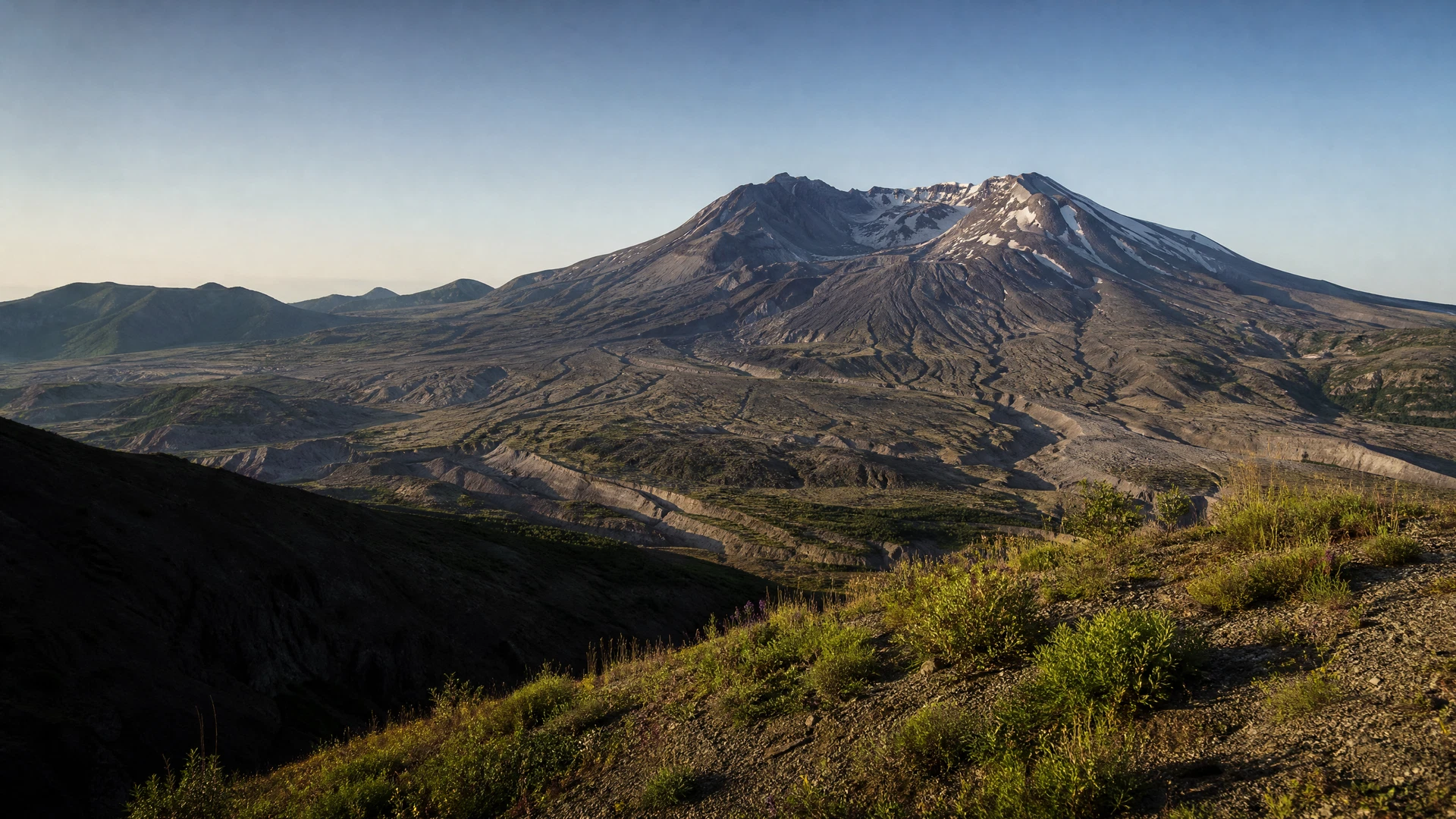
Before the sky turned the color of bruised iron on that Sunday morning in May, the mountain known to the Cowlitz people as Lawetlatla stood as a testament to frozen symmetry, its snow-capped cone a familiar anchor in the Cascades. For generations, the peak was a postcard of permanence, a jagged tooth of white and blue that seemed as immovable as the history of the land itself. Families gathered at the edge of Spirit Lake to watch the reflection of the volcano dance on the water’s surface, while climbers sought its summit for the clarity of the view. There was a profound stillness in the old-growth forests that draped its lower slopes, a cathedral of Douglas fir and hemlock that had stood for centuries. The air was often crisp with the scent of pine and the promise of a quiet spring, giving no hint of the violent awakening brewing beneath the surface of the earth.
The transition from peace to pandemonium occurred with a suddenness that defied the slow rhythm of geological time, beginning with a massive landslide that sent the mountain’s north flank cascading into the valley below. In an instant, the pressure that had been building for months was released in a lateral blast, a searing wave of hot gas and pulverized rock that leveled everything in its path for miles. Great trees that had stood for generations were snapped like matchsticks, their trunks laid out in rows tracing the direction of the wind’s fury. Spirit Lake was transformed into a steaming cauldron of debris, its water displaced by the avalanche and its surface soon covered by a vast mat of thousands of logs, a ghost forest floating on a sea of ash. The sky was swallowed by a plume of gray that rose miles into the atmosphere, casting a shadow that turned day into a suffocating, gritty night.
In the immediate aftermath, the landscape was a monochrome study in desolation, where the vibrant greens and deep blues of the mountain were replaced by a uniform, oppressive gray. To the human eye, it appeared that life had been extinguished entirely, leaving behind a moonscape of pumice and silence that felt fundamentally hostile to anything that breathed. The heat had been so intense and the burial so deep that it seemed impossible for anything to have survived the initial fury. The silence was not the peaceful quiet of the old forest but a heavy, hollow absence that spoke of a world that had been erased. Yet, beneath this veneer of total destruction, the first seeds of a new narrative were already beginning to stir, hidden in the very places that seemed most devastated by the fire and the stone.
The first signs of resilience were found not in the arrival of new life from afar, but in the survival of the small and the hidden, the biological legacies that had weathered the storm in subterranean depths. Northern pocket gophers, tucked away in their burrows beneath the reach of the heat, emerged into the gray light to find a world they no longer recognized. Their instinctive need to tunnel and churn the earth became a vital engine of recovery, as they brought buried seeds and nutrient-rich soil to the surface, breaking the crust of the ash and creating small islands of possibility. In lakes that had been covered by ice and snow, fish and amphibians survived the initial blast, waiting for the spring thaw to reclaim their place in the changing ecosystem. These survivors were the quiet architects of the mountain’s rebirth, proving that the roots of the past were deeper than the reach of the fire.
As the years began to stack upon one another, the pumice plain began to host the first of the pioneers, the hardy species that could thrive where others could not. Among these, the prairie lupine stood as a beacon of hope, its purple spikes of flowers appearing like small miracles against the gray backdrop of the ash. These plants were more than just a visual contrast; they were chemical engineers, fixing nitrogen from the air into the sterile soil and paving the way for more complex life to follow. Each lupine that took root was a testament to the slow, iterative process of succession, a reminder that the recovery of a landscape is a marathon of small, persistent victories. The return of the lupines brought with it the return of insects, which in turn attracted birds, slowly reweaving the intricate web of life that had been torn apart in a single morning.
The transformation of Spirit Lake remains a poignant chapter in the mountain’s recovery, as the "black broth" of the post-eruption days slowly cleared to reveal a vibrant ecosystem. The massive log mat that still floats on its surface is a lingering ghost of the old forest, a floating graveyard that provides habitat for aquatic life and serves as a reminder of the scale of the destruction. Beneath the logs, the water has become a sanctuary for fish and microorganisms, their presence a sign that even the most traumatized environments can find a new equilibrium. The lake is no longer the pristine mirror it once was, but it has become something perhaps more remarkable: a living laboratory where the processes of life are laid bare. The water reflects not just the mountain’s jagged rim, but the enduring capacity of nature to adapt and persist in the face of profound change.
On the higher slopes, the return of larger animals has signaled a new phase in the mountain’s ecological journey, as elk and deer have begun to navigate the hummocks and valleys created by the eruption. These creatures are not just visitors; they are active participants in the recovery, their movements dispersing seeds and their grazing shaping the growth of new vegetation. The sight of an elk herd moving across the pumice plain, their silhouettes sharp against the backdrop of the steaming crater, is a powerful image of the mountain’s transition from a site of disaster to a thriving wilderness. The animals bring a sense of motion and purpose back to a landscape once defined by its stillness, their presence a reminder that the wild does not wait for permission to return to the places it once called home.
The human relationship with the mountain has also undergone a profound shift, as the initial shock and grief of the 1980 eruption have matured into a deep respect for the power of the earth. For the Cowlitz and Klickitat peoples, the mountain has always been a sacred presence, a place of story and spirit that transcends the temporary fluctuations of geological activity. The name Lawetlatla, meaning "the smoker," reflects a long-standing understanding of the mountain’s true nature, viewing the 1980 event not as an anomaly but as a natural part of a much larger cycle. For the descendants of those who lived through the eruption, the mountain is a site of memory and reflection, a place where the loss of friends and family is intertwined with the awe-inspiring spectacle of the earth’s creative and destructive forces.
As we look toward the future, the mountain continues to change, its crater floor rising as a new dome of rock grows from the heat within. This ongoing activity is a reminder that the story of Mount St. Helens is far from over, and that the recovery we witness today is merely a snapshot in a process that will continue for centuries. The young forests of alder and willow that now line the stream banks are the precursors to the great conifers that will one day return to the slopes, a slow-motion transformation that requires a patience far beyond the human lifespan. There is a certain wistfulness in watching this process, a realization that we are witnessing the birth of a new world even as we mourn the loss of the old one. The mountain stands as a monument to the beauty of impermanence, a place where the gray ash of the past is being slowly overwritten by the green promise of the future.
The lessons learned on the slopes of Mount St. Helens have resonated far beyond the Pacific Northwest, providing a new understanding of how ecosystems respond to catastrophic disturbance. The discovery that life can persist in the most unlikely of places has shifted the way we think about conservation and restoration, emphasizing the importance of natural processes and the resilience of the wild. The mountain has become a classroom where the curriculum is written in the language of lupines and gophers, a place where the smallest of creatures can teach us the most profound truths about survival. It is a landscape that demands our attention and our humility, reminding us that we are merely guests in a world that is constantly being remade by forces far greater than ourselves.
In the end, the story of the mountain is not one of tragedy, but of a quiet and enduring grace that emerges from the wreckage of the past. The wistful beauty of the landscape lies in its contradictions: the jagged, broken rim of the crater set against the soft, emerging greenery of the valleys; the memory of the fire held in the cold, clear waters of the lakes. It is a place where the ghosts of the old forest and the pioneers of the new wilderness exist in a delicate, shifting balance, a testament to the fact that nothing is ever truly lost, only transformed. As the sun sets over the mountain, casting long shadows across the pumice and the pines, there is a sense of peace that settles over the land, a quiet acknowledgment that the cycle of life and death, of ash and bloom, is the most fundamental rhythm of the world we inhabit.