Learn
The Weight of Waking Earth
For centuries, the Reykjanes Peninsula remained a landscape of hushed whispers and silvered moss, a place where the Atlantic winds scoured the ancient lava fields into a stillness that felt eternal, yet the recent splintering of the crust has transformed this quiet corner of Iceland into a vivid theatre of geological rebirth. As the fires of the Sundhnúkur crater row and the fissures of Fagradalsfjall rewrite the topography of the coast, the residents of Grindavík find themselves navigating a profound and wistful displacement, caught between the warmth of the homes they were forced to abandon and the cooling, jagged beauty of a world that is literally being born anew beneath their feet.
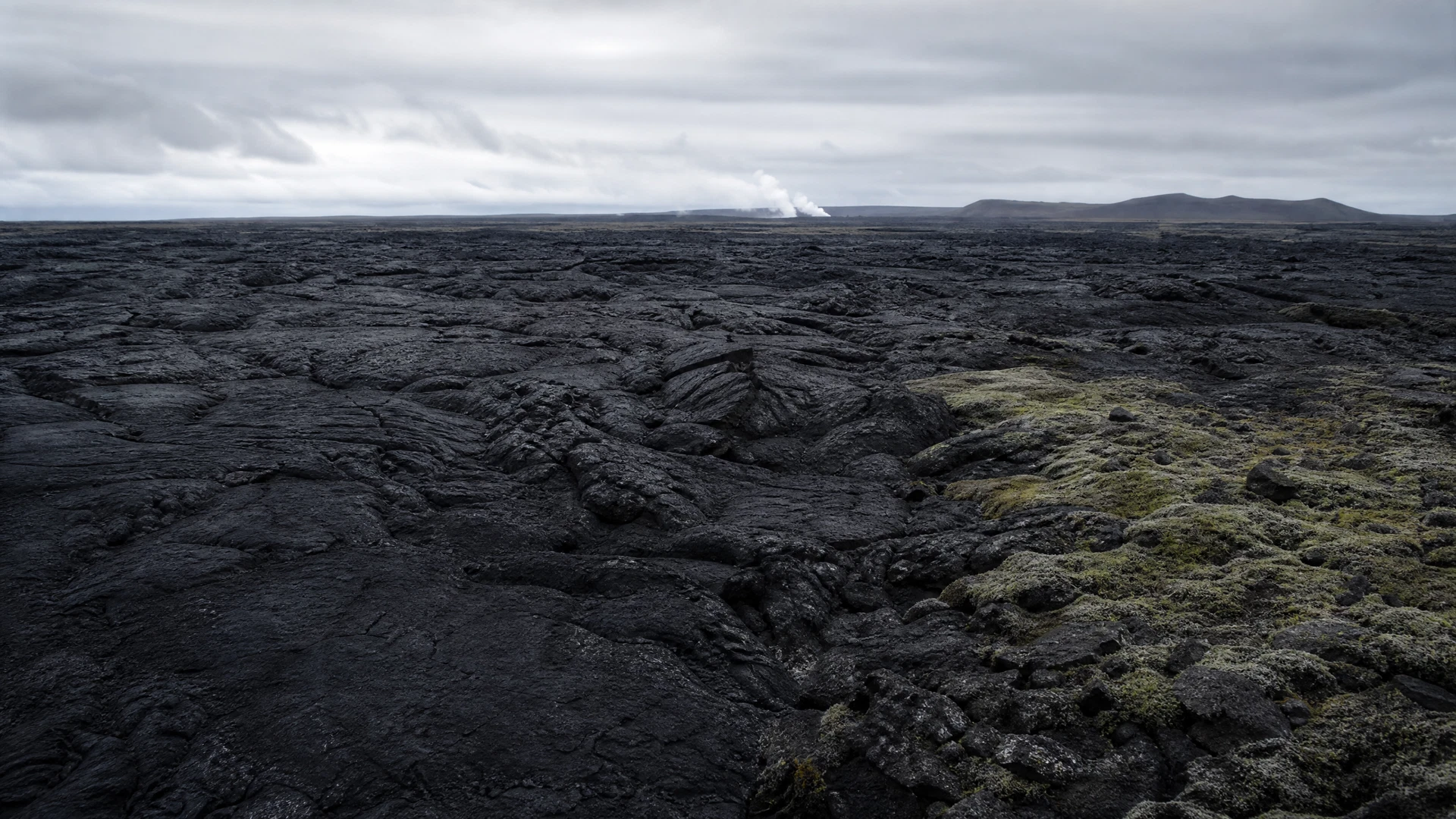
There is a specific kind of silence that belongs to the Reykjanes Peninsula, a weight of stillness that feels as though the earth itself is holding its breath against the relentless scouring of the North Atlantic gales. For nearly eight hundred years, this corner of Iceland was defined by vast, undulating fields of grey-green moss, a soft carpet concealing the jagged, obsidian bones of ancient eruptions long since cooled into memory. To walk across these plains was to move through a landscape of ghosts, where the only movement was the swaying of hardy grasses and the occasional steam rising from a geothermal vent, a quiet reminder that the heart of the world was still beating far below. People built their lives on the assumption of this permanence, carving out fishing villages in the shadow of mountains that seemed to have forgotten their fiery origins, trusting in the solidity of the basalt and the predictable rhythm of the tides. But the land here is not static; it is a participant in a geological conversation that spans millennia, and in the spring of 2021, that conversation suddenly and violently resumed.
The first rupture at Fagradalsfjall was less an explosion and more an unfolding, a gentle but insistent tearing of the mossy skin that allowed the molten core of the peninsula to spill into the light of the midnight sun. It began as a curiosity, a "tourist eruption" that drew thousands to the hillsides to witness orange-gold rivers snaking through the valleys of Geldingadalir. There was a strange, festive wistfulness to those early days, a sense of wonder at being present for the birth of new land, as if watching the first days of the planet’s creation play out in real-time. The air smelled of sulfur and scorched earth, a primitive scent that awakened something ancient in the onlookers who sat on the cooling ridges, warmed by the radiant heat of the lava. Yet, beneath the spectacle lay a growing realization that the peninsula had entered a new epoch of activity, one that would not be content to remain in the uninhabited highlands, but would eventually seek the paths toward the settlements that clung to its edge.
Fissure eruptions possess a unique, haunting beauty that differs from the catastrophic peaks of stratovolcanoes; they are long, jagged wounds in the earth that weep fire in curtains of liquid gold. These shimmering walls of heat dance against the bruised purple of the Icelandic sky, casting long, flickering shadows across the blackened plains. There is no central crater, only the relentless, rhythmic pulsing of magma as it surges from the depths, creating new topography with every passing hour. The resulting lava fields are a chaotic jumble of ropey pahoehoe and sharp, crumbling aa, a terrain so alien it feels as though it belongs to another world. Watching the lava advance is a lesson in patience and power, as the glowing front consumes everything in its path with a slow, crunching sound that resembles the breaking of glass, signaling the end of one landscape and the incandescent beginning of another.
For the people of Grindavík, a town built on the wealth of the sea and the stability of the shore, the volcanic awakening was not a spectacle but a slow-motion encroachment on the very idea of home. Grindavík was a place of sturdy houses and brightly colored fishing boats, a community where the smell of drying fish mingled with the salt spray and the laughter of children playing in the streets. It was a town that understood the ocean’s dangers—the unpredictable storms and freezing depths—but it had never considered the ground beneath its feet to be a threat. The residents were descendants of those who had weathered centuries of isolation, possessing a resilience deep as the basalt pillars of the coast. They lived in harmony with the geothermal heat that warmed their homes, never imagining that the same subterranean energy would one day rise up to reclaim the land they had so carefully cultivated over generations of labor.
The transition from peace to peril arrived with a series of rhythmic, bone-deep tremors that began to fracture the streets and tilt foundations in the dark months of late 2023. By November, the earth was no longer a solid platform but a fragile crust stretched over a migrating dike of magma that groaned and pushed against the surface with terrifying intensity. The sudden evacuation of Grindavík was a haunting exodus, a town of thousands reduced to silence in a matter of hours as families packed what they could and fled into the winter night. The streets, once vibrant with the daily routines of a bustling port, were left to the wind and the widening cracks that tore through gardens like jagged lightning. It was a displacement defined by profound uncertainty, a wistful looking back at a life that was still physically there, yet fundamentally altered by the invisible river of fire flowing just a few hundred meters below the pavement.
When the lava finally broke the surface near the Sundhnúkur crater row, it did so with a devastating proximity that turned the abstract threat into a scorching reality for the displaced residents. In the early weeks of 2024, the fire reached the outskirts of the town, its glowing fingers touching the wooden fences and neat lawns of the northernmost houses. To witness a home being consumed by lava is to watch the erasure of a lifetime’s memories by a force indifferent to human history; the fire does not burn so much as it absorbs, turning the domestic into the geological. There is a specific sorrow in seeing the steam rise from a garden as the molten rock rolls over it, a final, quiet sigh of a place that will never again be walked upon by human feet. The cooling stone becomes a monument to what was lost, a heavy, black shroud that preserves the shape of the town while rendering it forever inaccessible.
Despite the physical destruction and the scattering of the community, there remains a stubborn, wistful connection between the people of Grindavík and the land that has betrayed them. They gather in community centers across the island, sharing stories anchored in a past that feels increasingly distant, yet remains the core of their identity. There is a collective grief for the small things—the specific view of the harbor from a kitchen window, the way the light hit the mountains in autumn, the familiar creak of a neighbor’s gate. They are a community in exile, navigating the complexities of insurance claims and temporary housing while their hearts remain tethered to a coastline being reshaped by the minute. This resilience is not loud, but a quiet, enduring grace, a commitment to carrying the spirit of their town forward even if the physical streets are eventually buried under a kilometer of new basalt.
The ecology of the peninsula is also a casualty, particularly the ancient moss that has taken centuries to soften the harsh edges of previous eruptions. This moss, known as Hraunskegg, is a pioneer species that clings to the rock with a delicate tenacity, creating a micro-ecosystem that supports life in a landscape otherwise devoid of it. When the new lava flows, it incinerates this green mantle in an instant, leaving behind a sterile, blackened void that will not see the return of the moss for another hundred years. There is a deep melancholy in the loss of this soft texture, a realization that the landscape we knew is gone for a duration that exceeds a human lifespan. The peninsula is being reset to zero, returning to a state of raw infancy that serves as a stark reminder of the fleeting nature of our existence compared to the slow, grinding cycles of the earth’s crust.
In the midst of this upheaval, the industrial heart of the region—the Svartsengi power plant and the Blue Lagoon—has become a fortress of human ingenuity against the advancing tide of fire. Massive earthen ramparts have been bulldozed into place to divert the lava flows away from the critical infrastructure that provides heat and water to the entire peninsula. There is something surreal about these barriers, a desperate attempt to use the earth itself to defend against the earth’s fury. The workers who maintain these defenses move through a landscape of steam and heavy machinery, their efforts a testament to the necessity of adaptation. The Blue Lagoon, once a symbol of serene relaxation, now sits in the shadow of these great walls, its milky blue waters a stark contrast to the scorched blackness of the new lava fields that loom just beyond the perimeter.
Ultimately, the eruptions on the Reykjanes Peninsula are a profound meditation on the concept of home and the inherent fragility of our relationship with the natural world. We tend to view the earth as a backdrop for our lives, a stable stage upon which we play out our small dramas, but the fire in Iceland reminds us that the stage itself is a performer, capable of changing the script without warning. There is a haunting beauty in this realization, a wistful acceptance that we are part of a larger process that cares little for our boundaries or our buildings. As the sun sets over the smoking fissures, casting a long, golden glow across the new land, there is a sense of awe that balances the sorrow of the loss. We are witnesses to the earth’s renewal, a process that is both terrifying and magnificent, leaving us to find our way in a world where the only thing truly permanent is the spirit of the people who continue to love a land that is always, inevitably, in flux.