Learn
The Black Mother of the Mediterranean
High above the shimmering turquoise of the Ionian Sea, the rugged and soot-stained slopes of Mount Etna serve as a living testament to the fragile coexistence between a resilient Sicilian community and the temperamental giant they affectionately call Mamma, a relationship defined by the paradox of fertile black soil that yields the world’s most exquisite harvests and the ever-present threat of molten fire that can reclaim it all in a single, thunderous breath. This wistful exploration delves into the quiet persistence of the farmers and villagers who dwell within the reach of the plume, weaving a narrative of ancestral heritage, the bittersweet beauty of transience, and the enduring spirit of a people who have learned to find grace in the shadow of a mountain that both sustains and consumes their very existence.
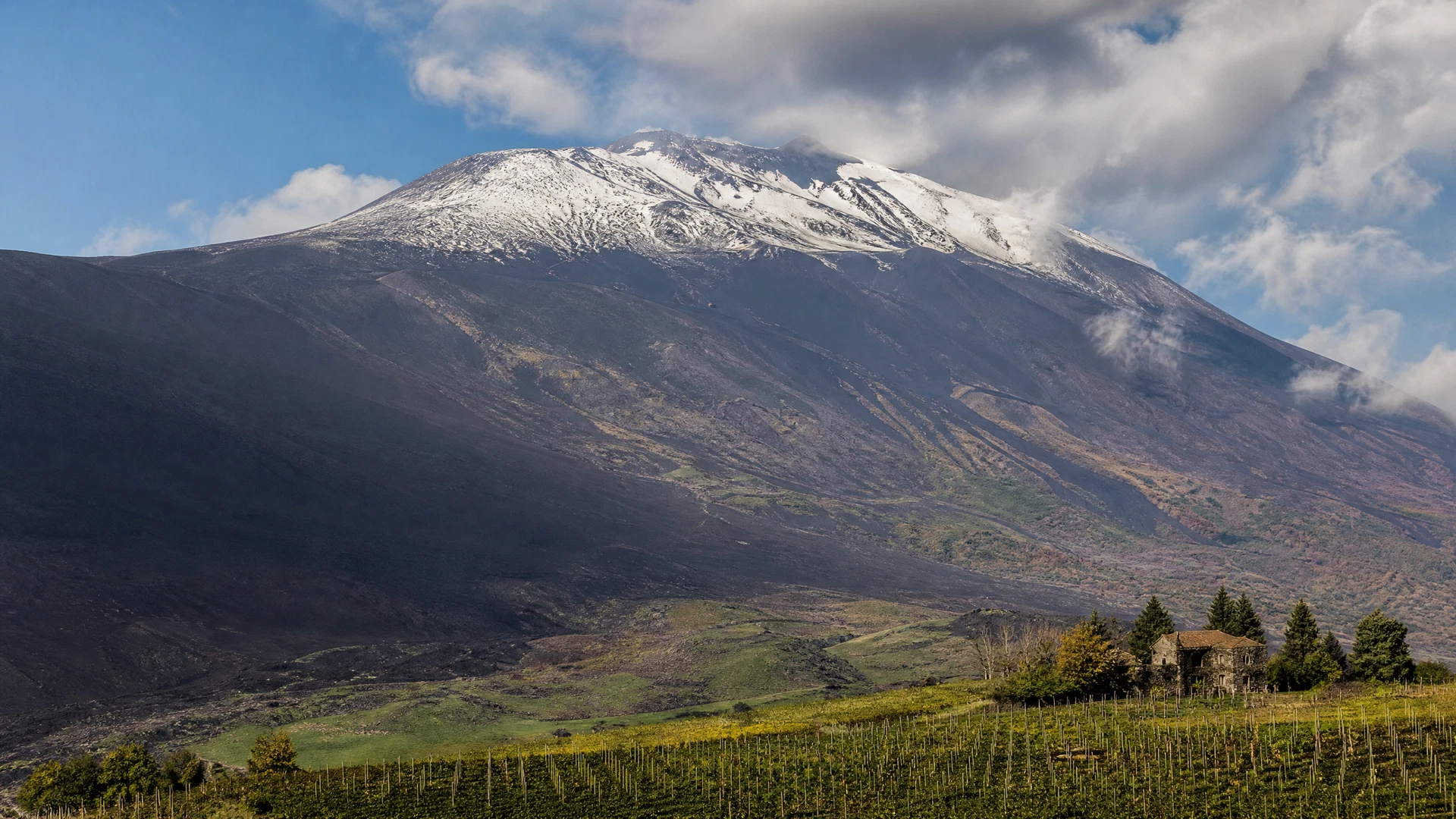
To look upon the silhouette of Mount Etna from the sun-drenched streets of Catania is to witness a conversation between the heavens and the underworld that has remained uninterrupted for millennia. The mountain dominates the consciousness of every living thing within its shadow, a sprawling titan draped in a perpetual veil of white steam and dark ash. There is a profound wistfulness in the way the morning light catches the jagged edges of the ancient lava flows, turning the scorched stone into a palette of bruised purples. For the Sicilians who call this landscape home, the volcano is a living matriarch known as Mamma Etna. She demands a unique devotion, a quiet acceptance that life here is lived on a geological clock that ticks much slower than the modern world, reminding us that even the most permanent structures are but fleeting marks on a restless earth.
The ground beneath one’s feet on the lower slopes is a rich and crumbly terra nera that feels like velvet and smells of ancient fires. This volcanic soil is the mountain’s greatest gift, a mineral-heavy bounty that has sustained generations of farmers who refuse to abandon the precarious ridges even when the earth begins to tremble. Here, the vineyards of Nerello Mascalese climb toward the clouds, their gnarled roots digging into the basalt to extract a flavor that is both saline and smoky, a liquid history of the eruptions that came before. There is something moving about the sight of a farmer tending to his vines amidst the ruins of a stone wall half-swallowed by a flow from decades ago, a testament to the belief that beauty can be coaxed from the heart of destruction. It is a landscape of contradictions, where the most fertile gardens are born from violent deaths, and every glass of wine carries the bittersweet ghost of the fire.
As one ascends through the mid-level forests of chestnut and oak, the air changes, losing the salty tang of the sea and taking on the sharp scent of the ginestra, the yellow broom flowers that bloom with a defiant brightness against the black rock. The ginestra is the poet’s flower of the volcano, a symbol of resilience that finds a way to take root in inhospitable crevices, offering a honeyed perfume that masks the sulfurous breath of the summit. The sound of the mountain at this height is a low, rhythmic thrumming, a subterranean heartbeat that vibrates in the soles of your boots and tells stories of the molten rivers moving deep within the stone. It is a lonely sound, evoking a sense of longing for a time when the world was still being forged, yet it is also strangely comforting, a reminder that the earth is still alive and capable of creation, even if that creation comes at a terrible price.
The villages that cling to the flanks of the mountain, like Zafferana Etnea and Linguaglossa, are built from the very substance that once threatened to erase them. The dark basalt is everywhere—in the paving stones of the piazzas, the lintels of the doorways, and the soaring facades of the baroque churches that stand as monuments to a faith tested by fire. In these quiet squares, the elders sit on benches of cooled lava, their faces as weathered as the slopes themselves, watching the plume of smoke above with a weary, familiar respect. There is a collective memory here of the great eruptions, like the one in 1669 that reached the sea, and yet there is no desire to leave. To depart from the mountain would be to lose a part of one’s own soul, for the identity of the volcano people is inextricably bound to the temperamental giant that watches over their sleep.
Living with Mamma Etna requires a daily ritual of cleaning, a constant battle against the fine black sand known as lapilli that falls from the sky like a dark, gritty snow. It settles on the windowsills and crunches underfoot with a sound that is the literal percussion of the mountain’s activity. There is a quiet melancholy in the act of sweeping away the mountain’s latest offering, a recognition that no matter how much we build or how carefully we prune our gardens, the volcano will always have the final word. The ash is a reminder of our own fragility, a fine dust that coats the memories of the past and the hopes for the future, yet it is also the very thing that makes the lemons so sweet and the pistachios so intensely green. It is a cycle of labor that mirrors the cycle of the mountain itself, a constant process of clearing away the old to make room for the new.
In the high, desolate reaches where the vegetation finally gives way to the raw power of the craters, the world feels ancient and alien, a place where time has no meaning and the elements reign supreme. The silence here is absolute, broken only by the whistling of the wind across the cinder cones and the occasional boom of a distant explosion that echoes through the thin air. It is a place of stark, terrifying beauty, where the heat of the earth meets the cold of the sky, and where one can stand on the edge of the abyss and feel the immense weight of the planet’s history pressing down. There is a profound wistfulness in standing at the summit, looking down at the tiny lights of the towns below and realizing how small our dramas truly are in the face of such overwhelming force, a realization that brings a strange, liberating sense of perspective on what it means to be alive.
The sweetness of life on the volcano is captured in the honey of Zafferana, a golden elixir that tastes of the mountain’s wildflowers and the subtle edge of the volcanic air. To taste this honey is to understand the persistence of the bees and the people who keep them, finding sweetness in a landscape that is often harsh and unforgiving. There is a lingering sadness in the knowledge that a single shift in the mountain’s mood could bury these hives and the families that tend them, yet that very uncertainty is what gives the honey its value, making every drop a precious celebration of the present moment. It is a wistful kind of joy, one that acknowledges the shadow of the mountain even as it basks in the warmth of the Sicilian sun, a philosophy of living that prioritizes the beauty of the here and now over the illusory safety of a promised tomorrow.
History on Etna is not found in books but in the layers of the earth, in the distinct strata of lava that tell the story of the mountain’s changing temperament over the centuries. Each flow has its own character, some smooth like frozen rivers, others jagged and cruel like the teeth of a subterranean beast, and each represents a moment when the human world was forced to bow to the geological one. There is a wistful beauty in the way the older flows are slowly being reclaimed by the ginestra and the lichen, a soft green fuzz beginning to blur the edges of the dark stone, showing that even the most violent scars can eventually be healed by the slow, patient hand of time. It is a reminder that the mountain is always in a state of becoming, a work in progress that will continue long after our own stories have faded into the ash, a thought that is both humbling and peaceful.
As the sun begins to set over the Mediterranean, casting long, dramatic shadows across the Valle del Bove, the mountain takes on a different character, its plume glowing with a faint, internal light that hints at the fires burning within. The wistfulness of the evening is palpable, a sense of a day well-lived in the presence of a giant, and the quiet anticipation of what the night might bring. The farmers return to their homes, the scent of woodsmoke begins to drift through the villages, and the mountain settles into a deep, brooding silence that is never quite empty. We are all children of the volcano in a way, living on a planet that is still cooling and still shifting, and there is no place on earth that reminds us of this more poignantly than the black, beautiful slopes of Mamma Etna.
The mountain remains, a timeless witness to the fleeting human story. It has seen the rise and fall of empires, the changing of languages, and the slow evolution of the landscape, and through it all, it has continued to breathe its fire and ash into the sky. There is a deep, abiding peace in the realization that we are part of this grand, geological drama, even if our roles are small and our time on stage is brief. To live in the shadow of Etna is to embrace the beauty of the temporary, to love the land not in spite of its dangers but because of them, and to find a sense of belonging in a place that is always changing. As the stars appear over the summit, we are reminded that the fire that burns within the mountain is the same fire that drives the stars and the same fire that warms our own hearts, a connection that transcends time and space and leaves us with a sense of wonder that no amount of ash can ever truly extinguish.