Learn
The Quiet Heart of Kaluapele
In the shadow of the great Mauna Loa, where the earth breathes in rhythmic pulses of steam and sulfur, the story of Kīlauea unfolds not merely as a sequence of geological events recorded by sensitive instruments, but as a profound and enduring dialogue between the ancient spirits of the fire and the modern observers who stand at the precipice of a landscape that is constantly rewriting its own history through the slow, inevitable crawl of molten stone toward the sea. This feature explores the intersection of high-tech monitoring and deep-seated cultural reverence, capturing the wistful essence of a place where every new inch of land is born from the destruction of what came before, leaving behind a hauntingly beautiful tapestry of blackened earth and resilient life that speaks to the ephemeral nature of our existence upon this restless, living planet.
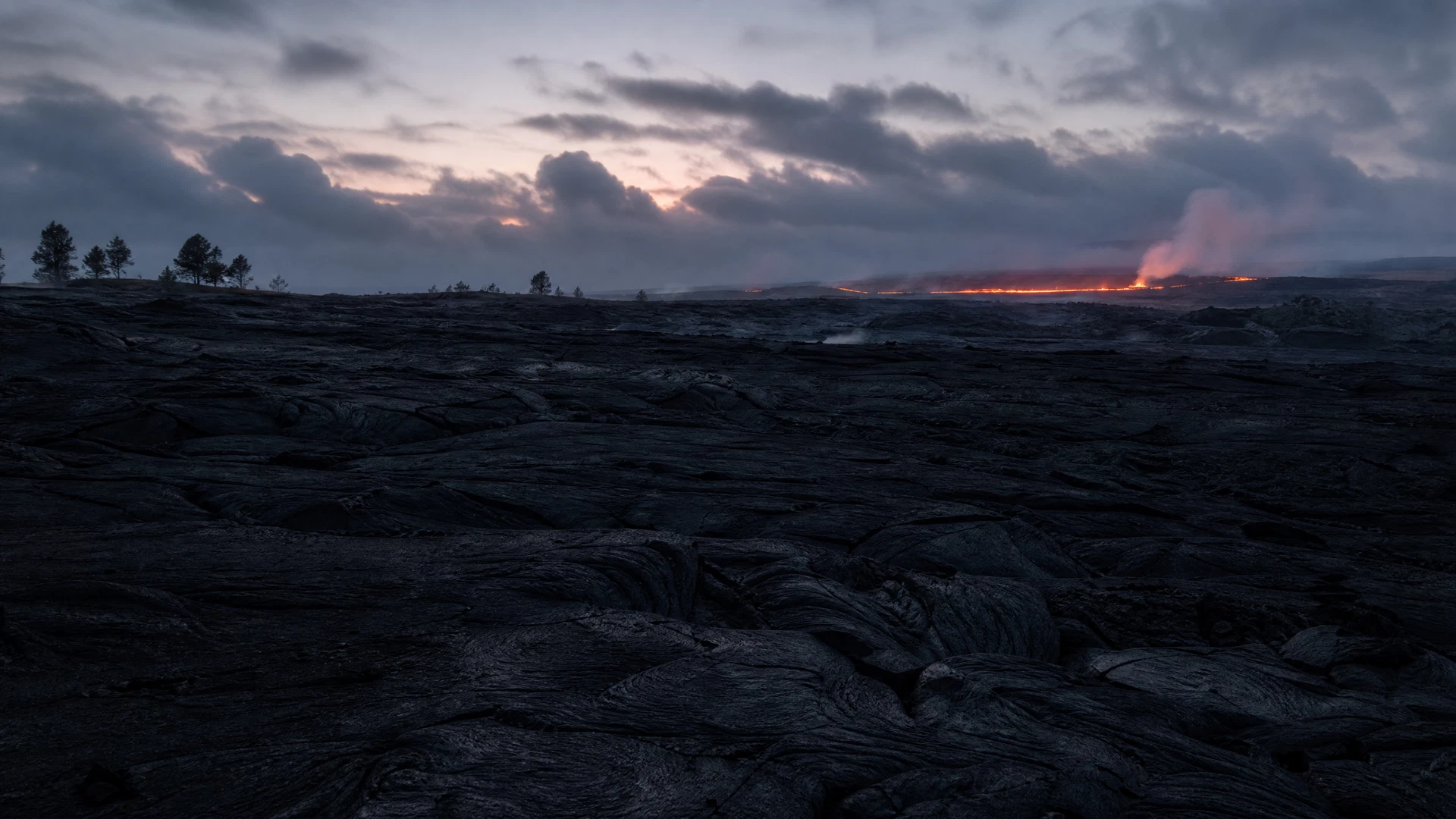
The air at the summit of Kīlauea carries a weight that is difficult to describe. It is a mixture of sulfurous breath and the sharp, metallic tang of minerals newly birthed from the mantle, a scent that lingers like a memory of a time before the atmosphere was kind. Here, in the vast Kaluapele caldera, the landscape does not sit still; it vibrates with a low-frequency hum that scientists track with precision, yet which the spirit senses as something far more primal. To look across the buckled floor of the crater is to witness a conversation between the past and the future, where jagged edges of old basalt are slowly reclaimed by the soft, green fingers of ferns and hardy ʻōhiʻa lehua trees. There is a profound wistfulness in this sight, a realization that the ground beneath our feet is merely a temporary arrangement, a brief pause in a geological process that cares little for the permanence we so desperately seek.
For over three decades, Kīlauea was defined by its relentless output, a steady stream of creation that added hundreds of acres to the island of Hawaiʻi. Those who lived through those years remember the glow on the horizon, a constant companion that signaled the presence of the fire goddess, Pele, as she moved across the land. The lava did not merely destroy; it paved over the old to make way for the new, swallowing forests and roads in a slow-motion tide of incandescent heat. There was a strange, melancholy beauty in the way the liquid stone draped itself over cliffs like heavy velvet, eventually meeting the ocean in a violent clash of steam and spray. This interaction created new black sand beaches and jagged capes, a landscape so raw it felt like the dawn of the world. Yet, for every acre gained, there was a sense of loss—a memory of the trails now buried under meters of solid rock, forever inaccessible.
Monitoring such a restless entity requires a delicate balance of detachment and intimacy. The volcanologists who interpret seismic swarms and ground deformation data are the modern translators of the volcano’s moods. Their instruments, buried deep in the flanks of the mountain, capture the subtle inflation of the summit as magma rises—a mechanical heartbeat that precedes the eventual rupture. There is a certain clinical distance in the charts and graphs, a way of ordering the chaos of the earth into something predictable. However, even the most seasoned scientist admits to a feeling of awe when the ground trembles in a way that sensors cannot fully quantify. It is a reminder that while we can map the plumbing of the volcano and predict the path of its flows, we are still merely observers of a power that operates on a scale far beyond our control. The data is a bridge, but the gap it spans is wide and filled with mystery.
In the traditional Hawaiian worldview, Kīlauea is a sacred space, the home of Pele, whose presence is felt in every wisp of steam and every tremor of the earth. The cultural context is one of deep respect and reciprocity, a recognition that the land is a living ancestor to be honored. When practitioners gather at the edge of Halemaʻumaʻu to offer chants and lei, they engage in a practice that has sustained their people for centuries, maintaining the balance between the human and the divine. This perspective offers a necessary counterpoint to the extractive nature of modern exploration, emphasizing the importance of listening to the land rather than just measuring it. There is a quiet dignity in the way the community approaches the volcano, a sense of stewardship that acknowledges the destructive power of the lava while celebrating its role as a bringer of new life. It is a relationship built on the understanding that to live here is to accept the earth’s terms.
Walking across a recent lava flow is an exercise in sensory overload. The surface, often referred to as pāhoehoe for its smooth texture or ʻaʻā for its sharp fragments, rings underfoot with a hollow sound, as if one is treading upon the hull of a great, buried ship. The heat still radiates from the cracks, a reminder that just a few feet below, the rock may still be glowing red. The "black ledge" left behind in the craters after a lava lake recedes serves as a grim watermark, a testament to the heights the molten stone once reached. There is a stark, monochromatic beauty to this environment, where the only colors are the deep blacks and grays of the basalt, occasionally interrupted by the iridescent shimmer of volcanic glass. In this harshness, one finds a peculiar kind of peace, a clarity that comes from being stripped of the distractions of the modern world. It is a physical manifestation of the volcano’s indifference to man.
Despite the apparent desolation, life is never far behind. The ʻōhiʻa lehua, with its grey bark and vibrant red blossoms, is often the first to take root in the cooling cracks. These trees are symbols of resilience, their seeds carried by the wind to find purchase in unlikely places. As they grow, they break down the rock, creating pockets of soil that eventually support a whole ecosystem of ferns and mosses. To see a single red flower blooming against a backdrop of endless black stone is a sight that evokes wonder and a touch of sadness, for it represents the beginning of a cycle that will eventually see the forest return, only to be threatened by the next eruption. This constant state of flux is the true essence of Kīlauea, a place where beginning and end are blurred into a single motion of becoming. The forest does not mourn its eventual burial, and the volcano does not celebrate its destruction; they simply exist in mutual necessity.
The 2018 collapse of the Halemaʻumaʻu crater floor was a moment of profound significance. For decades, the lava lake had been a visible manifestation of Kīlauea’s activity, a churning cauldron of fire that drew thousands to its rim. When the lake drained and the floor fell away, it felt as if the heart of the mountain had been hollowed out. The resulting landscape was unrecognizable—a jagged abyss that replaced the familiar glow with a dusty, silent void. This event was a stark reminder of the volcano’s capacity for sudden change, a shift that left many feeling a sense of displacement. The loss of the lava lake was not just a change in scenery; it was the disappearance of a constant indicator of the earth’s vitality. In the years since, the crater has begun to fill again, but the memory of that empty space remains, a wistful shadow that colors the way we look at the summit today.
There is a narrative that often surrounds volcanoes—one of danger and catastrophe. But at Kīlauea, the story is more nuanced, reflective of a partnership. The people who call this place home have learned to read the signs of the mountain, guided by a mixture of scientific warning and ancestral intuition. This way of living requires a certain degree of surrender, an acknowledgment that the land has the final say. It is a philosophy that stands in contrast to the rigid structures of the mainland, where we often try to bend the environment to our will. On the slopes of Kīlauea, houses are built with the understanding that they may one day be reclaimed, a reality that infuses every day with a sense of preciousness. This is not a life of fear, but rather one of heightened awareness, a deep appreciation for the beauty of the present moment in the face of an uncertain future.
As the sun sets over the caldera, the light catches the plumes of steam, turning them into ethereal pillars of gold and rose. The shadows lengthen across the lava fields, softening the harsh lines of the basalt and giving the landscape a dreamlike quality. In this quiet hour, the distinction between the physical and the spiritual seems to thin, and one can almost hear the whispers of the stories told about this place for centuries. The wistfulness of Kīlauea is not a longing for what was, but a resonant appreciation for the process of change itself. It is the realization that we are part of a larger story, one that began long before we arrived and will continue long after we are gone. The volcano is a reminder that the earth is alive, constantly renewing itself, and that our role is to witness this transformation with respect and wonder. To stand here is to stand at the edge of time.
Ultimately, Kīlauea teaches us about the beauty of the ephemeral. The lava landscapes, the shifting craters, and the resilient forests are all parts of a grand drama that we are privileged to observe. The monitoring equipment and the cultural traditions are our ways of trying to understand a force that is ultimately beyond comprehension, a mystery that lies at the core of our planet. As we look toward the future, there is a sense of anticipation, a quiet curiosity about what the next chapter will bring. We know that the fire will return, that the land will change, and that the silence will once again be broken by the roar of the eruption. And in that cycle, we find a sense of belonging, a connection to the restless, creative spirit of the earth that sustains us all. The quiet heart of Kaluapele continues to beat, a steady pulse in the darkness, reminding us that even in the face of destruction, there is always the promise of a new beginning.