Learn
The Pacific Is Not One Blue Thing
The Pacific cannot be reduced to a blue expanse. It is a crowded system of trenches, reefs, islands, weather, movement, and lives shaped by water.
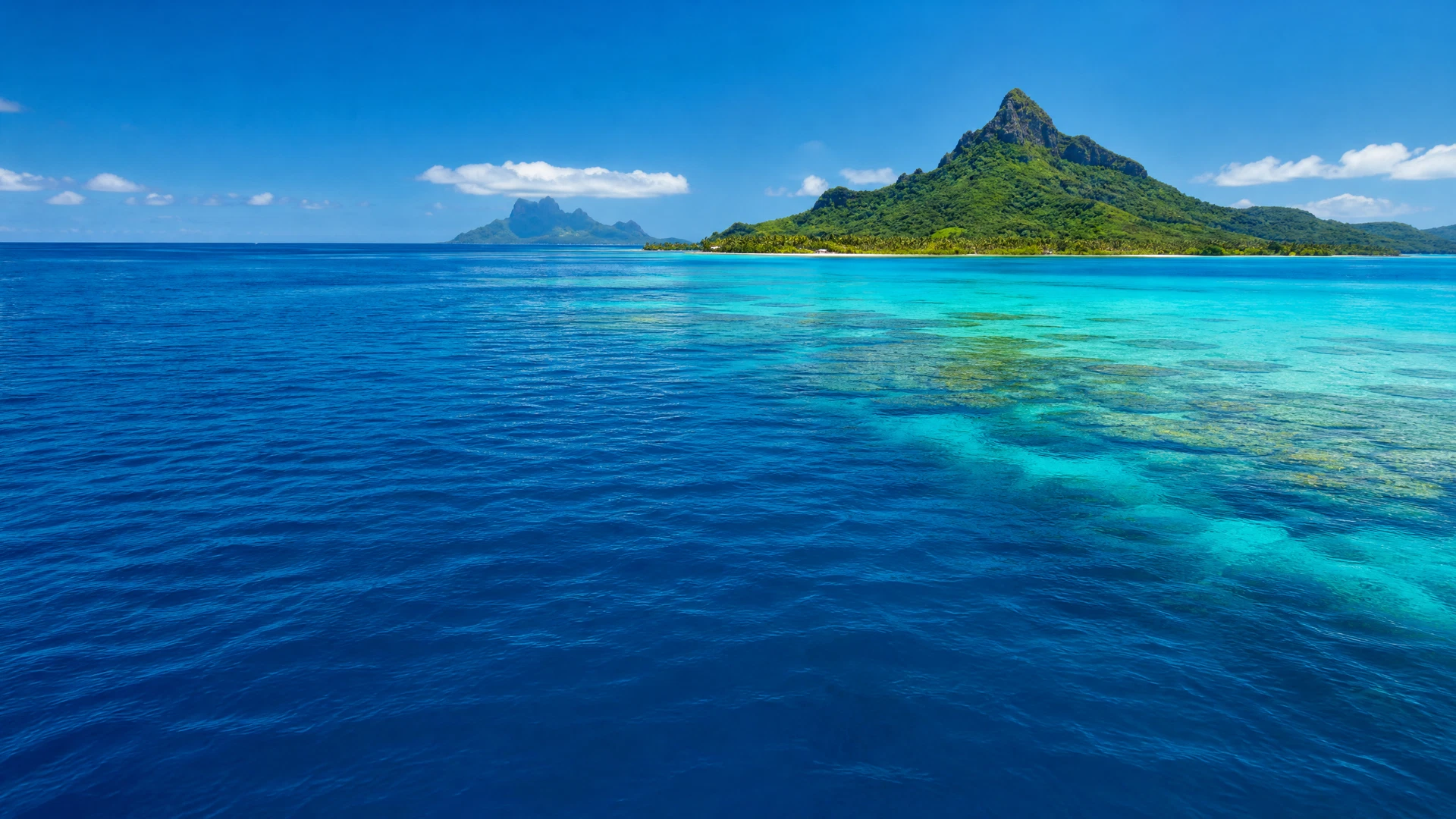
To think at the scale of the Pacific is to confront a cognitive boundary where the human map-making instinct begins to fray. It is a liquid continent that occupies a full third of the planet’s surface, a volume so immense that it could swallow every landmass on Earth and still have room for another Australia. This vastness creates a distortion of time and space, where the horizon is not a destination but a constant, repeating promise of more blue. In this theater of the infinite, the ocean is a collection of distinct worlds, each governed by its own physics and biological rhythms. To understand it requires a shift from the terrestrial mindset of borders to one of gradients, currents, and the slow pulse of planetary systems. We observe this scale through satellites and sensors, yet the magnitude remains an abstraction, a number that the mind struggles to reconcile with the physical reality of a thousand miles of empty water. It is a place where "here" is defined not by coordinates, but by the specific temperature of the water or the way light filters through the upper brine.
The history of human movement across this void is a testament to non-instrumental navigation, a practice that transformed emptiness into a readable landscape. Early voyagers did not see the ocean as a barrier, but as a network of paths written in the language of swells and stars. By observing the subtle interference patterns created when open-ocean waves encountered distant islands, these navigators could "feel" land hundreds of miles away. They understood that the ocean possesses a memory of the wind, carrying the signature of storms that passed days ago and thousands of miles away. This wayfinding was not a matter of digital precision, but a continuous dialogue with the environment, a synthesis of celestial positions, bird flight paths, and the glow of deep-water organisms. It suggests a way of being where the observer is never truly lost as long as they remain attuned to the shifting textures of the sea. Even now, in an age of GPS, there is a wistful recognition that something of that intimacy has been traded for the cold certainty of the screen, leaving us to wonder how much of the ocean’s true character is lost when we stop looking at the waves for directions.
Descending from the sunlit surface, the Pacific reveals its most secretive world in the Hadal zone, where the seafloor collapses into trenches of staggering depth. The Mariana Trench, a crescent-shaped scar in the crust, plunges nearly seven miles down, creating a realm where pressure is measured in tons per square inch and temperatures hover just above freezing. This is a landscape of silence and slow motion, where the weight of the water column compresses everything into a dense, lightless reality. Here, life adapts to the absolute. Amphipods and snailfish navigate the silt-choked floors, their bodies evolved to withstand conditions that would crush any surface vessel. The existence of these deep-water communities challenges our understanding of biological limits, suggesting that the "bottom" of the world is not a wasteland but a frontier of specialized existence. There is a heavy melancholy in the realization that these depths remain largely unmapped, a vast, dark archive of the planet’s history that we have only begun to skim with our robotic probes.
Complementing these deep voids are the volcanic arcs that rim the Pacific, a fiery architecture born from the collision of tectonic plates. The Ring of Fire is a dynamic process of subduction and renewal, where the ocean floor is dragged into the mantle, melted, and recycled back to the surface as molten rock. This geological churn gives rise to island chains that emerge from the waves as if by terrestrial alchemy. From the basaltic heights of Hawaii to the steaming vents of the Solomon Islands, these landmasses are the youngest parts of the planet, temporary footholds for life in an otherwise liquid world. The transition from deep trench to volcanic peak happens over short distances, creating dramatic gradients in pressure, light, and chemistry. It is a reminder that the Pacific is a place of constant creation and destruction, where the ground beneath the waves is in a state of perpetual flux. We observe the smoke from undersea volcanoes and the tremors of the crust, recognizing that the ocean is a living, breathing geological engine.
Beneath the surface, the Pacific operates an invisible machinery of nutrient transport known as upwelling, most vividly realized in the Humboldt Current. Driven by trade winds, warm surface waters are nudged westward, allowing cold, nutrient-rich depths to rise and replace them. This upwelling is the ocean’s great equalizer, bringing the chemical building blocks of life from the dark abyss into the sunlit zone for photosynthesis. The result is a biological explosion, where phytoplankton blooms support vast schools of fish, which in turn feed millions of seabirds and marine mammals. It is a world of frantic energy, yet entirely dependent on the delicate balance of wind and current. When the winds falter, the engine slows, and the abundance can vanish as quickly as it arrived. This fragility is a core characteristic of the Pacific’s high-productivity zones, where the line between a thriving ecosystem and a biological desert is drawn by the invisible hand of atmospheric pressure.
In the warmer reaches of the central Pacific, the architecture of the ocean is built not of rock, but of bone. Coral reefs represent a world of extreme biological density, where thousands of species coexist in a complex mosaic. These structures are more than habitats; they are living records of environmental change, their skeletons capturing the chemistry of the sea over centuries. Recent observations have highlighted a remarkable resilience among these communities. In the face of rising temperatures, some corals have shown an ability to shift their internal symbiotic partners to more heat-tolerant strains. This "shuffling" of symbionts suggests a capacity for adaptation that is often overlooked in alarmist narratives. However, this resilience is not an infinite resource, and the reefs exist in a state of perpetual negotiation with their surroundings. They are the ocean’s early warning system, beautiful and intricate, yet vulnerable to the shifting baselines of a warming world, reminding us that even the most ancient structures are subject to the whims of climate.
The Pacific’s influence extends far beyond its shores through the El Niño-Southern Oscillation, a coupled dance between the ocean and the atmosphere that dictates weather patterns across the globe. This phenomenon is a masterclass in planetary connectivity, where a slight warming of the sea surface can trigger droughts in Australia and torrential rains in the Americas. It is the ocean’s way of breathing, a rhythmic shifting of heat and moisture that reminds us of the fundamental unity of the Earth’s systems. We track these cycles with a vast network of buoys, yet the precise timing and intensity of each event remain elusive, a reminder of the inherent variability of a system so large. There is a certain wistfulness in our attempts to forecast these changes, a recognition that while we can measure the pulse, we cannot control the heart. The ocean’s mood, whether in the warm embrace of El Niño or the cool discipline of La Niña, is a reminder of our own dependence on a system that operates on a scale far beyond our reach.
For the fishing communities that dot the Pacific’s rim, the ocean is not an abstract system but a primary source of identity and survival. These communities possess a deep, generational knowledge that bridges the gap between scientific observation and lived experience. In places like the Solomon Islands or the coastal villages of Peru, the sea is a calendar and a provider. This traditional ecological knowledge offers a model for sustainability that modern industrial fishing has often ignored. It is a world where the health of the community is inextricably linked to the health of the reef and the regularity of the currents. As these communities face the dual challenges of overexploitation and environmental shifts, there is a growing movement to integrate this ancient wisdom with modern conservation efforts. It is a quiet, persistent form of resilience, rooted in the understanding that to take from the sea requires a commitment to its preservation. This human interface is perhaps the most poignant of the Pacific’s many worlds, where global actions are felt most personally.
Ultimately, the challenge of thinking at the scale of the Pacific is the challenge of accepting our own smallness within a system that is both ancient and ever-changing. We are observers of a liquid world that does not require our presence to function, yet is increasingly marked by our influence. To look across the vast expanse of the central Pacific is to see a reflection of our own curiosity and our own limitations, a place where the evidence of the past and the uncertainty of the future meet at the horizon. It is a world of many worlds, connected by the same salt water and the same restless winds, a reminder that the ocean is not just a resource to be managed, but a profound mystery to be respected. In the end, the Pacific remains a continent of the imagination as much as a reality of geography, a space where the wistful ink of our maps meets the indelible blue of the deep, leaving us to wonder what other secrets remain hidden beneath the waves.