Mining town
Uncover subterranean art and rare black opals in the heart of the outback
Lightning Ridge stands as the global capital of rare black opals, blending rugged mining heritage with eccentric charm. From hand-carved underground galleries to therapeutic artesian bore baths, it offers a unique and enduring outback experience.
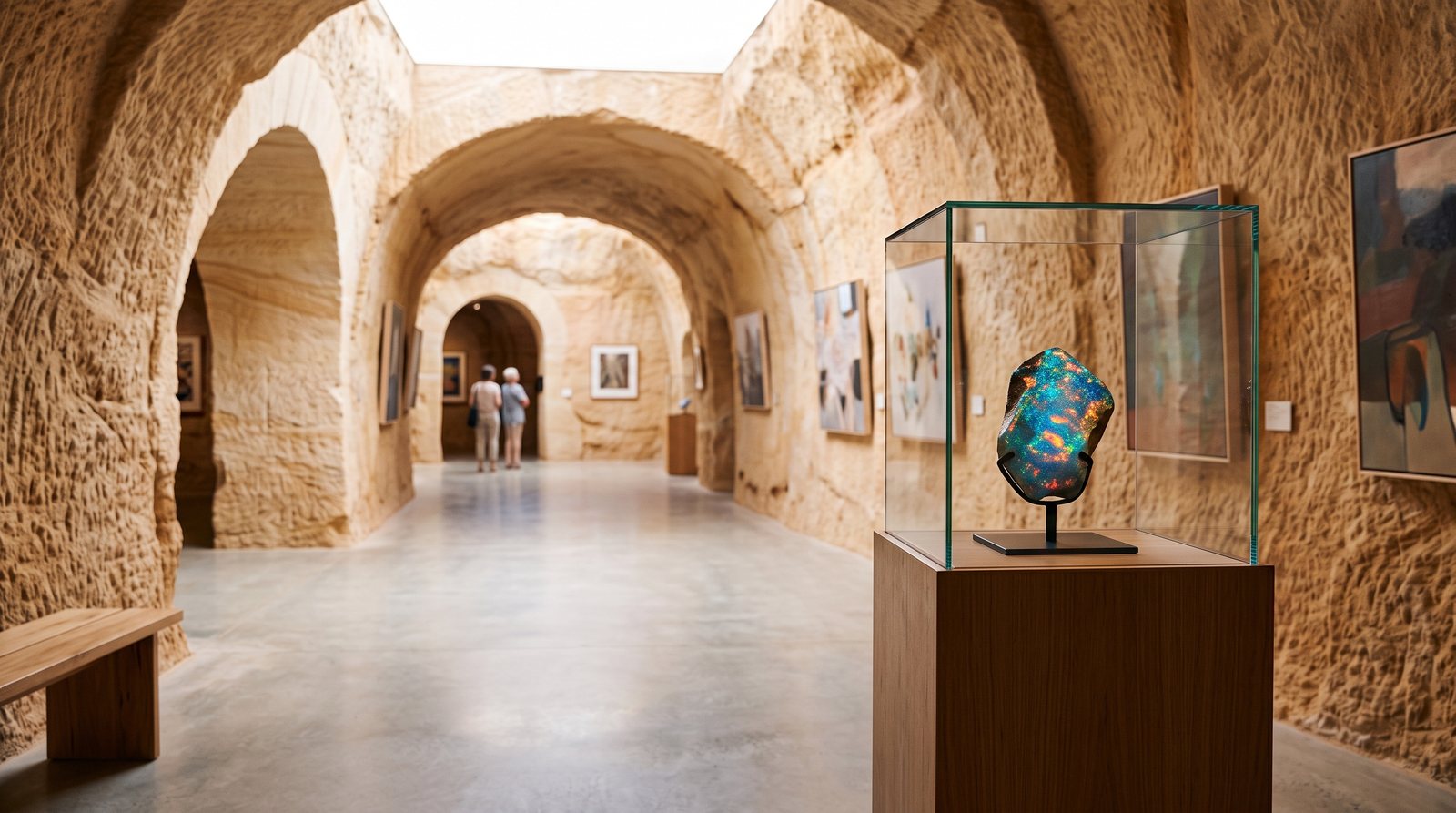
Lightning Ridge is a place where the landscape holds a secret, buried deep beneath the sun-baked surface of the Australian outback. Known as the premier source of rare black opals, this remote mining town in New South Wales is defined by a unique intersection of geological rarity and human perseverance. The town is literally carved into the land, a testament to generations of miners who arrived with little more than a pickaxe and a dream of finding the "fire" hidden within the dark stone. This specific variety of opal, characterized by its dark body tone and vibrant play-of-color, is found nowhere else in such significant quantities. The result is a community that feels fundamentally different from the agricultural hubs nearby, where life is dictated by the patient search for treasure in the subterranean dark.
The geological history of the region provides the foundation for this industry, dating back millions of years to when the vast inland sea covering central Australia began to recede. As the water evaporated, silica-rich solutions seeped into the crevices of the sedimentary rock, eventually hardening into the precious stones sought today. In Lightning Ridge, the presence of iron oxide and carbon creates the dark base that allows the spectral colors of the opal to stand out with intensity. This rarity has made the black opal one of the most valuable gemstones on the planet, yet the process of extracting it remains remarkably grounded in traditional methods. The landscape is dotted with the silhouettes of opal rigs and white mullock heaps, each representing a site where labor has been pitted against the ancient earth.
Mining here is as much a cultural practice as an economic one, fostering a rugged heritage that values independence and grit. The town’s history is filled with stories of individuals who walked into the desert and built a life from the ground up. This spirit is visible in the town’s architecture, where necessity and creativity produce structures as eccentric as they are functional. One famous example is the bottle house, a residence constructed using thousands of glass bottles embedded in mortar, providing both insulation and a unique aesthetic that captures the shifting outback light. Such buildings are not merely curiosities; they are reflections of a resourceful community that has always found ways to thrive in a harsh environment by using whatever materials the land and its history provide.
The subterranean world of Lightning Ridge extends far beyond active mines, encompassing hand-carved spaces that offer a cool refuge from the intense surface heat. Underground galleries, such as the Chambers of the Black Hand, demonstrate the artistic potential of the soft sandstone housing the opal seams. Here, artists have spent years carving intricate sculptures directly into the walls of old mine shafts, creating a labyrinth of figures ranging from historical portraits to mythical creatures. Walking through these quiet passages, visitors can appreciate the physical labor required to shape the earth and the creative impulse that drives people to decorate even utilitarian spaces. It is a reminder that the "subterranean art" of the Ridge includes the very act of making a home and a culture beneath the soil.
For the traveler, the experience of Lightning Ridge is often defined by the opportunity to participate in this search for beauty. Fossicking, or "noodling," allows visitors to sift through discarded mullock heaps in search of small pieces of opal missed by miners. It is a patient, tactile process that connects the individual to the landscape in a way few other activities can. Standing on a white mound under the expansive outback sky, one becomes aware of the sheer scale of the opal fields and the thousands of shafts honeycombing the ground below. The excitement of finding even a small flash of green or a spark of red provides a glimpse into the obsession that has driven the town’s development for over a century.
After a day in the dust of the opal fields, the therapeutic artesian bore baths offer a profound contrast and a necessary ritual. Fed by water from the Great Artesian Basin, these baths rise to the surface at a constant temperature of approximately 41 degrees Celsius. The mineral-rich water is believed to have significant healing properties, particularly for tired muscles and joints. At dusk, as steam rises into the cooling air, the baths become a communal gathering place where the day’s finds are discussed and stories exchanged. The experience of soaking in the warm waters while watching the stars emerge in the clear, unpolluted outback sky is an enduring memory, offering a sense of tranquility that balances the rugged nature of mining life.
The surrounding landscape of Outback NSW provides a dramatic backdrop, characterized by vast horizons and profound isolation. The vegetation is sparse but resilient, consisting of hardy shrubs and ancient trees adapted to low rainfall and high temperatures. This environment demands respect and preparation, as reflected in the practical advice from the local visitor information centre. Before venturing to remote opal fields, it is essential to understand local permit requirements and the conditions of unsealed roads. The landscape is beautiful but can be unforgiving to the unprepared, and the town’s survival has always depended on a collective understanding of the natural forces at play in this corner of the continent.
Ultimately, Lightning Ridge remains a place of mystery and allure, a destination that rewards those willing to look beneath the surface. It is a town where the most valuable things are often hidden, whether they are the rare black opals waiting in the dark or the stories of the people who have made this rugged landscape their home. The combination of industrial heritage, artistic expression, and natural beauty creates an atmosphere unlike anywhere else in Australia. As the global capital of its namesake gem, the Ridge continues to draw people from all over the world, each seeking their own version of the "fire" that has defined the town’s identity. It is a reminder that even in the remote outback, there is a wealth of culture and creativity waiting to be uncovered.