National park
A sacred desert landscape where ancient history meets the shifting sands of time
Explore the ancient, sculpted landscapes of Mungo National Park, where the Walls of China rise from a dry lake bed. This sacred ground holds the 42,000-year legacy of Mungo Man and Mungo Woman, offering a profound window into Australia’s deep human history.
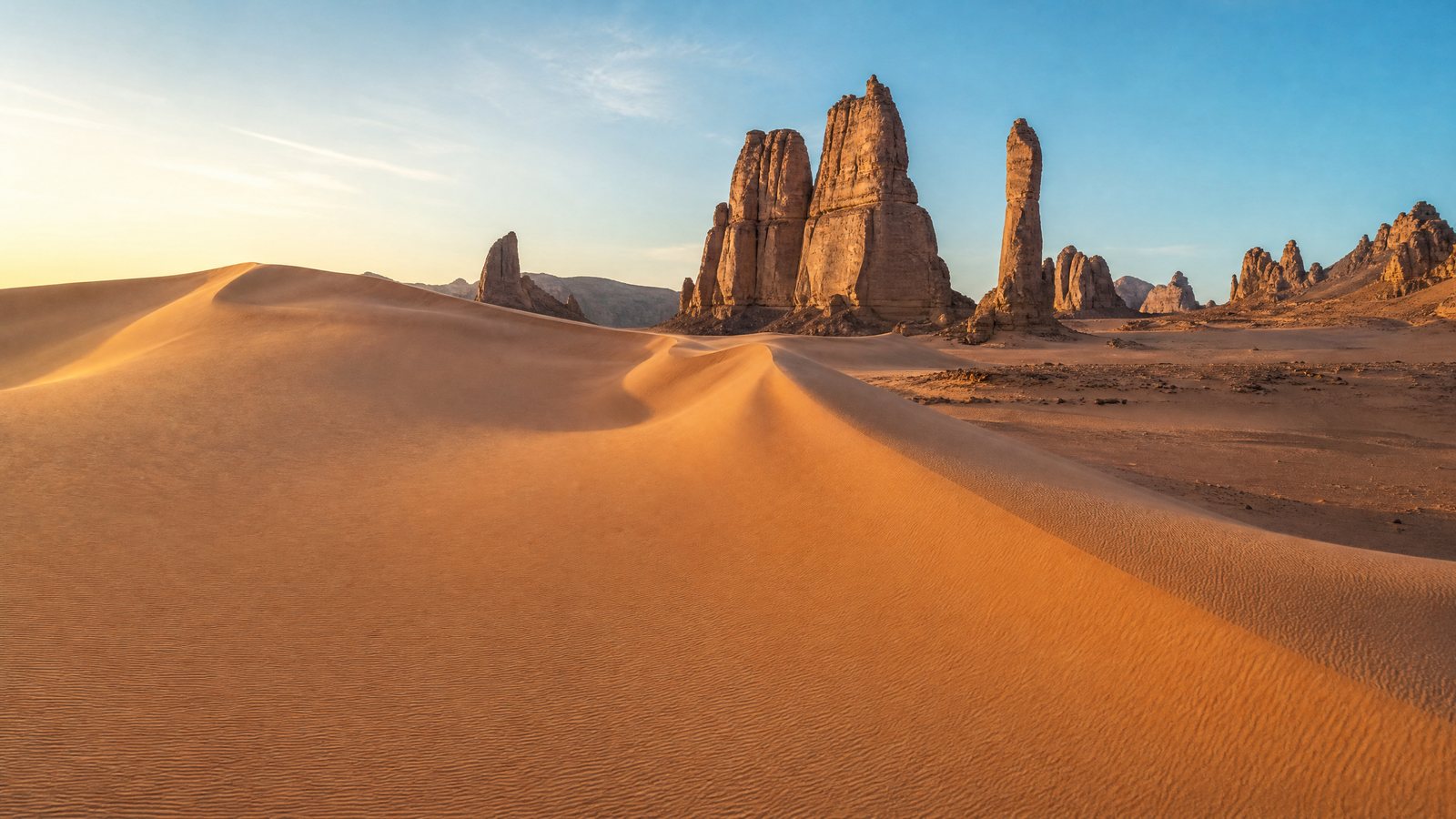
The journey into Mungo National Park is a transition from the green fringes of New South Wales into a landscape untethered from modern time. This remote outback sanctuary is defined not by water, but by its absence. As red earth gives way to the vast Mungo lake bed, the scale of the region becomes apparent. It is a place of silence where wind carries the dust of millennia and the horizon stretches into a shimmering haze. For the visitor, the first encounter is often disorienting; the ground is a mosaic of cracked clay and salt-tolerant scrub, a reminder of a once-thriving aquatic ecosystem. The air feels heavy with history, inviting a slower pace necessary to appreciate the subtle shifts in texture and light defining this ancient desert terrain.
Geologically, Mungo is a story of environmental transformation. Thousands of years ago, the Willandra Lakes were freshwater basins fed by the Lachlan River. During the last ice age, these lakes teemed with life, supporting fish, shellfish, and waterbirds alongside the megafauna that once roamed the continent. However, as the climate shifted approximately 18,000 years ago, the water receded, leaving behind the dry, white basins seen today. This drying process was a gradual retreat that forced local inhabitants to adapt to an increasingly arid environment. The legacy of this transition is etched into the soil, where layers of sediment provide a chronological record of the region’s hydrological history. To stand in the center of the lake bed is to stand at the bottom of a vanished world, a prehistoric sea replaced by the shifting currents of the outback wind.
The most iconic feature is the Walls of China, a lunette formation arcing along the eastern edge of Lake Mungo. Created over tens of thousands of years, this crescent-shaped dune is composed of sand and clay blown from the lake bed during periods of drought. Erosion has sculpted the lunette into dramatic, jagged ridges and deep gullies, revealing a vibrant palette of ochre, sienna, and cream. At sunset, the Walls of China undergo a transformation as the low light catches the eroded textures, casting long shadows that accentuate the fragility of the land. This is a delicate environment where elements continue to reshape the earth, uncovering ancient artifacts and skeletal remains buried for generations, making the lunette both a geological monument and a dynamic archaeological site.
Mungo National Park gained prominence through the human history preserved within its sands. In 1968, the discovery of Mungo Lady’s remains altered the understanding of human antiquity in Australia. Her remains provided evidence of the world’s oldest known ritual cremation, dating back approximately 42,000 years. This discovery was a profound moment, affirming a complex social and spiritual life that existed long before the rise of many Northern Hemisphere civilizations. The precision of the cremation suggested a deep respect for the deceased and a structured belief system regarding the afterlife. Mungo Lady was not just a specimen; she was an ancestor whose burial challenged previous assumptions about early modern humans. Her presence confirmed that the Australian interior was a site of sophisticated cultural practice at a time when much of the world was still in the grip of the Pleistocene.
A few years later, the discovery of Mungo Man cemented the site’s importance. Buried in a shallow grave and covered in red ochre, his remains represented another layer of ritualized behavior. The presence of ochre, which had to be transported from significant distances, indicated that these early inhabitants were part of an extensive network of trade and cultural exchange. The age of these remains, consistent with those of Mungo Lady, pushed back the timeline of human occupation in Australia and provided a rare glimpse into the physical characteristics of the people who lived during this era. Together, Mungo Man and Mungo Lady serve as central figures in a narrative of endurance and spiritual depth. Their story reminds all who visit that the Australian outback has been a site of human habitation, innovation, and ceremony for an almost inconceivable length of time.
The stewardship of Mungo is a collaborative effort involving three Traditional Tribal Groups: the Paakantji, the Ngyiampaa, and the Mutthi Mutthi people. For these groups, Mungo is a living part of their cultural identity and spiritual heritage. The land is filled with stories, songlines, and significant sites that continue to hold meaning for the contemporary Aboriginal community. The return of Mungo Man and Mungo Lady to their ancestral country after decades in institutional collections was a landmark event in the journey toward respect for Indigenous sovereignty. Today, Aboriginal rangers play a vital role in managing the park, sharing their knowledge with visitors and ensuring cultural protocols are respected. This partnership ensures that park management balances conservation and tourism with the deep-seated cultural obligations of the Traditional Owners, preserving the site for future generations.
Beyond its archaeological treasures, Mungo is a vibrant ecosystem supporting a variety of flora and fauna. The hardy vegetation, including saltbush and ancient cypress pines, has adapted to survive the extreme temperatures and low rainfall of the outback. Wildlife is abundant; red and grey kangaroos are seen in the early morning, while emus wander across the lake bed. The park is also a haven for birdwatchers, with species like the pink cockatoo soaring above the lunettes. The Mungo Visitor Centre provides a starting point, offering exhibits on the park’s history and ecology. From here, a network of boardwalks and driving tours allows visitors to explore without disturbing the fragile surfaces of the lunettes. This infrastructure emphasizes the importance of responsible travel, ensuring that the impact of tourism does not compromise the integrity of this sensitive desert environment.
A visit to Mungo National Park is an exercise in perspective. It is a place that demands a confrontation with the vastness of time and the resilience of both the natural world and the human spirit. The shifting sands of the Walls of China serve as a metaphor for the impermanence of all things, yet the stories of Mungo Man and Mungo Lady provide a sense of continuity that spans forty-two millennia. As the sun dips below the horizon and the desert stars emerge in the clear outback sky, the modern world feels distant. The legacy of Mungo is not found in grand monuments, but in the quiet endurance of the land itself and the enduring connection of the people who have called it home. It remains a sacred desert landscape where every grain of sand holds a memory, and every visitor is invited to witness the profound intersection of the ancient and the eternal.