National park
Ancient Aboriginal rock art meets vibrant desert ranges in this sacred outback landscape
Mutawintji National Park protects the rugged Bynguano Ranges and a profound collection of Aboriginal rock art. Visitors encounter deep gorges and permanent waterholes while experiencing the enduring cultural heritage of a landscape managed jointly with local Aboriginal communities.
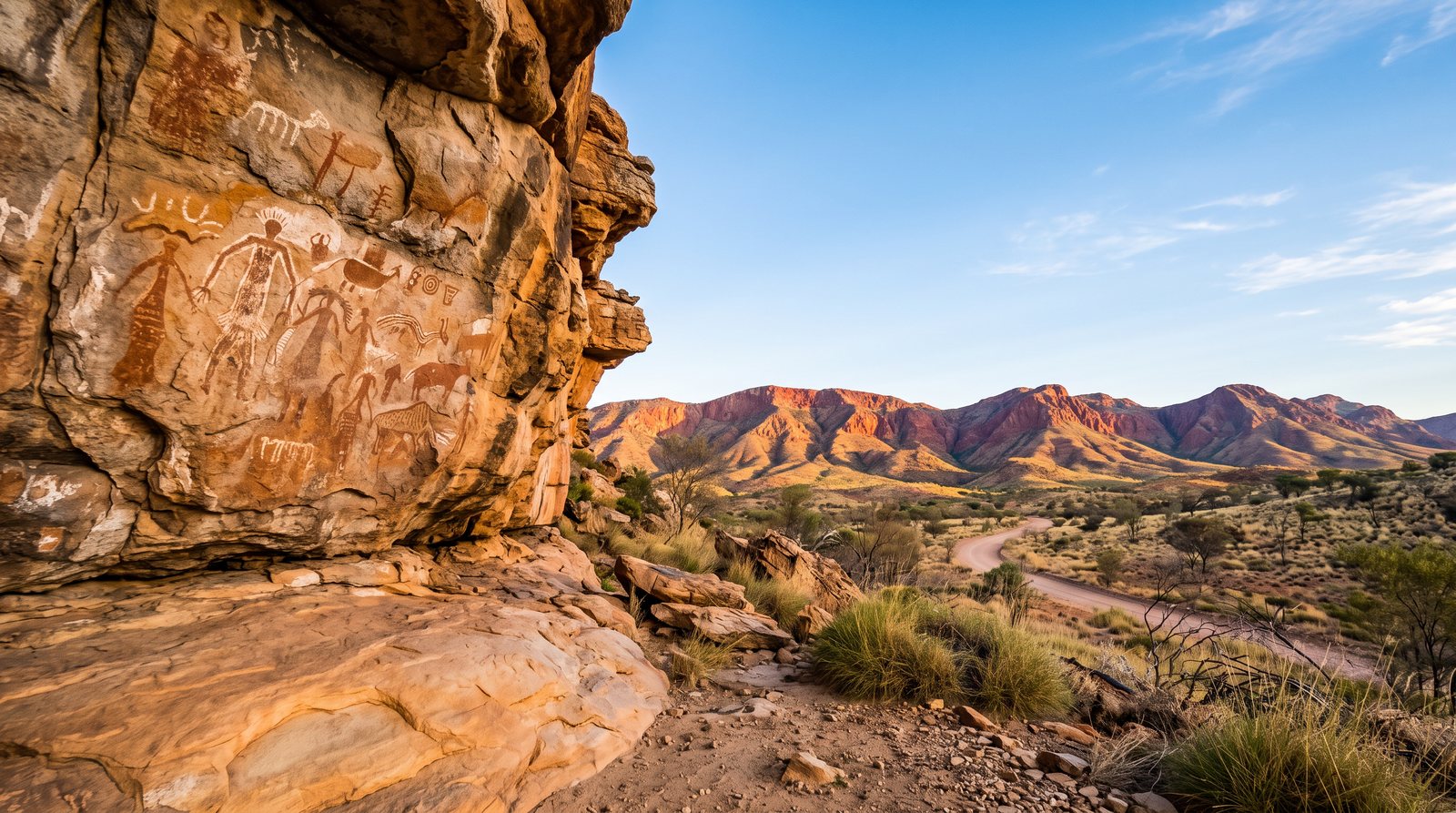
The Bynguano Ranges rise from the desert floor of Outback New South Wales like a weathered spine of ochre and ironstone. Mutawintji National Park, north-east of Broken Hill, is defined by this dramatic geological transition where flat plains meet the rugged upheaval of the ancient interior. Shaped by millions of years of erosion, the sandstone terrain is as unforgiving as it is beautiful. For travelers arriving from the Silver City Highway, the ranges at dusk offer a startling contrast of light, as the low sun ignites rock faces in shades of deep crimson and orange. This is a place where the geography feels palpably old, holding a stillness broken only by the call of a wedge-tailed eagle or the rustle of wind through the mulga trees.
Within these ranges lies one of the most significant cultural sites in the Australian outback, a sacred meeting ground for Aboriginal communities for thousands of years. The rock art of Mutawintji is a vast record of human presence, etched and painted onto sheltered sandstone overhangs. Hand stencils, created by spraying pigment over a hand pressed against the rock, suggest generations of individuals marking their place within the landscape. These stencils, alongside intricate engravings of emus, kangaroos, and symbolic motifs, provide a silent testament to the enduring heritage of the Malyangapa and Pandjikali people. The art is integrated so closely with the natural rock that it seems to emerge from the stone itself, bridging the gap between the physical environment and the ancestral stories that define it.
The survival of this vibrant cultural record is linked to the presence of permanent waterholes tucked in the shadows of deep gorges. Fed by intermittent rainfall channeled through rocky catchments, these pools create small oases that support a diverse array of life. Around the water’s edge, vegetation shifts from hardy saltbush to delicate ferns and majestic river red gums. These waterholes were historically essential for the survival of the people who gathered here, providing reliable hydration and attracting wildlife. Today, they remain central to the park’s ecology, serving as vital refuges for euros, wallaroos, and bird species like the apostlebird and galah. The sound of water dripping from a rock face provides a sensory counterpoint to the heat and dust of the surrounding desert.
Exploring the park requires engaging with the landscape on its own terms, following tracks that lead through the heart of the Bynguano Ranges. The Thaaklatjika Mingkana walk winds through a sandy creek bed to a site rich in rock art and engravings, where the scale of the landscape becomes apparent as cliffs tower overhead. For a more immersive experience, the Mutawintji Gorge walk leads deeper into the range, culminating in a spectacular waterhole surrounded by sheer rock walls. The often rocky and uneven path demands a slow pace that encourages closer observation—the way light shifts across stone, the scent of the desert, and the subtle variations in lichen color. This slow movement is essential to understanding Mutawintji, as its true character is found in the details that a hurried visitor might overlook.
The management of Mutawintji represents a significant milestone in land rights and conservation. In 1998, it became the first park in New South Wales returned to its traditional owners, leading to a joint management arrangement between the local Aboriginal community and the National Parks and Wildlife Service. This partnership ensures that cultural and spiritual values are prioritized alongside the protection of biodiversity. Decisions regarding access to sacred sites and the maintenance of infrastructure are made collaboratively, reflecting a respect for traditional knowledge. For visitors, this means the experience is informed by an authentic cultural perspective that emphasizes the sacredness of the land. This model serves as a powerful example of how modern conservation can be enriched by the wisdom of the world’s oldest living culture.
As day draws to a close, the atmosphere undergoes a profound transformation. The harsh glare of the midday sun softens into a golden light that elongates shadows and accentuates the rugged contours of the Bynguano Ranges. From vantage points within the park, the view extends across vast, flat plains toward the horizon, where earth and sky merge in a haze of purple and blue. The silence of the desert deepens, and the cooling air brings a sense of stillness that is both humbling and restorative. In these moments, the sacred nature of the landscape is most clearly felt, as physical beauty and spiritual weight come together. The desert is not a void but a place of immense complexity and meaning, holding the stories of those who walked here before.
The enduring appeal of Mutawintji lies in its ability to remain largely unchanged, offering a glimpse into a world operating on a geological and ancestral scale. While visitor infrastructure has improved, the core remains a remote wilderness requiring preparation and respect for the elements. The intense heat, potential road closures, and vast distances are part of the landscape’s character. To visit Mutawintji is to step outside the frantic pace of modern life and enter a space where the primary influences are the wind, sun, and stone. It is a place that rewards patience and curiosity, offering a connection to the deep history of the Australian continent. The rock art, ranges, and waterholes are living components of a sacred landscape that speaks to those who take the time to listen.
In an increasingly homogenized world, Mutawintji stands as an essential reminder of the value of the unique and the ancient. Preservation here is about honoring the relationship between a people and their land. The stories told through rock art and traditions maintained by local communities are a vital part of global human heritage, offering insights into living sustainably within the natural world. As stars appear in the clear outback sky, the Bynguano Ranges fade into silhouette, a constant anchor in the shifting sands of time. Mutawintji remains a place of power, beauty, and profound cultural significance, waiting for those who seek a deeper understanding of the Australian heartland. It is a landscape that demands respect and offers a sense of belonging to something far greater than oneself.