Regional city
Experience the lilac bloom and riverside heritage of historic Grafton
Set on the banks of the Clarence River, Grafton is a city defined by its Victorian architecture and the spectacular lilac bloom of its jacarandas. From the Gothic arches of its cathedral to its iconic double-decker bridge, it is a place of enduring charm.
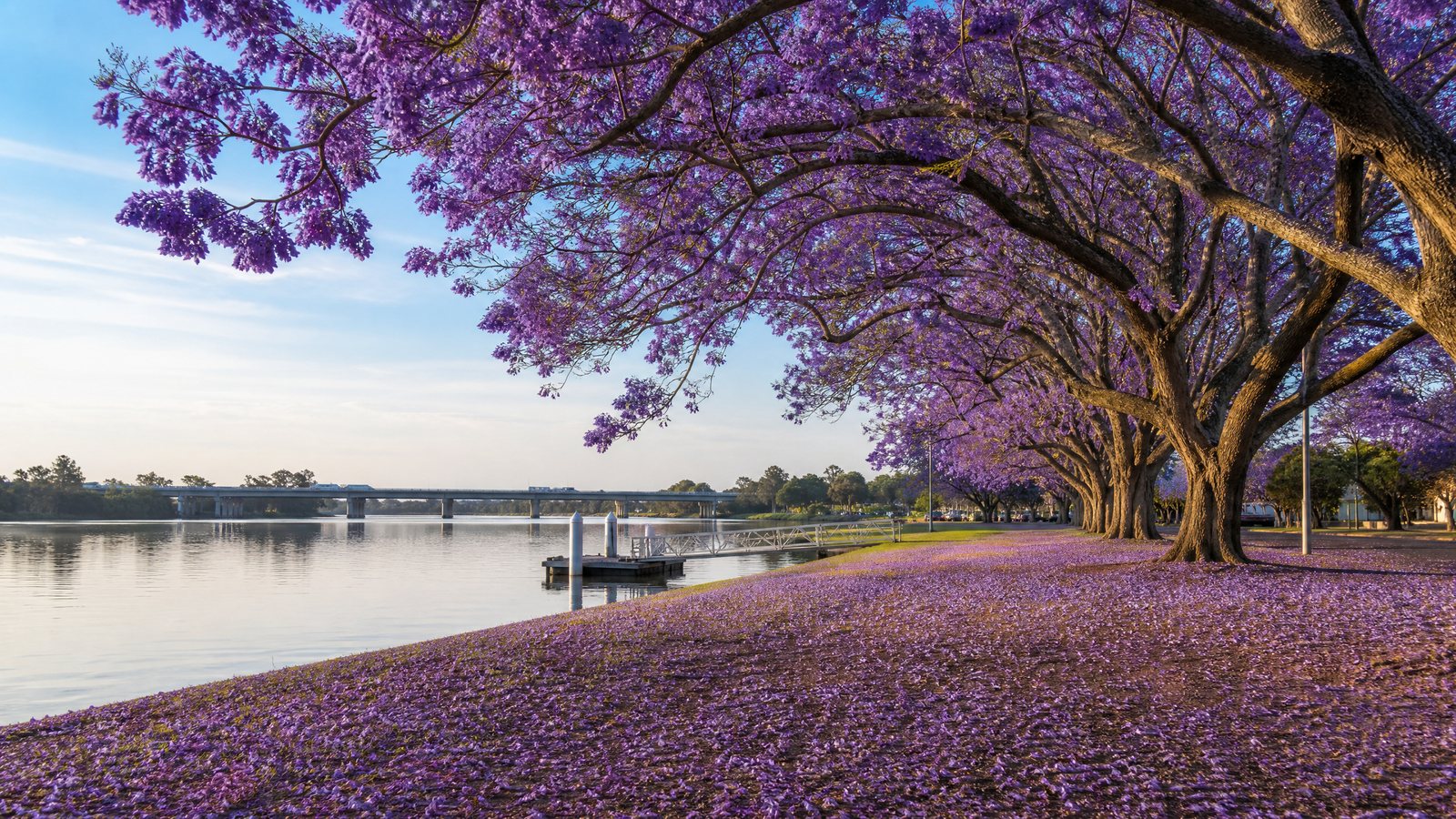
Grafton sits as a quiet sentinel on the banks of the Clarence River, a city defined by the slow, deliberate pace of the water and the seasonal explosion of lilac that blankets its streets every spring. Known for its spectacular display of jacaranda trees, the city offers a rare intersection of natural beauty and preserved colonial architecture. As the administrative heart of the Clarence Valley, it serves as a gateway to the North Coast, yet retains a character distinct from the coastal hubs nearby. The arrival of the bloom in late October transforms the urban grid into a living gallery, where the sky seems reflected in the carpet of fallen petals lining the wide avenues. This seasonal transformation is a fundamental part of the city’s identity, anchoring a community that has lived alongside these trees for over a century.
The history of Grafton’s jacarandas is a testament to the long-term vision of its early residents. The first trees were planted in the late 19th century by seed merchant Henry Volkers, whose efforts laid the groundwork for Australia’s oldest floral festival. Today, more than 2,000 jacaranda trees are scattered throughout the city, their delicate, bell-shaped flowers creating a canopy of vibrant purple that contrasts with the deep greens of the valley. The Jacaranda Festival, established in 1934, remains a cornerstone of the regional calendar, celebrating the brief period when the city is at its most photogenic. Beyond the spectacle, the trees provide a functional cooling canopy for the city’s wide streets, a legacy of urban planning that prioritized shade and aesthetic harmony in a warm climate.
The Clarence River, or Bibirba, is the lifeblood of Grafton. As one of Australia’s largest river systems, its scale is immediately apparent at sunset. The water moves with a heavy, rhythmic quality, reflecting the changing light of the North Coast sky and providing a constant backdrop to daily life. For generations, the river served as the primary highway for the region, carrying timber, sugar, and dairy products to the coast. Today, while its industrial role has diminished, its presence remains central to the city’s layout. The riverside parks and walkways offer a space for reflection, where the expanse of the water creates a sense of openness rare in regional centers. The river is not just a geographical feature; it is a historical narrative written in water.
Walking through Grafton is an exercise in reading the architectural history of regional New South Wales. The city is home to an exceptional collection of Victorian and Edwardian buildings, many of which have been meticulously preserved. The Christ Church Cathedral stands as a focal point, its red-brick Gothic Revival architecture and soaring arches providing a sense of permanence. Designed by John Horbury Hunt, the cathedral is a masterclass in the use of local materials and traditional craftsmanship, its interior light filtered through stained glass that captures the essence of the surrounding landscape. Elsewhere, the streetscapes are lined with grand residences and civic buildings that speak to a period of prosperity in the late 1800s. These structures housing offices, galleries, and homes continue to serve the modern population.
Perhaps the most iconic engineering feat in Grafton is the double-decker bridge that spans the Clarence River. Opened in 1932, this unique truss structure was a vital link in the coastal transport network. Its design, featuring a railway line on the lower level and a roadway on the upper, was a pragmatic solution to the challenges of crossing such a wide and powerful waterway. For decades, the bridge was the only way to traverse the river without a ferry, and its opening marked a new era of connectivity for the North Coast. Even with a modern second bridge nearby, the original structure remains a beloved landmark. Crossing the bridge at sunset provides one of the best vantage points for viewing the city, where the lilac-lined streets meet the vastness of the river.
The history of Grafton extends far deeper than its colonial foundations. The land is the traditional home of the Bundjalung, Gumbaynggirr, and Yaegl people, whose connection to the river and the valley spans tens of thousands of years. The Clarence River has always been a site of gathering and resource, a sacred geography that continues to hold profound significance for the local Indigenous community. Acknowledging this history is essential to understanding the full character of the city. The intersection of these ancient traditions with more recent layers of European settlement creates a complex cultural landscape. This ongoing dialogue between the past and the present ensures that Grafton’s identity is not just a collection of old buildings and trees, but a living, breathing record.
For the visitor, the Grafton Heritage Trail provides a structured way to engage with the city’s many layers. The trail links over twenty-five historic sites, ranging from the grand civic buildings of the central business district to the more modest cottages of the early settlers. Each stop offers a glimpse into a different aspect of the city’s development, whether it be the history of the local court system or the evolution of regional commerce. It is a practical way to experience the city’s charm, where the weight of history is felt as a rich foundation for the present. The trail provides a lens through which to view the city's growth, connecting the industrial riverfront to the refined streetscapes of the residential districts.
While the jacaranda season is the city’s most famous moment, Grafton’s appeal is not limited to spring. The city follows a gentle seasonal rhythm tied to the agricultural cycles of the Clarence Valley. In summer, the river becomes a focal point for water sports, while autumn brings a crisp light perfect for exploring the surrounding national parks. The winter is mild and quiet, a time when heritage architecture stands out clearly against the bare branches of deciduous trees. This consistency of character makes Grafton a durable destination. The lilac bloom may be the headline, but the riverside heritage is the enduring story.
In the end, Grafton is a city that rewards those who take the time to look closely. It is a place where the grandeur of a Gothic cathedral sits comfortably alongside the wild beauty of a mighty river, and where the purple haze of a spring morning can make even the most familiar street feel new again. The "wistful ink" of its history is written in its buildings, its trees, and the memories of its people. Grafton remains a quintessential Australian regional city, where lilac bloom and riverside heritage combine to tell a story of resilience and enduring charm.