Hinterland town
Explore the colourful spirit and ancient rainforests of Australia’s alternative lifestyle capital
Tucked within the lush hinterland of the Northern Rivers, Nimbin is a vibrant sanctuary for counter-culture and sustainability. From its rainbow-hued streetscapes to the ancient Gondwana Rainforests, the village offers a unique blend of historical activism and natural beauty.
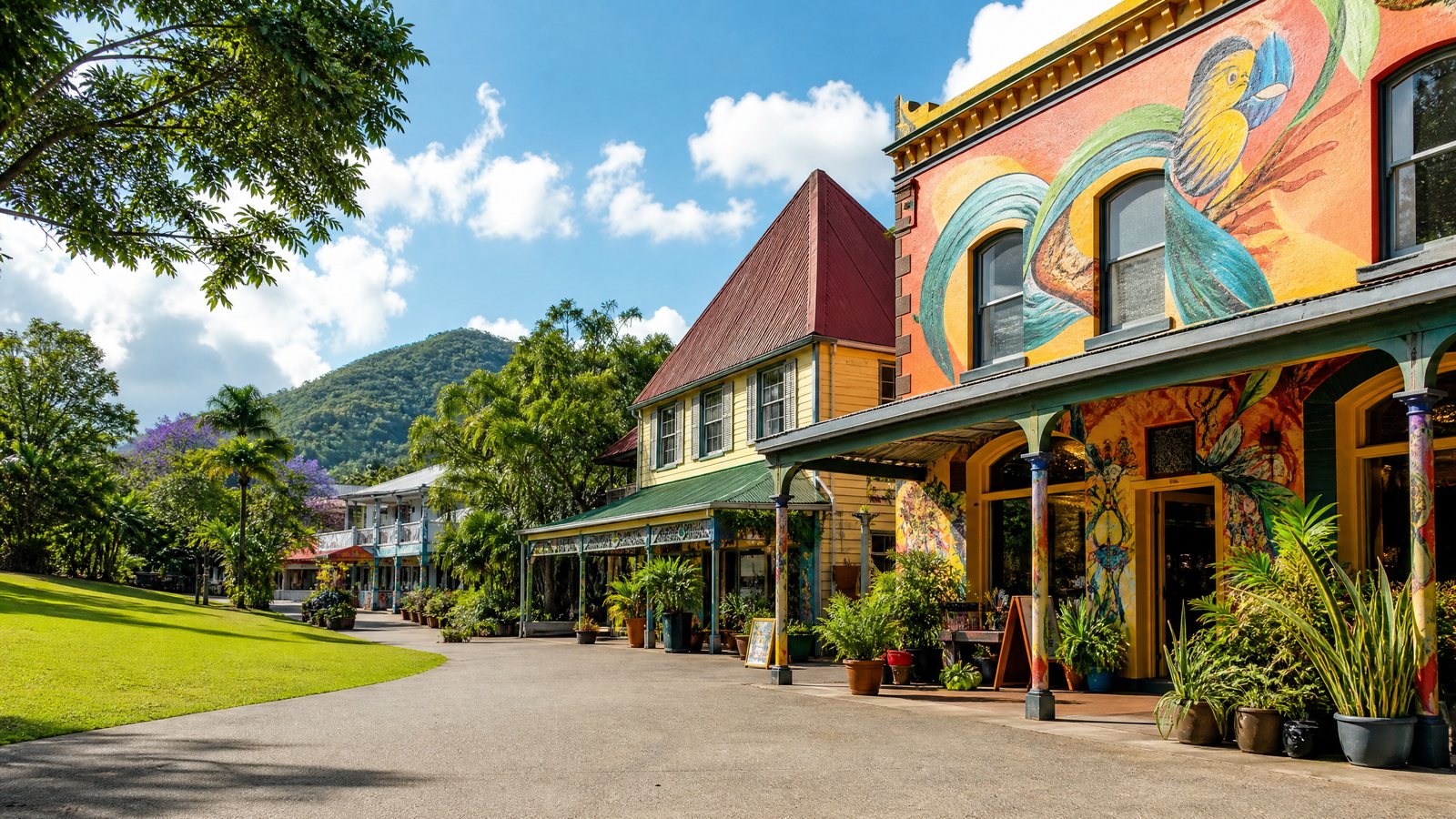
Nimbin occupies a singular position within the cultural landscape of the Northern Rivers in New South Wales. Situated thirty kilometres north of Lismore, the village serves as a living testament to a profound social shift that occurred in the late twentieth century. While its origins lie in the dairy industries of the early 1900s, Nimbin’s modern identity was forged during the 1973 Aquarius Festival. This ten-day event, organized by the Australian Union of Students, brought thousands of counter-culture seekers to the valley, permanently altering the town’s trajectory. The festival encouraged participants to create their own experiences, a philosophy that remains embedded in the community’s DNA. The legacy of this gathering transformed Nimbin from a declining rural settlement into Australia’s alternative lifestyle capital, a sanctuary for sustainability, creative expression, and social activism that continues to inspire seekers and nature lovers alike.
The physical aesthetic of Nimbin is its most immediate feature, characterized by a vibrant, mural-painted main street that defies conventional architectural norms. The storefronts along Cullen Street are adorned with intricate artworks reflecting the community’s values and histories. These murals function as a visual archive of the town’s commitment to alternative social structures and environmental stewardship. The use of bold, rainbow-hued palettes serves as a deliberate statement of inclusivity and a rejection of the monochrome uniformity found in larger urban centres. This visual vibrancy is mirrored in local markets and galleries, where the focus remains on artisanal craftsmanship. The architecture itself, often utilizing recycled materials and sustainable design principles, reinforces the village’s ethos of living in harmony with the surrounding environment rather than imposing upon it.
Sustainability in Nimbin is a foundational principle that has guided the community for over five decades. The village is home to pioneering projects in permaculture, most notably the Djanbung Gardens Permaculture Education Centre. This site demonstrates how integrated landscape design can provide food and energy while restoring the local ecosystem. Many residents live in intentional communities, sharing resources in a way that challenges traditional notions of private ownership. This collective approach extends to the Nimbin Hemp Embassy, which has long advocated for the industrial and medicinal uses of cannabis. The community’s resilience is rooted in this shared commitment to self-sufficiency and a skepticism of centralized industrial systems, favouring instead a localized, circular economy that prioritizes ecological health over unrestrained growth.
The natural heritage surrounding Nimbin is of global significance, as the village sits on the edge of the Gondwana Rainforests of Australia World Heritage Area. These ancient forests are remnants of the great rainforests that once covered the supercontinent of Gondwana millions of years ago. The nearby Nightcap National Park protects significant areas of these subtropical rainforests, where the landscape is defined by dramatic escarpments and waterfalls, such as the spectacular Minyon Falls and the ecologically vital Protestors Falls. The latter is particularly significant in the history of Australian environmentalism, as it was the site of the 1979 Terania Creek blockade. This successful grassroots protest marked the first time in Australian history that citizens successfully blocked logging operations through direct action, leading to the permanent protection of the rainforest and the eventual declaration of the national park.
Dominating the local skyline are the Nimbin Rocks, a series of striking volcanic formations that serve as a constant reminder of the region’s turbulent geological past. These rhyolite pillars are remnants of the Tweed Volcano, a massive shield volcano that erupted approximately twenty-three million years ago. The rocks are part of the caldera’s eroded rim, standing as silent sentinels over the valley floor. For the Bundjalung people, the traditional custodians of this land, the Nimbin Rocks hold deep spiritual and cultural significance. They are considered a sacred site, and while they are visible from the village, access is restricted to respect their cultural importance. The presence of these ancient formations provides a sense of deep time that grounds the village’s modern social experiments, offering a permanent geological backdrop to the community’s fluid and evolving nature.
The cultural resilience of Nimbin is maintained through a robust network of community-led initiatives and festivals that celebrate its unique heritage. Beyond daily operations, events like the Nimbin Roots Festival and the annual MardiGrass protest rally draw visitors from across the globe, reinforcing the town’s status as a hub for alternative music and social reform. These gatherings are essential rituals that reaffirm the community’s identity and provide a platform for discussing contemporary issues such as climate change and land rights. The village’s community centre, housed in the old Nimbin school, serves as a vital hub for local services, including a community radio station and a tool library. This infrastructure supports a culture of mutual aid, ensuring that the skills and values developed by the original Aquarian settlers are passed down to new generations.
For the contemporary visitor, Nimbin offers a profound encounter with a way of life that prioritizes human connection and environmental awareness over commercial convenience. The experience of walking through the village is one of sensory richness, from the scent of eucalyptus to the sounds of local musicians. However, the village is more than a relic of the 1970s; it is a dynamic, working community that continues to grapple with the challenges of the twenty-first century. The influx of tourism brings both economic opportunities and the risk of commodification, a balance that the town navigates with characteristic independence. Visitors are encouraged to engage with the village not as spectators, but as guests in a space that values authenticity and respect. Whether exploring the hidden trails of the hinterland or participating in a workshop on sustainable living, the encounter with Nimbin is an invitation to reconsider one’s relationship with the natural world.
In conclusion, Nimbin remains a vital and enduring sanctuary for those who seek a more deliberate and connected way of living. Its history, from the ancient volcanic eruptions that shaped its landscape to the radical social experiments of the Aquarius Festival, informs a present that is both grounded and visionary. The village stands as a reminder that alternative social and ecological models are not only possible but can thrive over decades through community commitment and environmental stewardship. As the world faces increasing environmental and social uncertainty, the lessons of Nimbin—rooted in the soil of the Gondwana Rainforests and the spirit of collective action—offer a valuable perspective on resilience and hope. It is a place where the past is not forgotten, but used as a foundation for a future that honours both the ancient heritage of the land and the creative potential of the human spirit.