Nature reserve
A peaceful sanctuary where ancient littoral rainforest meets the crashing Pacific surf
Iluka Nature Reserve preserves the state’s largest remaining stand of littoral rainforest. This World Heritage-listed sanctuary offers a rare glimpse into prehistoric landscapes where ancient canopies meet the dramatic Pacific coastline.
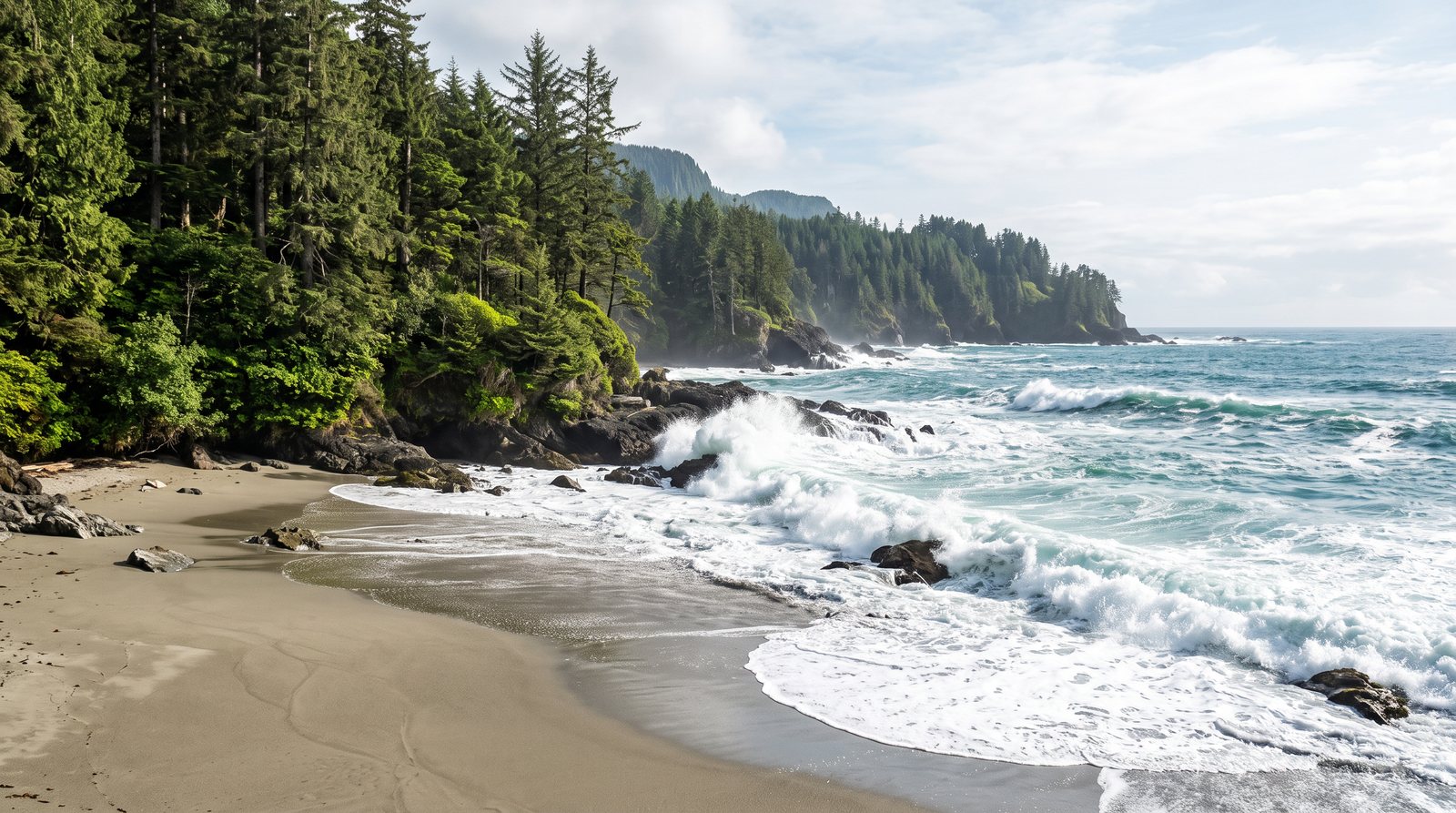
Iluka Nature Reserve stands as a rare environmental anchor on the northern coast of New South Wales, where the mouth of the Clarence River meets the Pacific Ocean. This sanctuary is a preserved fragment of a prehistoric world, recognized as part of the Gondwana Rainforests of Australia World Heritage Area [1]. The reserve is home to the largest remaining stand of littoral rainforest in the state, a fragile ecosystem that has largely vanished from the Australian coastline. Entering the reserve feels like stepping across a threshold of time, leaving behind the modern rhythm of the nearby village and entering a space where the biological architecture has remained consistent for millennia. It is a place of profound quietude, where the land seems to hold its breath against the encroaching sea.
| Feature | Detail | | :--- | :--- | | **Location** | Iluka, Northern NSW | | **Status** | World Heritage Listed | | **Primary Ecosystem** | Littoral Rainforest | | **Key Attraction** | Rainforest Walking Track | | **Wildlife Focus** | Noisy Pitta, Whales | | **Management** | NSW National Parks |
The defining characteristic of Iluka is its littoral rainforest, a unique forest type that thrives in proximity to the ocean, surviving on sandy soils and enduring salt-laden winds. Unlike expansive subtropical rainforests, littoral rainforests are compact and resilient. At Iluka, the forest forms a protective canopy that acts as a living shield for the biodiversity within. The trees here, including the broad-leaved lilly pilly and the tuckeroo, have adapted by growing in tight, interlocking patterns that deflect Pacific gales. This natural engineering creates a stable, humid microclimate beneath the leaves, allowing ferns and mosses to flourish in a location that would otherwise be too harsh. The result is a lush interior that stands in stark contrast to the rugged, sun-bleached dunes just a few meters away.
Walking through the Iluka Rainforest is a multi-sensory experience that begins with a drop in temperature and a shift in the quality of light. The dense canopy filters the sun into a soft, emerald-hued gloom, where shadows are deep and the air is thick with the scent of damp earth. The ground beneath the walking track is composed of fine, ancient sand, which muffles the sound of footsteps and contributes to the sense of isolation. The auditory landscape is equally distinctive; the roar of the ocean is reduced to a distant, rhythmic thrum, replaced by the immediate sounds of the forest—the rustle of a scrub turkey or the sudden outburst of a noisy pitta. These sounds are not merely background noise but indicators of a healthy ecosystem that has remained undisturbed for generations.
The primary artery through this sanctuary is the Iluka Rainforest walking track, a path that guides visitors from the edge of the township through the heart of the reserve. The track is designed to be unobtrusive, winding between the massive trunks of ancient trees and beneath the draped curtains of lawyer vines and strangler figs. These vines are essential components of the forest structure, binding the canopy together and providing pathways for arboreal mammals and birds. As the path progresses, the vegetation begins to change, reflecting the subtle shifts in soil composition and exposure. The transition is gradual but noticeable, as the towering giants of the interior give way to the wind-sculpted shrubs of the coastal fringe. This progression offers a practical lesson in ecological adaptation, showing how life adjusts its form to meet the environment.
Iluka Nature Reserve is a critical refuge for a diverse array of wildlife, particularly avian species that rely on the specialized resources of the littoral rainforest. The abundance of fruiting trees provides a consistent food source for fruit-doves, while the dense understory offers protection for ground-dwelling birds. The reserve is noted for its population of the noisy pitta, a vibrantly colored bird whose presence is often signaled by its distinctive call. Beyond the birds, the forest floor is a complex web of life, inhabited by various reptiles and invertebrates that play essential roles in nutrient cycling. This interdependence is a hallmark of the Gondwanan heritage, representing a lineage that has persisted through dramatic changes. Observing these creatures in their natural habitat provides a rare opportunity to witness the balance of a self-sustaining wilderness.
The climax of the journey through Iluka Nature Reserve occurs at the Bluff Lookout, where the forest abruptly ends and the vastness of the Pacific Ocean is revealed. The transition is jarring; the enclosed, green world of the rainforest is replaced by a wide-horizon view of crashing surf and dramatic headlands. From this elevated vantage point, visitors can see the interplay between the Clarence River and the sea, watching as the river’s sediment-laden waters merge with the deep blue of the ocean. The lookout is a prime location for observing the seasonal migration of humpback whales, which pass close to the shore on their journey along the coast. The contrast between the silent, ancient forest and the powerful, moving ocean serves as a reminder of the dynamic forces that shape the Australian landscape, highlighting the reserve’s role as a stable point in a shifting world.
The preservation of Iluka Nature Reserve is a testament to the importance of protecting rare ecosystems. Littoral rainforests are among the most threatened forest types in Australia, often falling victim to coastal development. The World Heritage listing of Iluka acknowledges its scientific and historical value as a living laboratory of evolutionary history. The reserve’s management by the NSW National Parks and Wildlife Service ensures that its delicate balance is maintained through weed control and track maintenance. For the visitor, the reserve offers more than just a scenic walk; it provides a connection to the deep time of the Australian continent, offering a perspective that is both humbling and inspiring.
In the broader context of the WISTFUL INK philosophy, Iluka Nature Reserve represents the intersection of natural history and human observation. It is a place that invites reflection, demanding that we slow our pace to match the growth of an ancient tree. The reserve does not offer the immediate thrills of modern entertainment, but instead provides a deeper satisfaction—the quiet joy of discovery and the peace of a well-protected sanctuary. As we look toward a future defined by environmental challenges, places like Iluka serve as both a blueprint and a warning. They show us what we have to lose, but also what is possible when we choose to value the integrity of the land. To visit Iluka is to participate in a tradition of coastal stewardship, ensuring this ancient landscape continues to meet the Pacific surf.