Coastal town
Yamba is a storied fishing village defined by world-class surf and river estuaries
Perched where the Clarence River meets the Pacific, Yamba balances its legendary Angourie surfing heritage with a refined dining scene centered on local prawns. The town remains a sanctuary of unhurried life, defined by rugged walks and marine migrations.
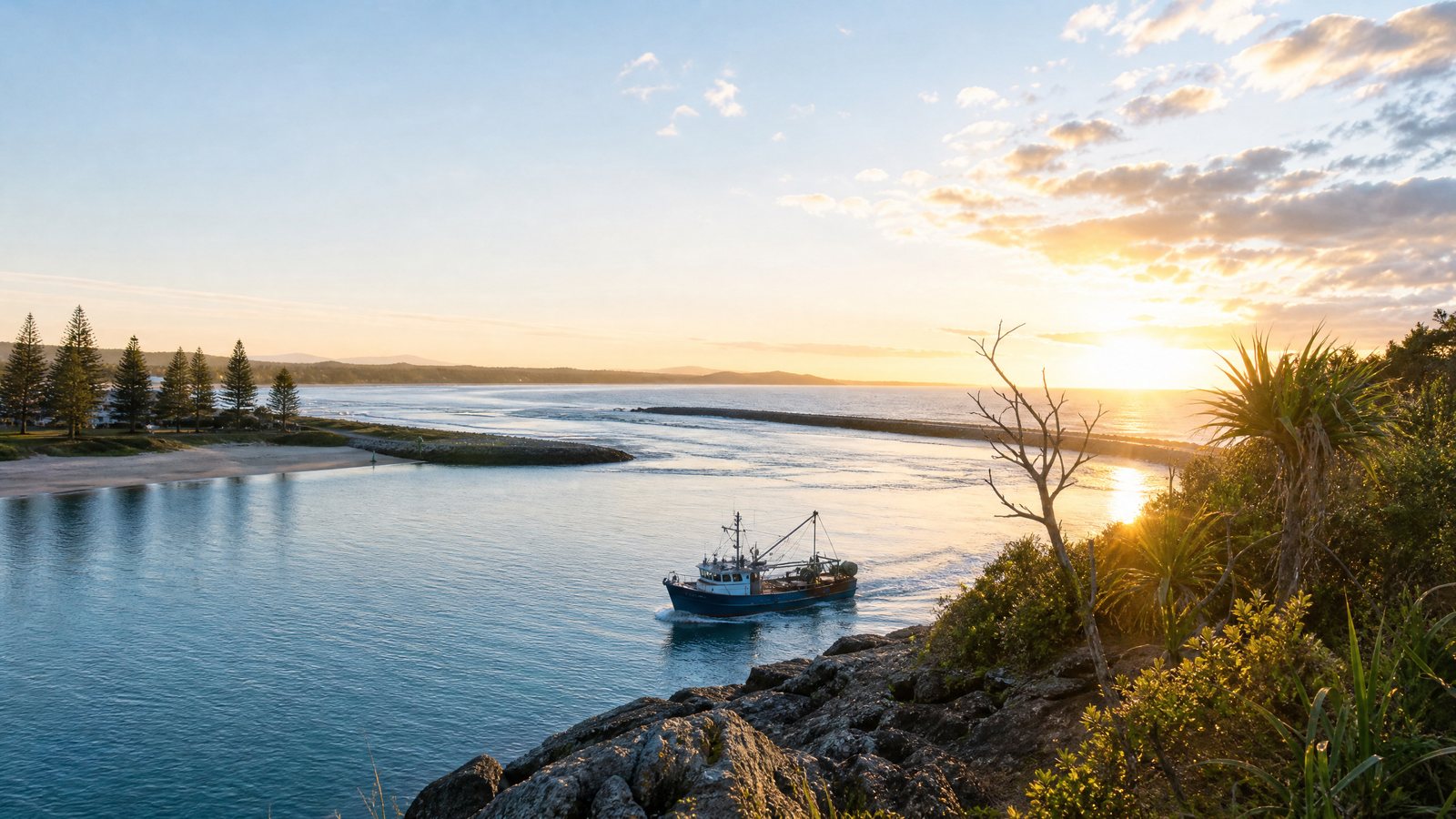
Yamba occupies a singular position on the New South Wales North Coast, anchored at the point where the expansive Clarence River meets the Pacific Ocean. This geographic convergence defines the town’s character, creating a landscape where the movement of fresh water and the surge of the tide are constant, visible forces. Unlike many coastal destinations reshaped by rapid expansion, Yamba maintains a scale grounded in its environment. Built upon headlands and river flats, the town offers varied perspectives on the water surrounding it on three sides. This proximity to the elements fosters an atmosphere described as unhurried, a quality arising from a deep alignment with the natural cycles of the estuary and the sea.
The surfing heritage of the region is centered at Angourie Point, a location holding legendary status within the global surfing community. As one of Australia’s first National Surfing Reserves, Angourie is recognized for the quality of its right-hand point break and its pristine natural setting. The coastline here is rugged, characterized by dark volcanic rock and a salt haze that clings to the headlands during the golden hour. Surfers at Angourie participate in a tradition spanning decades, navigating waves that wrap around the point with consistent power. The experience is deeply physical, defined by the clarity of the water and the quiet camaraderie of those who wait for the right set in the shadow of the coastal cliffs.
Parallel to its surfing reputation is Yamba’s identity as a premier fishing village, a legacy most famously represented by the Clarence River prawns. The town’s fishing fleet is a constant presence, with trawlers navigating the river mouth and open sea to bring in a harvest central to the local economy. This industry has fostered a sophisticated dining scene that avoids metropolitan pretension, focusing instead on the quality and provenance of the catch. In the early mornings, the sound of engines and the sight of nets are reminders of a working waterfront that remains central to the town’s life. The culinary appeal of Yamba is rooted in the immediate geography of the Clarence, where the estuary provides a celebrated bounty.
For those seeking an immersive connection with the landscape, the Yuraygir coastal walk offers a traverse through spectacular and diverse terrain. Stretching southward from Yamba, the trail follows the coastline, crossing secluded beaches and rocky headlands through coastal heaths that erupt in color during flowering seasons. The walk is a study in coastal wilderness, where the absence of development allows the sounds of wind and surf to dominate. Hikers must be attentive to tides and weather, as the path often dips to the sand or skirts steep escarpments. It is a route demanding respect for the environment, rewarding the effort with a profound sense of isolation and a clearer understanding of the rugged beauty defining the North Coast.
The headlands of Yamba serve as elevated vantage points for observing the rich marine life frequenting these waters. During annual migration seasons, humpback whales breaching offshore are a common occurrence, their massive forms visible from the town’s lookouts. Dolphins are also frequent visitors, often seen playing in the surf at Main Beach or navigating the calmer river mouth. The height of the cliffs provides a perspective that makes the scale of these animals and their movements easier to appreciate. For the observer, these encounters are reminders of the town’s position on a major biological corridor, where the rhythms of migration and feeding are as much a part of the seasonal calendar as the changing winds.
Standing as a sentinel over the town and sea, the Yamba Lighthouse is a historic landmark offering panoramic views of the surrounding landscape. The current structure occupies a site critical to maritime navigation for over a century. From the lighthouse grounds, one can look across the white water of the bar, where the Clarence River pushes into the Pacific, and see the distant outlines of the Iluka peninsula to the north. The lighthouse is a focal point for the community, a place where coastal history is tangible and the vastness of the ocean is always on display. The salt-worn surfaces of the headland reflect the enduring nature of the town’s relationship with the sea, honoring generations who looked to this point.
The Clarence River is a massive presence, its estuary a complex network of islands, channels, and mangroves providing vital habitat for birdlife and aquatic species. The river is not merely a boundary but a thoroughfare, its tidal movements shaping the daily lives of those along its banks. Exploring the river by boat or kayak reveals a quieter side of Yamba, more sheltered than the exposed ocean beaches. The islands within the estuary, such as Dart and Freeburn Island, offer glimpses into a landscape that feels ancient and untouched. The way the river broadens as it nears the sea creates a sense of openness and light, making the water an integral part of the town’s social layout.
The atmosphere of Yamba is defined by its "unhurried" pace, particularly evident during the early morning and late afternoon. As the sun sets, the light softens over the river and headlands, casting long shadows across the streets and sand. This is a time when the town settles into itself, away from the midday heat and the bustle of shops. There is a wistful quality to these hours, a sense of a place content with its own rhythm and unburdened by the need to constantly entertain. The lack of high-rise developments and the preservation of the town’s original character contribute to this feeling of timelessness, allowing visitors to experience a version of the Australian coast that feels authentic.
In conclusion, Yamba remains a storied destination where the meeting of river and sea creates a unique landscape. It is a place where the legendary surf of Angourie, the legacy of the fishing industry, and the beauty of the Yuraygir coast coexist in balance. The town’s identity is built on a mosaic of experiences—the taste of fresh prawns, the sight of a whale on the horizon, the sound of surf against the headland, and the quiet flow of the Clarence. By maintaining its relaxed atmosphere and respecting the natural forces that shape its environment, Yamba offers a profound connection to the North Coast, serving as a reminder of the beauty of a place where the water is the primary narrator.