Marine park
Where tropical and temperate currents meet along a pristine subtropical coastline
Stretching seventy-five kilometres along the North Coast, the Solitary Islands Marine Park protects a rare convergence of tropical and temperate currents, fostering a vibrant underwater wilderness where over six hundred fish species thrive in harmony.
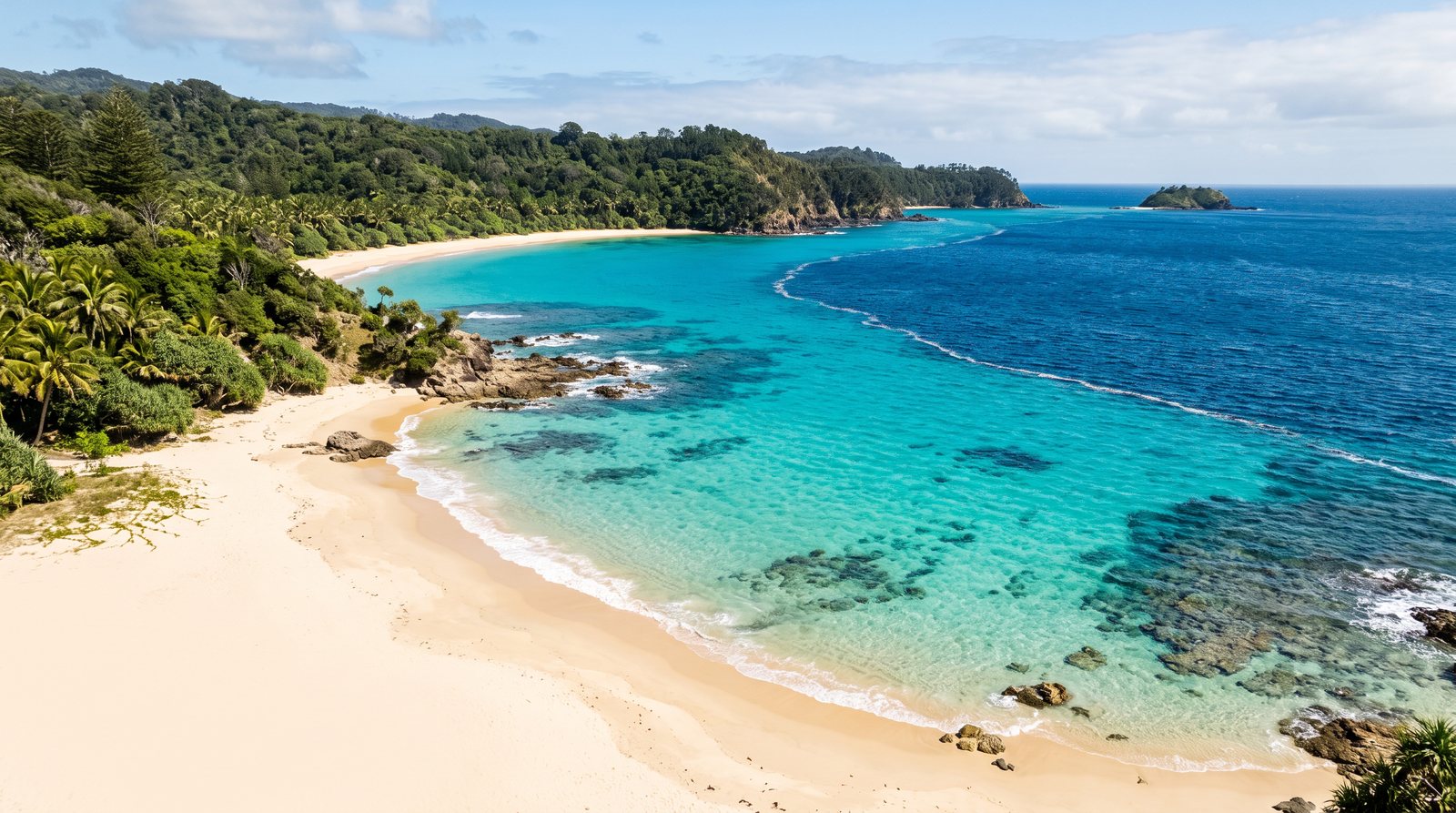
The Solitary Islands Marine Park represents a rare geographical dialogue, a seventy-five-kilometre stretch of coastline where the fluid boundaries of the Pacific are redrawn by the meeting of two great currents. This expansive marine sanctuary is defined by the convergence of the warm East Australian Current and the cooler waters of the Tasman Sea. This intersection is not merely a collision of temperatures but a profound ecological handshake, creating a subtropical transition zone that supports a diversity of life found in few other places. The park encompasses approximately 71,000 hectares of ocean, including five main islands and several smaller reefs, each serving as a vital anchor for an ecosystem thriving on the edge of climatic shifts. To stand on the shore at Diggers Beach is to look out over a hidden wilderness that functions with a complexity rivaling any terrestrial forest.
The biological significance of this convergence is most evident in the variety of species that call the Solitary Islands home. Beneath the surface, the park hosts over six hundred species of fish, ranging from neon-hued tropical residents to the streamlined predators of cooler southern waters. It is a place where a diver might encounter a clownfish amongst subtropical anemones, only to see a school of temperate snapper or grey nurse sharks gliding through deeper channels. This overlap extends to the ninety species of hard coral providing a structural foundation for the reef. These corals exist at the southern limit of their range, relying on seasonal pulses of the East Australian Current for necessary warmth. The resulting underwater landscape is a mosaic where the rigid geometry of plate corals meets the swaying soft corals and sponges of the Tasman influence.
The underwater topography is as varied as the life it supports, characterized by submerged ridges, deep gutters, and sandy plains connecting the islands to the mainland. The five primary islands—North, North West, South West, South, and Split Solitary—are the visible peaks of a vast, submerged mountain range. These islands act as baffles for prevailing currents, creating localized eddies and upwellings that bring nutrient-dense water to the surface. This process fuels a massive bloom of plankton, supporting the entire food web from small crustaceans to large marine mammals. The estuaries lining the coast, such as Woolgoolga and Corindi creeks, serve as critical nurseries for juvenile fish and invertebrates, providing a sheltered environment before they venture into the exposed marine park. The connectivity between these estuarine systems and offshore reefs is a fundamental component of the park’s health.
Managing such a complex ecosystem requires a patient, structured approach to conservation. The Solitary Islands Marine Park is governed by a detailed zoning plan that balances biodiversity protection with historical and cultural uses. Sanctuary zones offer the highest level of protection, safeguarding representative samples of each habitat type, from shallow kelp forests to deep-water reefs. In these areas, all forms of extraction are prohibited, allowing natural processes of growth and reproduction to proceed without human interference. Habitat protection and general use zones provide a tiered framework allowing for sustainable fishing and recreation, provided they do not compromise the long-term integrity of the marine environment. For the visitor, this means every encounter is guided by shared responsibilities, from consulting zoning maps to adhering to strict activity guides that protect the most sensitive underwater sites, ensuring the park remains a resilient sanctuary.
The islands serve as important terrestrial outposts, providing essential habitat for a wide range of bird and mammal species. South Solitary Island, famous for its historic lighthouse, is a significant breeding site for wedge-tailed shearwaters, which return each year to nest in burrows dug into the thin soil. The rugged cliffs also provide haul-out sites for Australian and New Zealand fur seals, often seen basking in the sun between hunting forays. During winter and spring, the park becomes a major thoroughfare for the annual migration of humpback whales. These majestic mammals travel north from Antarctic feeding grounds to mate and give birth before returning south with their calves. The Solitary Islands provide a safe corridor for this journey, with deep waters between the islands and the shore offering a protected route often visible from the many headlands along the Coffs Coast.
The experience of the Solitary Islands is deeply influenced by changing seasons, which dictate water visibility and the arrival of seasonal visitors. In summer, the East Australian Current is at its strongest, bringing clear, warm water and a surge of tropical species. During this time, visibility can exceed twenty meters, offering an unparalleled view of the intricate reef systems and bustling fish populations. As autumn turns to winter, the current weakens and cooler southern waters dominate, bringing a different set of inhabitants and a shift in the underwater palette. Kelp forests, thriving in cooler temperatures, become more prominent, providing a swaying, emerald-green backdrop for temperate species moving in to feed and breed. This seasonal rhythm is a reminder that the marine park is not a static display but a dynamic, breathing entity responding to the larger movements of the planet’s oceans.
For the human observer, the Solitary Islands Marine Park demands a specific kind of attention—one that values quiet, patient observation of a world operating on a different timescale. Snorkeling or diving here is an exercise in slow looking, where the true complexity of the ecosystem reveals itself only to those willing to wait and watch. It is in the small details that the park’s character is most clearly expressed: the way a nudibranch moves across a sponge, the subtle camouflage of a wobbegong shark, or the rhythmic pulsing of a jellyfish drifting with the tide. This form of engagement fosters a deeper understanding of the marine environment. Responsible tourism is built on this foundation of respect, encouraging visitors to act as stewards of the underwater wilderness they have been privileged to enter.
Ultimately, the Solitary Islands Marine Park stands as a living archive of the ocean’s resilience and a testament to the possibility of harmony between disparate ecological worlds. It is a place where boundaries between north and south, warm and cold, and land and sea are not barriers but points of creative tension fueling a magnificent display of life. The continued protection of this sanctuary is not just an act of environmental management but a commitment to preserving a rare dialogue unfolding for millennia. The islands offer a vision of the future where the diversity of the natural world is valued and protected, ensuring the meeting of the currents will continue to bring life to the pristine subtropical coastline for generations to come.