Coastal village
A remote seaside sanctuary where historic beacons watch over wild Pacific swells
Tucked away on the Barrington Coast, Seal Rocks offers a rare glimpse into a slower pace of life where uncrowded beaches meet the rugged headlands of Myall Lakes National Park. It remains a sanctuary for historic beacons and wild Pacific swells.
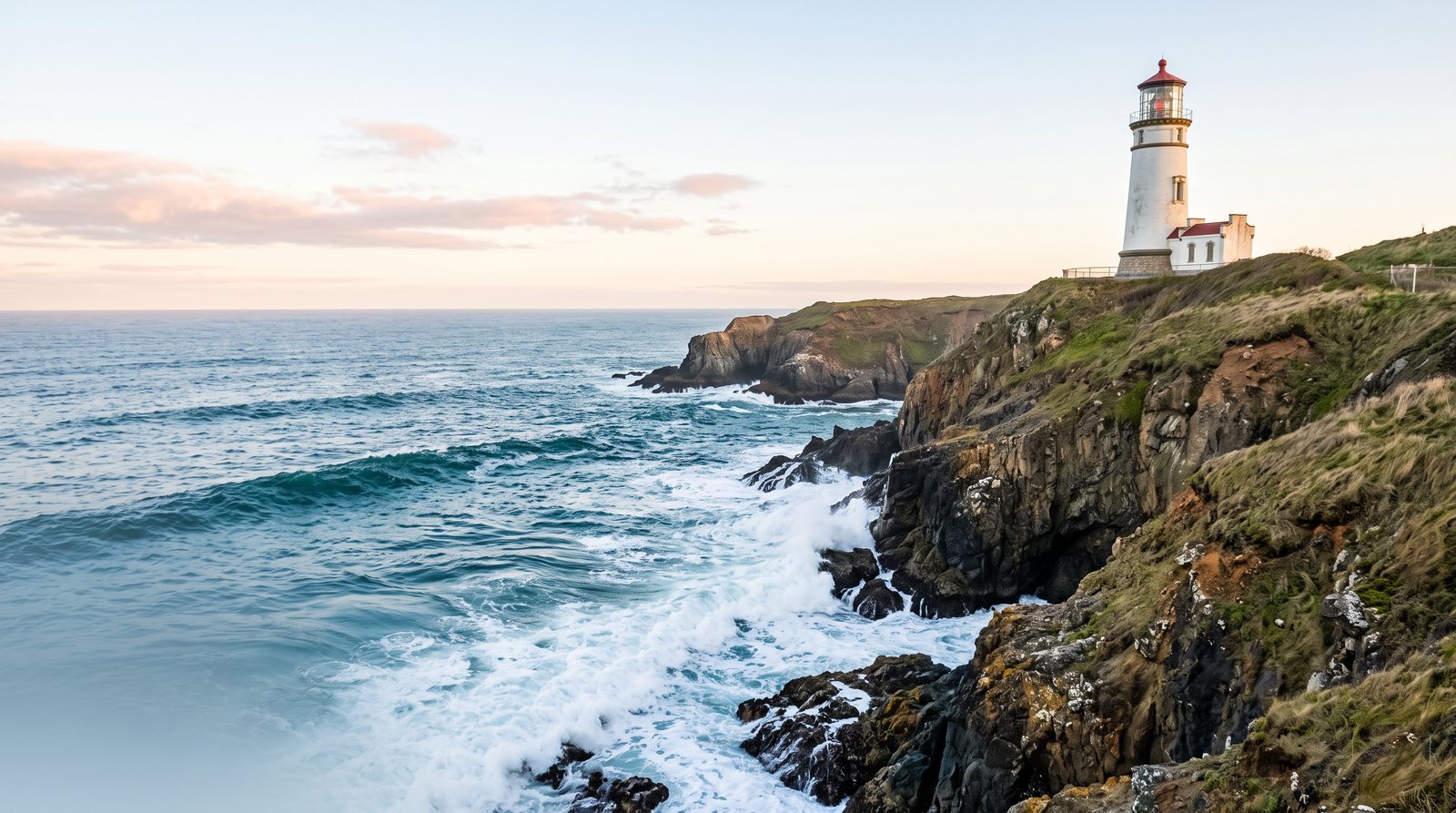
Seal Rocks exists as a deliberate pause along the otherwise accelerating trajectory of the New South Wales North Coast. Located at the edge of the Barrington Coast, this small coastal village remains one of the few places where the geographical isolation of the landscape has successfully dictated the terms of its development. It is defined by what has been preserved: a rugged, unyielding coastline that serves as a buffer between the dense eucalyptus forests of Myall Lakes National Park and the vast, unpredictable expanse of the Pacific Ocean. To arrive here is to step into a different cadence of time, one governed by the rotation of a historic light and the seasonal movements of the marine life that congregates in the deep, clear waters just offshore.
The journey to Seal Rocks is a transition through layers of coastal wilderness. The road winds through the thick littoral rainforests and paperbark swamps of the Myall Lakes system, where the canopy frequently closes over the asphalt to create a tunnel of green light. This enclosure reinforces the village’s status as a sanctuary. As the forest eventually gives way to the first glimpses of the ocean, the scale of the landscape becomes apparent. The beaches here—Number One, Boat, and Treachery—are broad, sweeping arcs of golden sand that remain largely uncrowded even in the height of summer. The absence of high-rise structures or significant commercial infrastructure allows the natural topography of the headlands to remain the dominant visual feature of the area.
Standing as the sentinel of this coast is the Sugarloaf Point Lighthouse, a structure that has defined the maritime identity of Seal Rocks since its completion in 1875. Perched on a dramatic rocky headland, the white-painted tower serves as a functional reminder of a time when the safety of coastal shipping relied entirely on the visibility of a steady beacon. The lighthouse was constructed from local sandstone, and its presence provides a grounding architectural weight to the wildness of the surrounding cliffs. From this vantage point, the sheer verticality of the headland becomes visceral, as the Pacific swells strike the jagged rocks below with a force that resonates through the ground. The precinct offers a rare look at the intersection of colonial engineering and the raw coastline.
Beneath the surface of the water, the environment of Seal Rocks is equally significant. The area is renowned among the international diving community as one of the most reliable locations to observe the grey nurse shark in its natural habitat. These prehistoric-looking predators, despite their formidable appearance, are a protected species that congregates around the submerged rocky gutters and caves of the nearby islands. The underwater topography here is a complex network of canyons and kelp forests, providing a rich nursery for a diverse range of marine life. The clarity of the water, often a deep, crystalline blue, allows for a level of visibility that makes the observation of these ecosystems a profound experience. The sanctuary extends far beyond the shoreline into this vital, ancient world.
The passage of time at Seal Rocks is marked by the grand, slow movements of the seasons. During the winter and spring months, the headlands become a premier vantage point for observing the annual migration of humpback whales as they travel along the "humpback highway" between their Antarctic feeding grounds and tropical breeding waters. From the balcony of the lighthouse or the high ridges of the walking tracks, the sight of a breach or a blow in the distance is a common occurrence. This seasonal ritual brings a different kind of energy to the village, as observers gather in quiet anticipation of these marine giants. The headland's height provides an unobstructed view to track whales across the ocean.
Seal Rocks is inextricably linked to the broader ecological system of Myall Lakes National Park. This park, which covers over 44,000 hectares, is a mosaic of lakes, islands, and coastal wetlands that have been recognized as a Ramsar site of international importance. The forest-fringed shores of the Seal Rocks area serve as a vital corridor for native wildlife, including dingoes, wallabies, and a vast array of bird species. The walking trails that spiderweb out from the village lead into the heart of this wilderness, where the transition from salt-spray-hardened heathland to towering blackbutt forest occurs within a few hundred meters. This proximity to a protected national park has acted as a natural barrier to urban sprawl, ensuring that the interface between the village and the wild remains sharp and uncompromising.
The cultural atmosphere of Seal Rocks is defined by a commitment to simplicity. In an era where coastal tourism is often synonymous with rapid development and luxury amenities, this village has maintained a steadfastly low-key profile. The social life of the place revolves around the beach, the surf, and the communal experience of the local general store. There is a palpable sense of stewardship among the residents and regular visitors, a shared understanding that the value of Seal Rocks lies in its lack of modern distractions. The "slower pace of life" is not a marketing slogan but a practical reality dictated by the geography. The limited mobile reception and the absence of streetlights allow the natural rhythms of the day—the rising sun, the shifting tides, and the emergence of the stars—to take center stage.
Ultimately, Seal Rocks serves as a vital case study in the importance of preserving remote coastal sanctuaries. It is a place where the history of human endeavor, represented by the enduring light of the Sugarloaf Point beacon, exists in a fragile but functional balance with a wild and untamed environment. As the world outside continues to accelerate, the value of these quiet, forest-fringed corners of the coast only increases. Seal Rocks remains a destination for those who seek a more precise connection to the landscape, offering a rare opportunity to witness the unadorned beauty of the Pacific swells and the ancient, weathered headlands that have watched over them for centuries. It is a place that reminds us of the necessity of stillness.