Coastal destination
Where the wild blue ocean meets the shifting peaks of ancient dunes
At the edge of the North Coast, Port Stephens serves as a profound intersection where the southern hemisphere’s largest moving dunes meet a vibrant marine sanctuary, offering a landscape defined by shifting sands and the steady presence of resident dolphins.
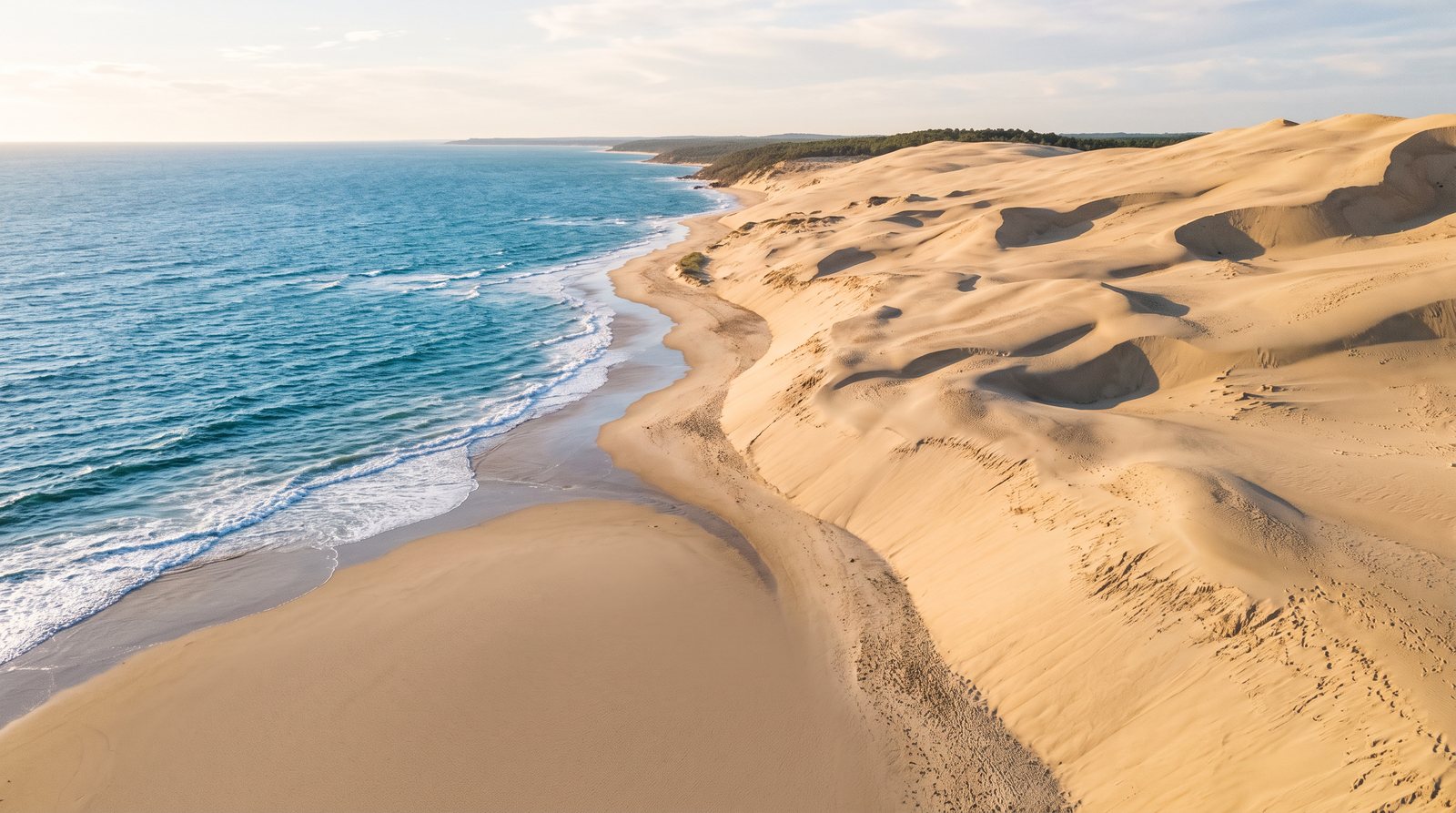
The coastline of New South Wales is often defined by rugged sandstone cliffs, but at Port Stephens, the landscape transforms into a realm of immense, moving geometry. Here, the Stockton Bight sand dunes stretch for thirty-two kilometers, forming the largest moving coastal dune system in the Southern Hemisphere. This vast expanse of silica is a living entity that marches inland at up to four meters per year, reshaping the topography with every gust of the south-easterly winds. To stand amidst these peaks is to witness a profound intersection of terrestrial and maritime forces, where the energy of the Pacific Ocean is translated into the slow migration of the land. The scale of the dunes creates a sense of isolation that belies their proximity to the bustling townships nearby, offering a visceral reminder of the geological processes sculpting the Australian continent.
These dunes are the heart of the Worimi Conservation Lands, a site of immense cultural significance to the Worimi people. For thousands of years, these shifting sands have served as a source of sustenance and a canvas for cultural expression, housing ancient shell middens periodically revealed and reclaimed by the wind. The co-management of this land by the Worimi Traditional Owners and the NSW National Parks and Wildlife Service ensures that heritage preservation and public access are balanced. Visitors traversing the dunes, whether on foot or via regulated four-wheel-drive tours, enter a landscape that is actively cared for, where the protection of fragile ecosystems and the honoring of ancestral connections are paramount. The dunes serve as a silent witness to a history that predates modern settlement, offering a perspective on time measured in the slow accumulation of sand.
Beyond the desert-like interior of the dunes, Port Stephens reveals itself as a vibrant aquatic sanctuary, famously known as the dolphin capital of Australia. The sheltered waters of the bay provide a permanent home to a resident population of approximately one hundred and forty Indo-Pacific bottlenose dolphins, whose presence defines the region’s identity. Unlike transient pods migrating along the coast, these dolphins are a constant fixture of the Port Stephens-Great Lakes Marine Park, navigating seagrass beds with a familiarity that speaks to the health of the local ecosystem. The bay’s status as a marine park ensures that these creatures, along with a diverse array of fish and migratory whales, are protected from intrusive human activities. This commitment to conservation allows for a rare level of proximity between humans and marine life, fostering a culture of observation and respect central to the visitor experience.
The topography of the region is anchored by the dramatic silhouette of Tomaree Head, a volcanic remnant standing as a sentinel at the entrance to the port. The ascent to the summit offers a comprehensive view of the North Coast’s coastal complexity, where the turquoise waters of Shoal Bay are framed by the lush, forested slopes of the headland. From this vantage point, the true scale of the Stockton Bight dunes becomes apparent, appearing as a pale, undulating ribbon separating the deep blue of the ocean from the green hinterland. The hike itself is a journey through diverse coastal plant communities, from hardy banksias to wind-swept eucalypts, providing a micro-scale view of the resilience required to thrive in a salt-sprayed environment. The summit serves as a point of orientation, allowing one to trace the intricate network of islands that serve as critical nesting sites for endangered seabirds.
The diversity of Port Stephens is further reflected in its twenty-six distinct beaches, each offering a unique interaction with the coastal environment. From the surf-heavy breaks of One Mile Beach to the tranquil surfaces of Little Beach and Dutchmans Beach, the region provides a spectrum of maritime experiences. These beaches are vital components of the coastal fringe, serving as buffers between the sea and the land. The presence of these varied shorelines allows for a nuanced understanding of how coastal dynamics change over short distances, influenced by the sheltering effects of the headlands and the orientation of the coast. For the visitor, this variety means the character of the day can be chosen by simply moving a few kilometers along the shore, transitioning from the raw energy of the open ocean to the quiet contemplation of a sheltered cove.
Maintaining the delicate equilibrium of Port Stephens requires a sophisticated approach to environmental management, particularly as the region’s popularity grows. The Stockton Bight dunes are highly susceptible to erosion and the introduction of invasive species, necessitating strict regulations on vehicle access and pedestrian movement. Similarly, the marine park’s zoning plan must navigate the competing interests of commercial fishing, recreational boating, and species protection. This ongoing effort to manage the landscape is a testament to the value placed on the region’s natural heritage, recognizing that the very features drawing people to Port Stephens are also those most easily diminished. The visitor notes and alerts provided by the National Parks and Wildlife Service are essential tools for ensuring the human presence remains sustainable, allowing future generations to experience the same sense of wonder that the dunes currently inspire.
As the sun sets over the North Coast, the light hitting the Stockton Bight dunes transforms the white silica into a palette of warm ochres and deep shadows, highlighting the intricate ripples carved by the wind. This daily spectacle is a reminder of the ephemeral nature of the landscape, where every grain of sand is in a state of potential movement. Port Stephens stands as a place where the geological past and the environmental present are inextricably linked, offering a substantive encounter with the forces defining the Australian coast. In the quiet moments at the edge of the dunes, one can feel the pulse of the coast, a rhythm that has persisted for millennia.
The experience of Port Stephens is ultimately one of convergence—where the ancient and the modern, the land and the sea, and the human and the wild meet in a landscape of remarkable clarity. The preservation of the Stockton Bight dunes and the protection of the bay’s marine life are investments in the continuity of a story belonging to the whole of New South Wales. It is a place that rewards curiosity and respect, providing a space where the shifting peaks of the dunes and the wild blue of the ocean are understood as parts of a single, magnificent system. As the dunes continue their slow march inland, they carry with them the history of the land and the promise of a future where the wildness of the coast remains central to the Australian identity.