Heritage town
Aviation heritage meets the golden bloom of the historic Riverina plains
Temora serves as a profound intersection of history and nature in the Riverina, where the silver wings of vintage warplanes meet the golden expanse of the Canola Trail. This heritage town offers a rare, sensory-rich journey through Australia’s legacy.
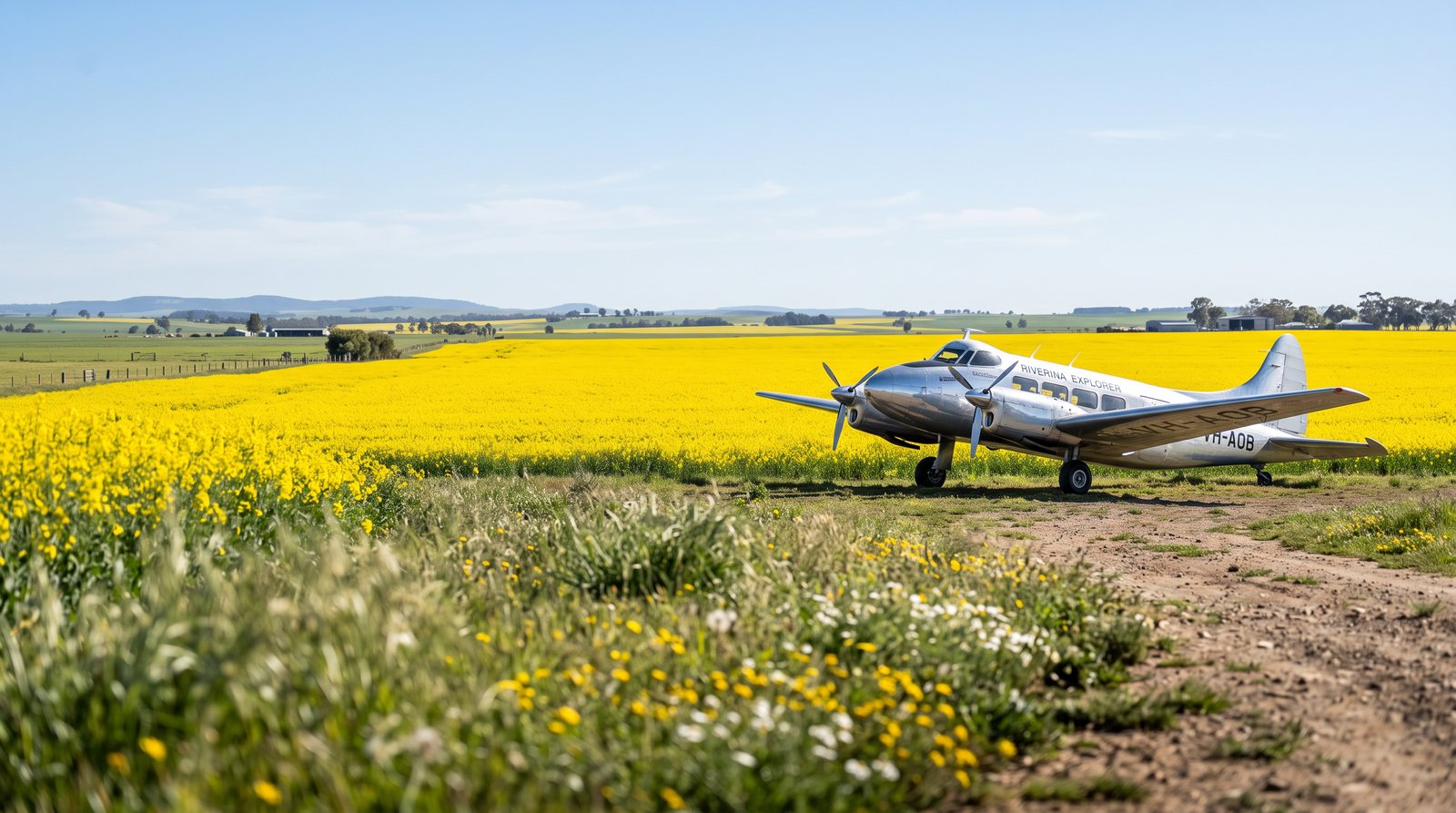
In the northeastern Riverina, where the undulating plains of New South Wales begin their descent toward the interior, lies Temora—a town that operates as a singular intersection of mechanical precision and agricultural rhythm. During the spring months, the landscape undergoes a transformation so complete that it feels like a deliberate act of gilding. The surrounding paddocks, once the muted greens of the winter wheat cycle, erupt into the brilliant yellow of the canola bloom. This is the heart of the "Hello Yellow" Canola Trail, a regional circuit that connects the heritage communities of Junee, Coolamon, and Temora in a celebration of the harvest. Yet, even as the eye is drawn to the golden earth, the ear is often caught by a sound from another era: the unmistakable roar of a Rolls-Royce Merlin engine. It is this duality—the grounded beauty of the plains and the soaring legacy of the skies—that defines Temora.
The town’s origins are rooted in the 1860s gold rush, a period that saw thousands of prospectors descend upon the Western Slopes. Founded in 1879, Temora derives its name from a Gaelic term, a nod to the heritage of the early settlers. While the gold eventually thinned, the true wealth of the region was found in its fertile soils, sustaining a robust tradition of sheep farming and wheat production. The heritage architecture that lines the town’s main streets today stands as a testament to the prosperity of that era. Walking through the town center, one feels the weight of this history as a living foundation for a community that has bridged the gap between its pioneer past and a sophisticated regional future. The preservation of these buildings ensures that the town retains its character as a gracious settlement even as it embraces its modern role as a hub for aviation.
The defining feature of Temora’s modern identity is the Temora Aviation Museum, an institution that has gained international acclaim since its establishment in 1999. Founded by David Lowy, the museum was born from a vision to keep historic aircraft in the environment for which they were built: the sky. Unlike many aviation collections where planes sit in silent repose, the aircraft at Temora are maintained to rigorous flying standards. This philosophy of "living history" transforms the visitor experience into a visceral encounter with the past. The museum’s hangar houses one of the world's finest collections of flying vintage warplanes. Here, the history of Australian military aviation is told through the very machines that once patrolled the coastlines and fought in distant theaters of war. The collection spans from the pre-World War II era through to the jet age, offering a comprehensive timeline of technological evolution.
Among the museum’s most prized residents are the Supermarine Spitfires—specifically the Mk VIII and Mk XVI models. To see a Spitfire on the tarmac at Temora Aerodrome, its elliptical wings silhouetted against a clear blue Riverina sky, is to witness a masterpiece of engineering. These aircraft are symbols of a pivotal moment in global history, and their presence allows new generations to appreciate the sheer scale of the effort required to keep them aloft. The museum also houses other legendary craft, such as the North American P-51 Mustang and the Curtiss P-40 Kittyhawk. On designated flying days, the town becomes a pilgrimage site for enthusiasts who travel from across the continent to hear the symphony of vintage engines. The smell of high-octane fuel and the sight of a vintage jet performing low passes create a sensory experience that grounds the abstract facts of history in the physical reality of flight.
While the silver wings of the warbirds dominate the sky, the golden bloom of the Canola Trail dominates the earth. The transformation begins in late August, when the fields around Temora become a sea of vibrant yellow foliage. The "Yellow Bloom Road," a dedicated path planted beside Lake Centenary, offers visitors a chance to immerse themselves in this floral spectacle. The 2.7-kilometer walk around the lake provides a perfect vantage point for photographers, with the yellow blossoms reflecting in the tranquil waters. This agricultural phenomenon is a vital part of the Riverina’s economy and a source of regional pride. The trail encourages a slower pace of travel, inviting visitors to stop at local farm gates and explore the boutique shops of neighboring villages. The contrast between the industrial precision of the aviation museum and the organic beauty of the canola fields creates a narrative of balance—a town that respects both the machine and the land.
For those seeking a deeper understanding of the region’s human history, the Bundawarrah Centre provides a comprehensive look at the pioneer life that shaped the Riverina. This sprawling complex includes a pioneer village, where historic buildings have been restored to create a tangible link to the 19th century. From the old schoolhouse to the blacksmith’s forge, the center captures the ingenuity and resilience of the early settlers who carved a living out of the bush. It also houses the Temora Ambulance Museum and a significant collection of agricultural machinery, illustrating the technological shifts that allowed the region to become a powerhouse of Australian primary production. The Bundawarrah Centre complements the aviation museum by focusing on the stories of the people who built the town, ensuring that the narrative of Temora is as much about the hands that tilled the soil as it is about the pilots who flew the planes.
Ultimately, Temora offers a wistful experience—a journey that evokes a longing for the craftsmanship of bygone eras while celebrating the living beauty of the natural world. Planning a visit requires foresight, particularly during the peak spring season when regional accommodation can reach capacity. Travelers should consult the official aviation museum’s flying calendar to align their trip with the days when the warbirds take to the air. Beyond the major attractions, the town offers a warm hospitality best experienced through its local cafes and friendly conversations in the shaded squares. It is a place that rewards the curious traveler with a sense of genuine connection to the Australian story. In the intersection of the silver wing and the golden bloom, Temora finds its unique voice, inviting all who pass through to witness a chapter of history that is as enduring as the Riverina plains themselves.