Heritage town
Vast plains, riverside trails, and the golden legacy of Australian wool
On the banks of the Murrumbidgee, Hay stands as a gateway to the infinite horizon of the Riverina. From the shearers' legacy to the quiet history of the Dunera Boys, the town preserves a pastoral heart where the earth meets a 360-degree sky.
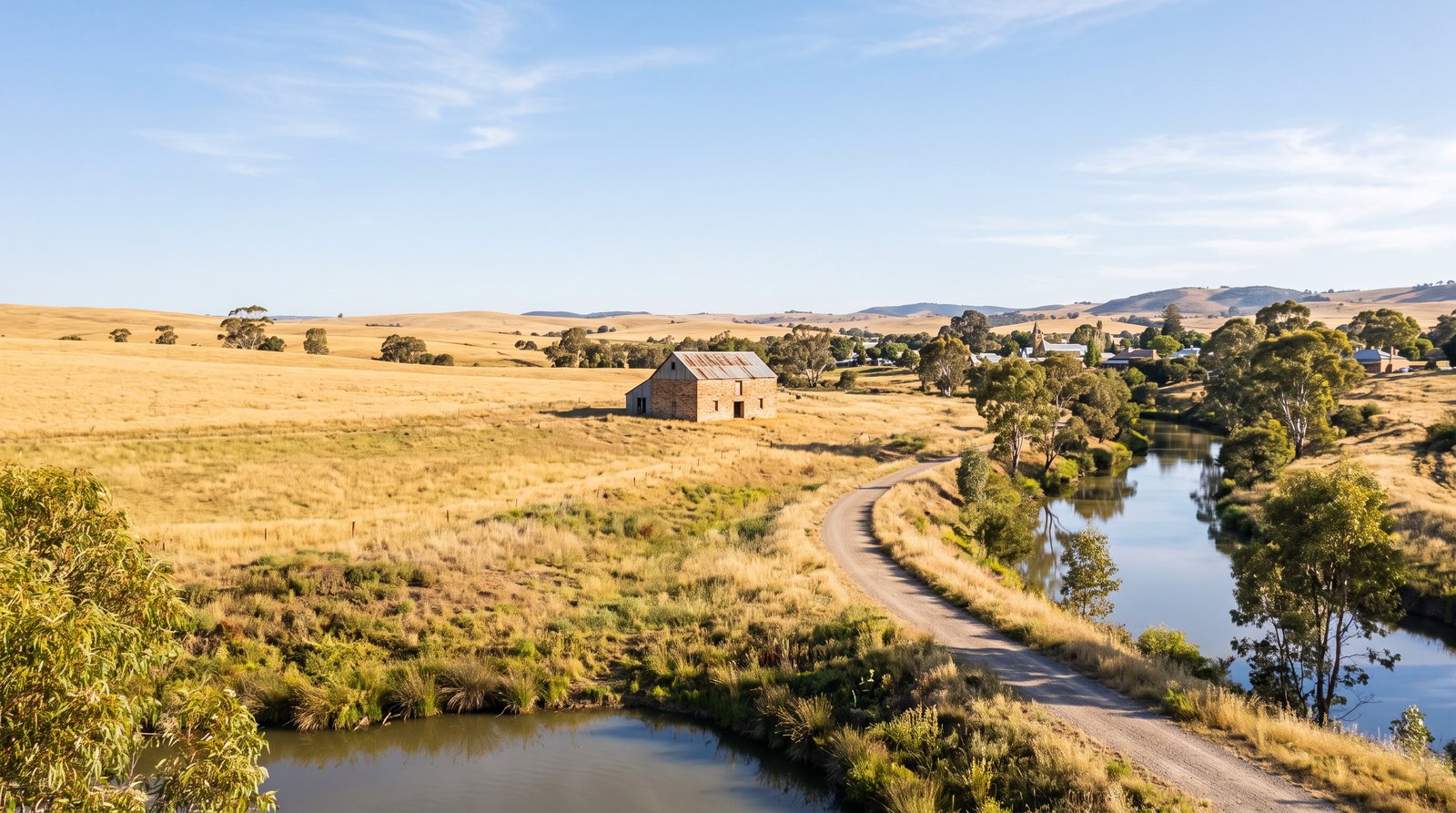
The Hay Plains are defined by a geographical fact: they are among the flattest places on the planet. To stand at the center of this expanse in the western Riverina is to witness the curvature as reality. Unlike the undulating hills of the east, the landscape here offers no vertical resistance. It is a pancake-flat horizon that stretches infinitely in every direction, creating a 360-degree theater of sky. This vastness dictates the rhythm of life in Hay, where the town appears as a necessary anchor in a sea of saltbush and red dust. For the traveler, the first encounter with the plains is a moment of sensory recalibration, where the scale of the Australian interior is suddenly and undeniably revealed.
While the plains define the horizon, the Murrumbidgee River defines the town’s survival. Perched on the banks of this waterway, Hay exists because of the water that cuts through the landscape. The river is a corridor of green, lined with ancient red gums that stand in stark contrast to the low-lying scrub. The Bidgee Riverside Trail offers a way to navigate this boundary, winding through the timber and providing glimpses of the dark, slow-moving water that has sustained the region for generations. In the early morning, mist rises from the surface and the calls of cockatoos echo through the canopy. It is a place of transition where the industrial legacy of the river trade has given way to a quieter, more reflective form of recreation.
Hay’s identity is inextricably linked to the golden age of wool. The Shearers Hall of Fame, known as Shear Outback, serves as a living monument to this heritage. It is not a static museum but a place where the physical labor of shearing is still demonstrated. The architecture of the shearing shed reflects a highly evolved system of agricultural production that transformed the Riverina into a premier wool-growing region. To witness a demonstration is to understand the grueling, rhythmic nature of the work—the heat, the grease of the lanolin, and the precision required to harvest the fleece. This legacy is visible throughout the town, from the grand historic buildings funded by pastoral wealth to the simpler cottages that once housed the families of those who worked the land.
The history of Hay also holds a significant chapter of history. During World War II, the town became the site of an internment camp for the "Dunera Boys"—refugees transported from Britain to Australia as enemy aliens. The Dunera Museum, housed in vintage railway carriages at the Hay Railway Station, preserves the stories of these men. It is a narrative of displacement, resilience, and eventual contribution, as many of the internees went on to become prominent figures in Australian life. The museum provides a somber counterpoint to the town’s agricultural narrative, reminding visitors that even in the most remote corners of the continent, the ripples of international conflict have left an indelible mark.
The physical character of Hay is defined by a sense of permanence and order. The wide streets were originally designed to allow bullock teams, hauling massive loads of wool, to turn around with ease. Today, these avenues provide a sense of space that mirrors the surrounding plains. The town’s heritage buildings, such as the Hay Gaol and various historic banks, are constructed from sturdy brick and stone to withstand the extremes of the Riverina climate. There is a particular dignity in the way these structures have been maintained, serving as functional spaces for the modern community while retaining their 19th-century aesthetic. Walking through the town, one notices the deliberate placement of public gardens and shaded squares, which offer a necessary respite from the intense summer sun.
As the day draws to a close, the Hay Plains undergo a dramatic transformation. The legendary 360-degree sunset is a consequence of the unobstructed horizon. Without hills or tall buildings to block the view, the light of the setting sun fills the entire dome of the sky. The colors transition from a harsh gold to deep oranges and eventually a bruised purple that settles over the saltbush. It is a moment of profound stillness, where the solitary silhouette of a saltbush or a lone windmill becomes a focal point in a vast, glowing landscape. This daily ritual is a reminder of the environmental forces that shape life in the Riverina—the heat of the day giving way to the cool clarity of the desert night.
Modern Hay balances its historical weight with a welcoming spirit. The visitor center’s initiative to provide free bicycles is a practical expression of the town’s flat geography. Cycling the Bidgee Riverside Trail or the heritage circuit allows for a slower, more intimate engagement with the landscape. The community remains connected to the seasonal rhythms of the land, with events often tied to the agricultural calendar. There is a lack of pretension in the hospitality found here—a straightforwardness that reflects country life. Whether in local cafes or historic pubs, there is a sense of a community that knows its history and is proud to maintain it. This blend of heritage and accessibility ensures that Hay remains a destination that rewards attentive travel.
To visit Hay is to encounter a specific kind of Australian wistfulness—a feeling of being connected to a grand past while standing in a landscape that seems indifferent to time. The rusted machinery and quiet museum halls are vessels for the memories of a region that has navigated through boom and bust. The golden legacy of wool is still present, but it is now part of a broader story that includes the resilience of refugees and the enduring presence of the Murrumbidgee. In the silence of the Hay Plains, one can hear the echoes of the past, creating a layered narrative that defines the Riverina’s pastoral heart. It is a place that reminds us of the value of looking closely at the horizon.
In the end, the appeal of Hay lies in its refusal to be hurried. Shaped by the slow movement of bullock teams and the steady flow of the river, the town invites visitors to adopt a similar pace. The vast plains and riverside trails are invitations to experience a different sense of scale. By preserving its heritage while embracing the modern traveler, Hay ensures that its story remains relevant. It stands as a testament to the enduring power of the Australian interior—a place where the past meets the infinite possibilities of the horizon. As the stars appear over the dark expanse, the town remains a beacon of human effort and memory in the great, open heart of the country.