Town
Golden poplars and crystal waters in the western Snowy Mountains foothills
Nestled in the western foothills of the Snowy Mountains, Tumut offers a serene escape defined by fly-fishing rivers and the vibrant golden transformation of its poplars. This destination serves as a gateway to the wonders of Kosciuszko National Park.
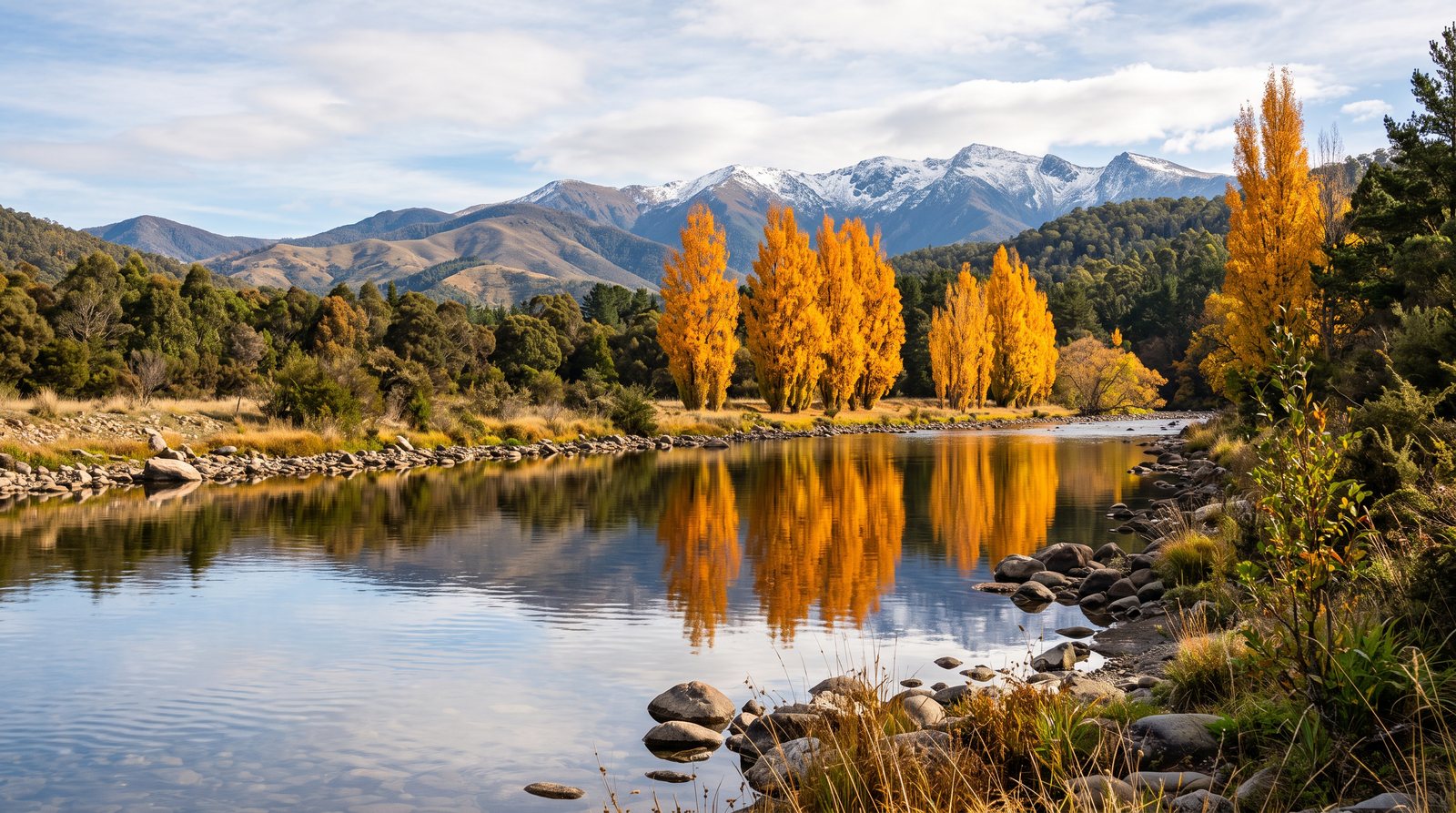
Nestled in the western foothills of the Snowy Mountains, Tumut occupies a unique geographical position where rugged alpine peaks transition into the fertile plains of the Riverina. The town is defined by its relationship with the Tumut River, which winds through the valley as a cold, crystal-clear ribbon. For those arriving from the dry expanses to the west, the encounter with Tumut is marked by a sudden drop in temperature and a shift in light, as mountain air meets the warmth of the valley floor. The town maintains a grounded resilience reflecting its history as a service hub for regional timber and agricultural industries, offering a landscape that changes profoundly with every passing season.
The Tumut River is the lifeblood of the region, its character shaped by its role as a significant tailwater for the Snowy Mountains Hydro-electric Scheme. High, cold, and remarkably clear, the river supports a thriving ecosystem, most notably a world-class population of brown and rainbow trout. This has made Tumut a primary destination for fly-fishing enthusiasts who navigate the reaches in drift boats or wade into swifter currents near the town’s edge. The experience is as much about the environment as the catch; the river runs through forest corridors, open farmland, and manicured parklands, offering sensory immersion in the sounds of rushing water. Water clarity rewards the patient and observant angler who respects the river’s predictable yet demanding nature.
Perhaps the most iconic visual association with Tumut is the vibrant transformation of its deciduous trees during autumn. While much of the Australian landscape is defined by evergreen eucalypts, Tumut was planted extensively with poplars, elms, and willows by early settlers, creating a pocket of the northern hemisphere in the Snowy Mountains foothills. Every April, these trees ignite in a spectacular display of gold and russet, celebrated by the annual Falling Leaf Festival. The festival, a community staple for over seventy years, marks the harvest and the arrival of cooler mountain air. During this time, the town takes on a luminous quality as the low autumn sun filters through the thinning canopy, reflecting off the crystal river waters.
History in Tumut is tangible, particularly in the preservation of industrial landmarks like the Old Butter Factory on Adelong Street. This historic sandstone and brick structure stands as a reminder of the town’s past as a center for dairy production in the early twentieth century. Today, the building has been repurposed to house local enterprises, including a cafe and boutique shops, allowing visitors to experience heritage architecture in a contemporary context. The factory’s thick walls and high ceilings evoke the scale of early regional industry, while its riverside location provides a direct link to the water that once powered its operations. The careful stonework has allowed the building to endure as a focal point of the town’s cultural landscape.
Beyond the built environment, the Tumut Wetlands offer a sanctuary for diverse avian species and a place of quiet reflection. This rehabilitated landscape, once a series of degraded lagoons, has been transformed into a thriving ecosystem through community effort. A network of walking tracks and boardwalks allows access to the water’s edge, where one can observe black swans, pelicans, and elusive reed-dwelling species. The wetlands serve as an important ecological corridor, connecting the river to the surrounding forest and providing a vital breeding ground for local wildlife. A stroll through the wetlands at dawn or dusk offers a chance to witness the landscape at its most active, as the air fills with bird calls.
Tumut’s role as the northern gateway to Kosciuszko National Park is most evident at Blowering Dam, one of the largest reservoirs in the Snowy Mountains Scheme. The dam is a massive engineering feat, holding back the Tumut River to create a vast expanse popular for boating, water-skiing, and fishing. The shoreline is dotted with campgrounds, such as Yachting Point, where visitors can pitch a tent at the water’s edge and wake to views of the surrounding mountains reflected in the still surface. Blowering Dam is also significant as the site where Ken Warby set the world water speed record in 1978. The scale of the dam and the surrounding wilderness provides a taste of the rugged high country beyond the town.
A short drive from Tumut leads to the Yarrangobilly area of Kosciuszko National Park, home to spectacular limestone caves. These ancient formations, some dating back over two million years, offer a subterranean world of intricate stalactites and vast chambers carved by water over eons. Visitors can take guided tours through caves like the Jersey or the North Glory, each offering a unique perspective on the geological history of the region. Above ground, the Yarrangobilly Thermal Pool remains a constant twenty-seven degrees Celsius year-round, fed by a natural spring. Swimming in the pool, surrounded by the steep, forested walls of the valley while the mountain air remains crisp, is a quintessential Snowy Mountains experience that highlights the diverse natural offerings.
The seasonal rhythm of Tumut is a significant asset, providing reasons to return throughout the year. In winter, the town serves as a base for those heading to the nearby Selwyn Snowfields, offering a cozy retreat after a day on the slopes. Spring brings a burst of new life as gardens and orchards come into bloom, filling the air with the scent of blossoms and the sound of bees. Summer is a time for the river and the dam, where cool water provides a welcome escape from the valley heat. Each season is distinct, yet they are all tied together by the enduring presence of the mountains and the river. The town maintains a genuine hospitality where the pace of life is dictated by the water.
Ultimately, a visit to Tumut rewards those willing to slow down and engage with the landscape. Whether it is the patient art of fly-fishing, the quiet observation of birdlife in the wetlands, or a walk beneath the golden poplars, the town offers a profound sense of place. It is a destination that invites exploration but also provides opportunity for rest, serving as a reminder of the beauty found in the transitions between high peaks and low plains. As the western foothills of the Snowy Mountains continue to draw travelers seeking adventure and tranquility, Tumut remains a steadfast anchor. The golden light of autumn and the crystal waters of the river continue to tell a story of resilience, heritage, and natural wonder in this inviting corner.