Town
Discover cool-climate wines and historic rail trails in the scenic Snowy Mountains foothills
Nestled in the western Snowy Mountains foothills, Tumbarumba offers a refined escape defined by premium cool-climate vineyards and a historic rail trail. Visitors can explore cascading waterfalls, fly fish in pristine streams, and sample award-winning wines.
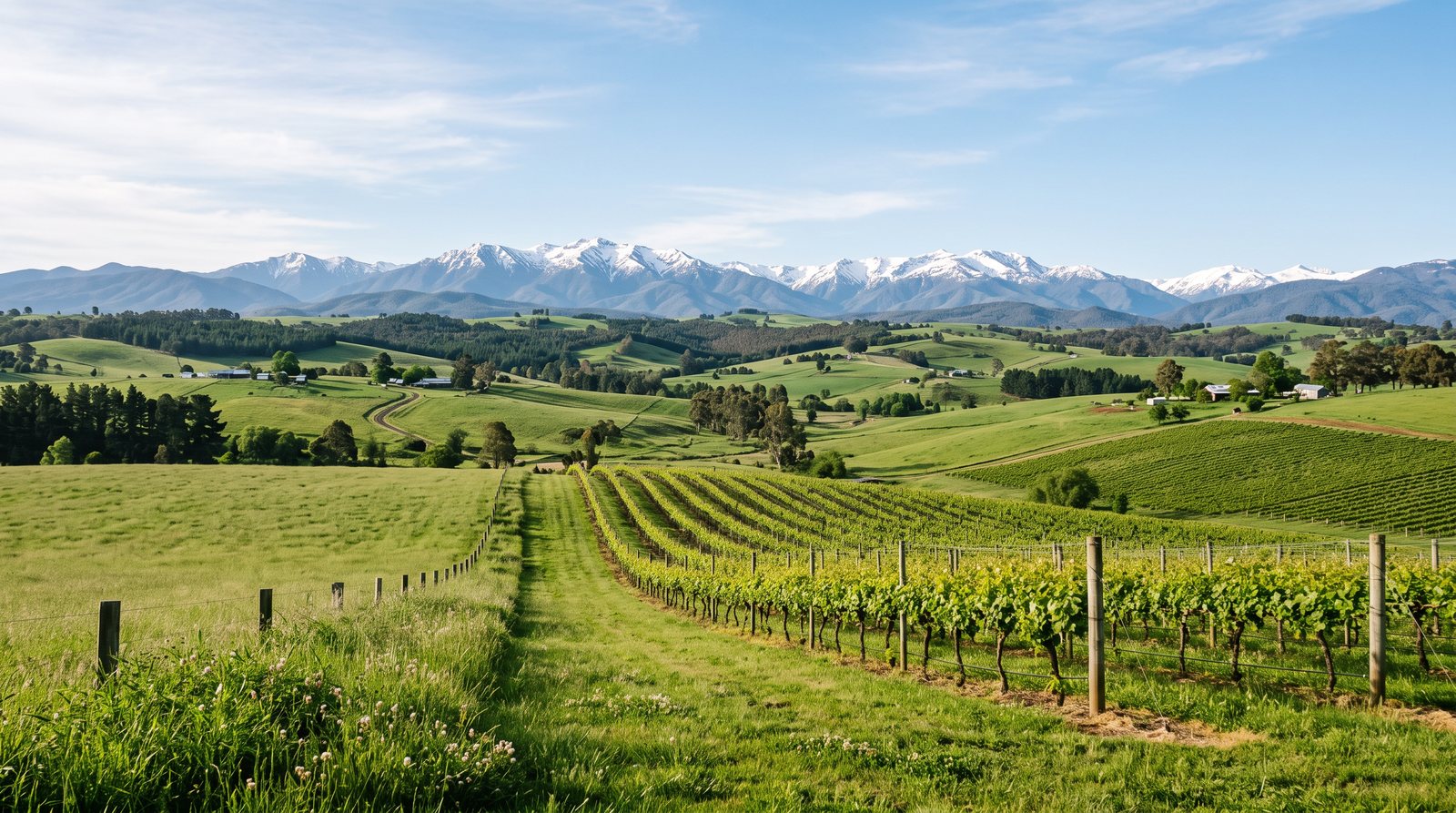
The western slopes of the Snowy Mountains present a landscape where the rugged verticality of the Australian Alps begins to soften into the undulating rhythms of the foothills. Tumbarumba sits at this geographical threshold, a town defined by its elevation and the cooling influence of the nearby peaks. The air here carries a distinct clarity, a reminder of the proximity to the high country, yet the environment is one of verdant abundance rather than alpine austerity. This transition zone creates a unique microclimate, where the local soils and consistent rainfall support a diverse array of agricultural and natural systems. It is a place where the scale of the mountains is always present on the horizon, providing a dramatic backdrop to the valley floors and forested ridges that characterize the region's immediate surroundings.
One of the most significant recent transformations in the region is the development of the Tumbarumba to Rosewood Rail Trail. This route follows the path of the historic railway line, repurposing a corridor once vital for timber and livestock into a contemporary artery for slow exploration. The trail winds through a sequence of diverse landscapes, from the sheltered shade of eucalypt forests to the open expanses of grazing land. For the cyclist or walker, the trail offers a level gradient that belies the mountainous terrain, providing a democratic way to experience the scale of the foothills. The preservation of original railway infrastructure—culverts and bridges—serves as a tactile connection to the industrial history of the Snowy Mountains, grounding the modern recreational experience in a longer narrative of regional development.
The viticultural identity of Tumbarumba is inextricably linked to its specific cool-climate conditions. Unlike the warmer wine regions of Australia, the vineyards here operate at the limits of sustainable grape growing, where the long, slow ripening season allows for the development of intense aromatics and precise acidity. Chardonnay and Pinot Noir have found a resonant home in these elevated sites, producing wines celebrated for their structural elegance and purity of fruit. The growers in this region must work with a high degree of attentiveness, managing the risks of late frosts and variable harvests to produce a product that reflects the specificities of the landscape. This commitment to site-specific winemaking has elevated Tumbarumba to national significance, offering a counterpoint to more robust styles and emphasizing the importance of climate in defining regional character.
Water is the defining force of the Tumbarumba landscape, descending from the high plateaus of the Snowy Mountains in a series of cascades and clear-running streams. The region’s waterfalls are not merely scenic landmarks but are central to the local ecosystem and the visitor’s sensory experience. These sites offer a profound encounter with the power of gravity and the persistence of the hydrological cycle. The constant movement of water over ancient rock formations creates a localized atmosphere of moisture and cool air, supporting pockets of lush vegetation that contrast with the drier eucalypt forests of the surrounding ridges. Observing these falls provides a moment of stillness within the larger movement of the landscape, inviting a form of attention that recognizes the slow work of erosion and the enduring presence of the mountain’s runoff.
The pristine streams that intersect the foothills are renowned for their clarity and the opportunities they provide for fly fishing. This activity embodies the Wistful Ink ethos of slow, deliberate engagement with the natural world. Fly fishing in the Snowy Mountains foothills requires a deep understanding of the river’s rhythm—the way the current breaks around a submerged rock, the timing of insect hatches, and the subtle movements of trout in the shadows. It is a practice of quiet observation, where the angler becomes part of the riparian environment, standing in the flow of the water and responding to its minute changes. The success of a day on the river is measured not just by the catch, but by the degree of immersion achieved in the landscape, providing a rare opportunity to disconnect from the pace of modern life.
Beyond its modern agricultural and recreational roles, Tumbarumba remains deeply connected to its history as a timber town. The vast forests that surround the settlement have for generations provided the raw material for construction and industry across New South Wales. This heritage is visible in the architecture of the town and the managed landscapes of the surrounding hills, where the transition between native forest and plantation reflects a long-standing relationship with the land as a source of resource and livelihood. The timber industry has shaped the social fabric of the community, fostering a culture of practical expertise and resilience that continues to define the town’s character today. Even as the region diversifies, the presence of the mills and the scent of freshly cut wood remain integral to the sensory identity of Tumbarumba.
The experience of Tumbarumba is profoundly shaped by the passing of the seasons, each bringing a different light and a different pace to the town. In autumn, the deciduous trees planted by early settlers turn the valley into a tapestry of gold and red, while winter brings the crisp, cold mornings and the occasional dusting of snow that signals the region’s alpine connections. Spring is a period of rapid renewal, with the blossoming of orchards and the vigorous growth of the vineyards, followed by the long, warm days of summer that are ideal for exploring the rail trail and the riverbanks. These seasonal shifts are celebrated through local festivals and harvests, events that bring the community together and offer visitors a chance to participate in the regional calendar. This cyclical rhythm ensures that the town is never static.
In the broader context of Australian travel, Tumbarumba represents a refined alternative to conventional mountain destinations. It offers a balance between the ruggedness of the high country and the sophistication of a mature agricultural landscape, providing a space where natural beauty and human industry coexist in a state of productive tension. Whether one is traversing the rail trail, sampling the latest vintage at a cellar door, or simply watching the light change on the distant peaks, the region invites a form of travel that is both restorative and intellectually engaging. It is a destination that rewards the patient visitor, offering a deeper understanding of how geography, climate, and history converge to create a place of enduring character. As the Snowy Mountains continue to evolve, Tumbarumba stands as a testament to the value of the foothills.