Alpine town
A year-round alpine hub perched on the sapphire shores of Lake Jindabyne
Perched on the sapphire shores of its namesake lake, Jindabyne serves as the high-altitude gateway to the Snowy Mountains. This vibrant alpine hub balances the winter adrenaline of Australia’s premier ski fields with the quiet serenity of the high country.
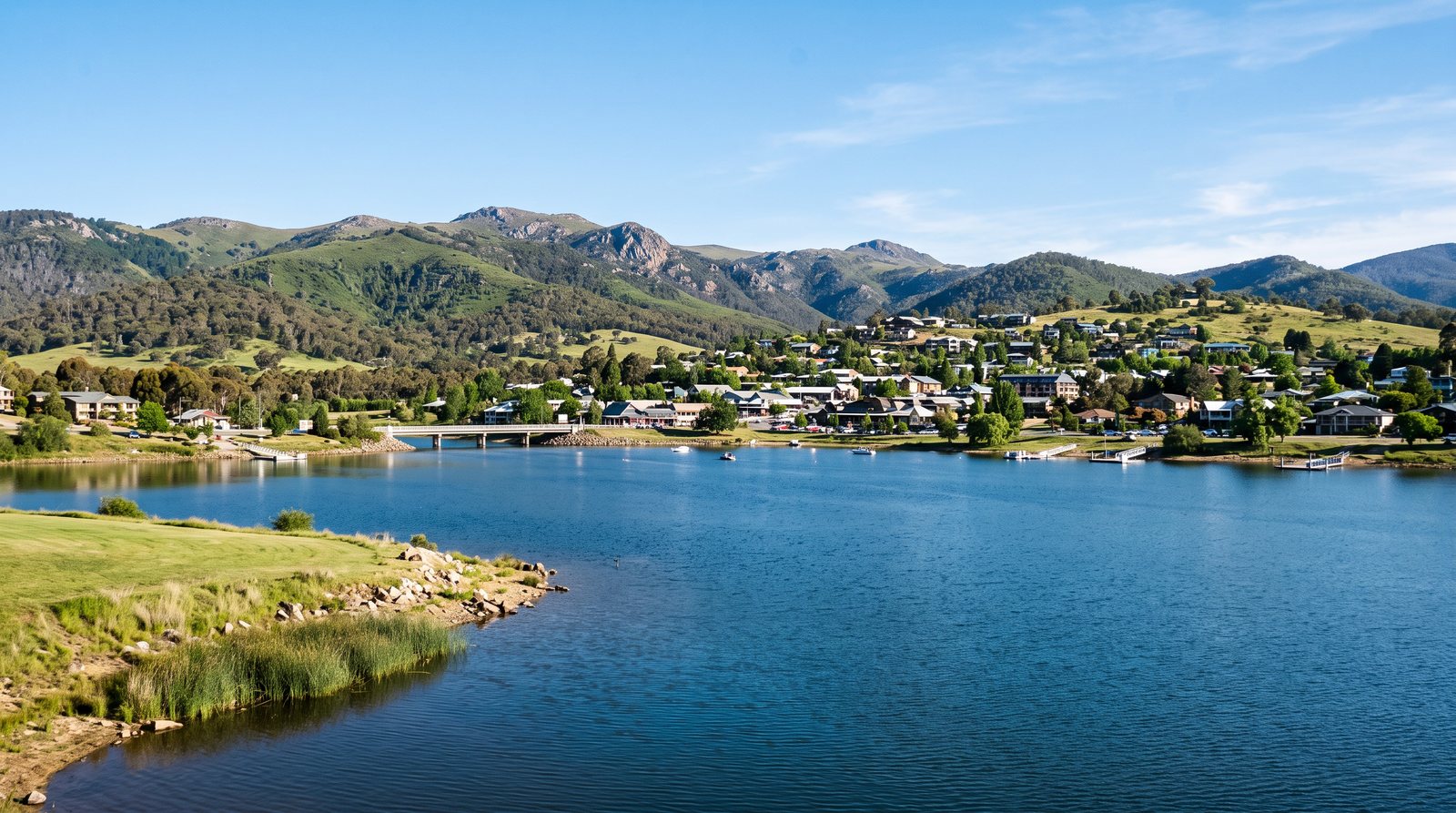
The approach to Jindabyne is a study in shifting light. As one leaves the rolling basalt plains of the Monaro, the landscape begins to fold, giving way to the rugged granite outcrops and snow gums of the Australian Alps. The first glimpse of the town is defined by the water; Lake Jindabyne sits in a vast basin, a shimmering expanse mirroring the changing moods of the sky. At dawn, the surface is often veiled in a delicate mist that lifts to reveal the distant, snow-capped peaks of Kosciuszko National Park. This setting is the soul of the town, a place where mountain grandeur meets the stillness of a deep alpine reservoir.
Beneath the clear waters of the lake lies a ghost of the town’s former self. Old Jindabyne, established in the 1840s as a modest pastoral settlement on the banks of the Snowy River, was sacrificed in 1967 to the grand ambitions of the Snowy Mountains Scheme. This massive hydro-electric and irrigation project, which remains one of the largest engineering feats in Australian history, transformed the region’s geography forever. The relocation of the town was a profound moment for the local community, as houses were moved or demolished and the familiar streets were slowly reclaimed by the rising tide of the dam. Today, during periods of extreme drought, the remains of the old town—stone foundations and the skeletal remains of trees—sometimes emerge from the depths, serving as a haunting reminder of the cost of progress and the enduring power of the water.
When the first frosts of autumn give way to the heavy snowfalls of winter, Jindabyne undergoes a dramatic transformation. The quiet lakeside village becomes a bustling hive of activity, serving as the primary base for thousands of visitors heading to the nearby ski resorts of Perisher and Thredbo. The air in town grows crisp and scented with woodsmoke, and the streets hum with the energy of skiers and snowboarders preparing for a day on the slopes. This seasonal rhythm is the town’s lifeblood, supporting a vibrant ecosystem of gear shops, restaurants, and lodges. Yet, even in the height of the ski season, Jindabyne retains a distinct sense of alpine serenity that sets it apart from the more commercialized mountain villages higher up the range.
As the snow melts and the alpine wildflowers begin to bloom, the town’s pace slows to a more contemplative rhythm. Summer in Jindabyne is defined by long, lazy days spent on or near the water. The lake, once a frozen fringe in winter, becomes a playground for sailing, kayaking, and water skiing. The crystal-clear water is remarkably refreshing, drawing swimmers to its secluded coves and sandy stretches. For many, the appeal of summer lies in the escape from the stifling heat of the coast, as the high altitude provides a natural air conditioning that makes outdoor activity a pleasure rather than a chore. It is a time for lakeside picnics and sunset walks, where the only deadline is the fading of the light over the western peaks.
The tradition of angling is deeply woven into the fabric of Jindabyne’s culture. The lake is renowned as one of the premier trout fishing destinations in the country, home to thriving populations of Rainbow, Brown, and Brook trout. Anglers often gather at the water’s edge in the quiet hours of the morning, their lines casting long arcs across the still surface. The pursuit extends beyond the lake itself to the rushing waters of the Thredbo and Eucumbene rivers, where fly-fishing requires a patient, rhythmic grace. There is a specific kind of quietude found in this pursuit, a focused attention on the movement of the water and the subtle signals of the fish that perfectly encapsulates the "wistful" character of the region.
Beyond the town limits lies the vast expanse of the Kosciuszko National Park, a World Heritage-listed wilderness that offers a profound connection to the ancient Australian landscape. Jindabyne serves as the essential portal for those seeking to conquer the roof of Australia. The Mount Kosciuszko Summit walk, which begins at the top of the Thredbo chairlift or from the trailhead at Charlotte Pass, leads hikers through a landscape of extraordinary beauty. Here, the vegetation is low and resilient, consisting of alpine heaths and herbfields that have adapted to the harsh conditions of the high country. In summer, these fields erupt in a carpet of silver snow daisies and yellow billy buttons, creating a vibrant tapestry against the grey granite boulders.
The identity of modern Jindabyne is linked to the migration that accompanied the Snowy Mountains Scheme. Between 1949 and 1974, over 100,000 workers from more than thirty countries arrived to labor on the dams and power stations. This influx of European migrants brought a rich multicultural heritage, influencing everything from local architecture to the culinary scene. Today, the community is a blend of long-term residents, seasonal workers, and lifestyle migrants, all united by a shared love for the mountain environment. This social fabric reflects the grit and cooperation required to thrive in a landscape that can be as unforgiving as it is beautiful.
Respect for the alpine environment is a requirement for anyone visiting Jindabyne. The mountains are a place of extreme contrasts, where a clear blue sky can rapidly give way to a blizzard or torrential downpour. The "visitor note" for the region is a necessary guide for safety; checking official NSW National Parks conditions for road closures and park entry requirements is an essential ritual. Preparedness is the hallmark of the experienced alpine traveler, from carrying snow chains in winter to ensuring adequate water and sun protection in summer. This respect fosters a deeper appreciation for the fragility and power of the wilderness that surrounds the town.
Ultimately, Jindabyne remains a place that bridges the gap between the modern world and the timeless wild. It is a town that has been built, flooded, and rebuilt, yet it has never lost its connection to the landscape that defines it. Whether one is drawn by the adrenaline of the winter slopes, the quietude of a summer morning on the lake, or the historical echoes of the Snowy Scheme, Jindabyne offers a profound sense of place. It is a destination that rewards the patient observer, a high-country sanctuary where the sapphire water and the granite peaks invite a slower, more attentive way of being. In the heart of the Snowy Mountains, Jindabyne stands as a testament to the enduring allure of the Australian Alps.