Rural town
Pastoral charm and contemporary culture at the heart of the Sapphire Coast
Nestled at the junction of the Bega and Brogo Rivers, this historic town is the epicurean heart of the Sapphire Coast. Known for its world-class cheese, Bega blends lush dairy pastures with a vibrant contemporary arts scene and pristine wilderness access.
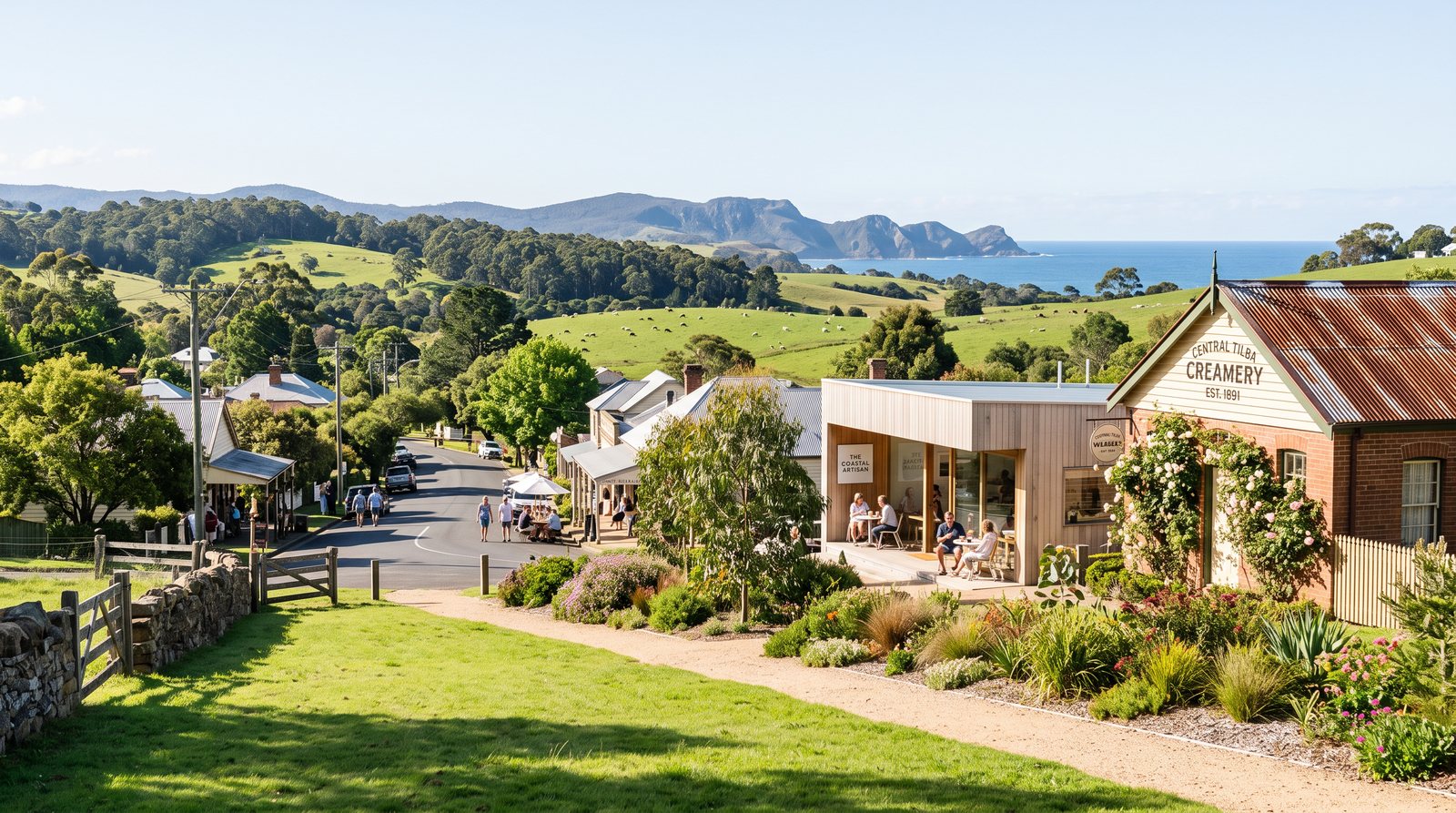
Bega, located at the junction of the Bega and Brogo Rivers on the Sapphire Coast of New South Wales, serves as a regional hub that harmonizes agricultural heritage with a burgeoning contemporary cultural identity. The town’s geographic positioning within a fertile valley, surrounded by the rugged Kybean Range and dense wilderness, has historically defined its economic trajectory. Unlike many coastal settlements, Bega has developed as the inland epicurean heart of the region, anchored by its proximity to both lush dairy pastures and pristine natural environments. This intersection of riverine geography and pastoral land has fostered a community rooted in both primary production and the curation of regional arts. The resulting landscape is one where historic sandstone architecture and traditional farming practices coexist with modern exhibition spaces and environmental conservation efforts, offering a multifaceted encounter with the Australian regional experience.
The foundational narrative of Bega is inextricably linked to the Australian dairy industry, which began in the Bega Valley during the 1850s. The region’s temperate climate and reliable rainfall provided ideal conditions for cattle grazing, leading to the establishment of the Bega Co-operative Creamery Company. The opening of the original Bega Cheese factory in 1900 marked a pivotal moment in the town’s industrial history, formalizing a collective approach to production that elevated the Bega brand to international recognition. Today, the Bega Cheese Heritage Centre, a reconstruction of one of the company’s earliest buildings, serves as both a functional dairy outlet and a historical archive. It documents the evolution of cheesemaking processes from manual labor to automated systems, illustrating the technological shifts that have sustained the local economy. The endurance of this industry is a core component of the town’s social fabric, where generations of farming families have contributed to a world-class epicurean tradition.
Complementing its agricultural prowess, Bega has emerged as a premier destination for contemporary art in regional New South Wales, centered around the South East Centre for Contemporary Art (SECCA). As a first-class exhibition space, SECCA curates a diverse program of thought-provoking collections that challenge the traditional boundaries of regional art. A cornerstone of this cultural program is the biennial Shirley Hannan National Portrait Prize, which honors the gallery’s eponymous patron and attracts significant entries from across the country. This prize has elevated Bega’s standing within the national arts community, demonstrating that rigorous intellectual and creative inquiry can flourish outside of metropolitan centers. The nearby Spiral Gallery Cooperative further enhances this ecosystem by providing a rotating platform for local artists. Through these institutions, Bega facilitates a continuous dialogue between the local landscape and broader contemporary themes, ensuring that the town’s cultural life remains as vibrant and evolving as its physical surroundings.
The preservation of Bega’s historical trajectory is evidenced by the Bega Pioneers Museum, housed in a significant building dating back to the mid-1800s. This institution serves as a repository for the collective memory of the valley’s early European settlers, featuring an extensive collection of over 200 photographs that document the faces and places of a bygone era. The museum’s holdings include a diverse array of artifacts, ranging from a rare horse-drawn ambulance to a substantial collection of militaria from the two World Wars, reflecting the community’s historical engagement with both local challenges and global events. By maintaining these physical links to the past, the museum provides a necessary context for understanding the town’s contemporary character. The architectural integrity of the museum building itself, with its weathered surfaces and period details, acts as a silent witness to the passage of time and the resilient spirit of the pioneers who first recognized the potential of the Bega Valley.
Beyond the town’s built environment lies a landscape of profound spiritual and ecological significance, most notably embodied in Biamanga National Park. This site is of immense importance to the local Yuin Aboriginal people, representing a sacred space where ancient Indigenous lore and the natural world are entwined. In a landmark decision in 2006, Biamanga was returned to its traditional owners, marking a significant step toward the recognition of Indigenous land rights in the region. The park’s terrain, characterized by massive granite boulders and ancient gum trees, offers a stark contrast to the manicured pastures of the valley floor. Visitors to Biamanga are invited to engage with a deeper history of the land, one that predates European settlement by tens of thousands of years. The co-management of the park ensures that the cultural heritage of the Yuin people is protected while allowing for the scientific study and public appreciation of its unique biodiversity, reinforcing Bega’s connection to the deep history of the continent.
The broader environmental context of Bega is defined by the Brogo Wilderness and the Kybean Range, which provide a sanctuary for a diverse range of flora and fauna. The Brogo River, which joins the Bega River at the town’s edge, flows through deep gorges and glassy waterways that remain largely untouched by modern development. The Kybean Range to the west is densely carpeted in banksias, grevilleas, and mountain gum forests, creating a rugged backdrop that influences the local microclimate. Nearby national parks such as Wadbilliga and Bournda offer additional opportunities for ecological exploration, featuring everything from coastal heaths to temperate rainforests. These protected areas are essential components of a regional conservation strategy that seeks to preserve the Sapphire Coast’s unique environmental assets. The accessibility of these wilderness areas from the town center allows for a seamless transition between urban convenience and the raw beauty of the Australian bush, reinforcing Bega’s identity as a gateway to the natural world.
In recent years, Bega’s agricultural roots have branched into a more diverse and sophisticated epicurean culture, exemplified by the Bega Produce Markets and artisanal ventures like the North of Eden Gin School. These initiatives reflect a growing consumer interest in traceability and the stories behind regional food and drink. The produce markets provide a direct link between local growers and the community, showcasing the seasonal variety of the valley’s harvest, from organic vegetables to artisanal honey. Meanwhile, the emergence of high-quality spirits production indicates a shift toward value-added agricultural products that leverage the region’s reputation for quality. This modern epicurean movement does not replace the traditional dairy industry but rather complements it, creating a more resilient and multifaceted local economy. By embracing both its heritage and new culinary trends, Bega continues to reinforce its position as a central pillar of the Sapphire Coast’s food culture, attracting visitors who seek an authentic and high-quality gastronomic experience.