Nature reserve
Discover a pristine wildlife haven and historic lighthouse retreat off the Narooma coast
Nine kilometres off Narooma, Barunguba Montague Island is a vital sanctuary for the state's largest little penguin colony and a historic granite sentinel. This nature reserve blends wildlife conservation with a profound maritime heritage and ancient Yuin culture.
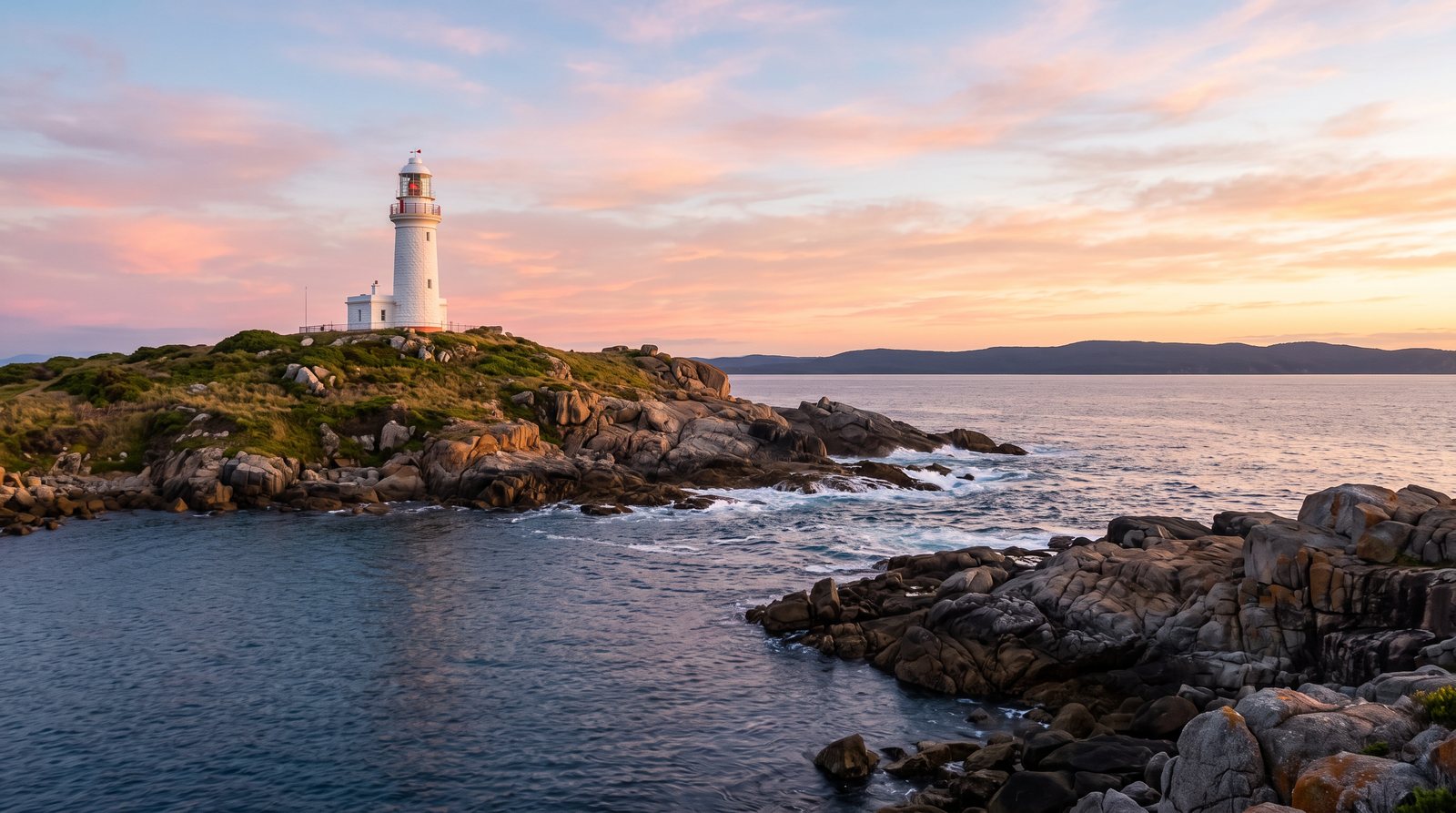
The approach to Barunguba Montague Island from Narooma marks a transition between two distinct worlds. As the mainland recedes, the nine-kilometre stretch of the Tasman Sea serves as a natural buffer, isolating a landform that has remained a critical sanctuary for biodiversity and a sentinel of maritime history for over a century. Known as Barunguba to the Yuin people, the island is a complex ecosystem where terrestrial and marine environments intersect. Rising from the continental shelf, its granite foundations have withstood the Pacific for millennia, creating a rugged topography that supports significant wildlife populations. For the visitor, the island offers a rare opportunity to witness raw natural rhythms, but this access is governed by restraint, ensuring human presence remains secondary to the preservation of the island’s residents.
Geologically, the island is a remnant of a larger landmass, separated from the coast as sea levels rose after the last glacial period. This isolation allowed it to become a biodiversity hotspot, free from many invasive species that pressure mainland ecosystems. The island is divided into two main sections—North and South Montague—connected by a narrow isthmus. The vegetation consists of hardy coastal scrub and grasses adapted to salt-laden winds and thin soils. This landscape provides essential nesting habitat for thousands of seabirds, making the island a vital avian sanctuary. The surrounding waters are enriched by the East Australian Current, bringing nutrient-rich flows that support diverse marine life, from plankton to apex predators.
The most celebrated residents are the little penguins, Eudyptula minor, forming the largest colony in New South Wales. Each evening, as the sun dips below the Great Dividing Range, hundreds of these flightless birds emerge from the surf in a ritual known as the penguin parade. They navigate the rocky shoreline with agility, returning to burrows hidden among the grasses to feed chicks or rest. The colony's scale reflects the success of the island’s management as a nature reserve. Researchers monitor the population closely, ensuring nesting sites remain undisturbed. The absence of foxes and feral cats allows the population to thrive, providing a baseline for understanding marine health. The sight of these resilient creatures returning from foraging is a poignant reminder of the island’s role as a safe haven.
Beyond penguins, the island is a vital haul-out site for Australian and New Zealand fur seals. The rocky northern end provides an ideal environment for these marine mammals to rest and socialize. During peak seasons, the shoreline is animated by hundreds of seals, their vocalizations carrying across the water. The interaction between seals and the marine ecosystem is dynamic; they are formidable hunters and indicators of fish abundance. Observing seals from a respectful distance offers insight into their complex social structures and physical power. The island’s position also makes it a premier location for whale watching during annual migrations of humpback and southern right whales. These giants often pass close to shore, their breaching providing a spectacular display of ocean grandeur.
The human history of the island is dominated by the 1881 granite lighthouse. Designed by James Barnet, the tower was constructed from granite quarried directly from the island, a feat of nineteenth-century engineering. The lighthouse was established to guide vessels through treacherous South Coast waters, a role it performed with human keepers for over a century before automation. The granite’s grey hue allows the structure to blend with rocky outcrops, yet its height makes it an unmistakable landmark. The light remains an active aid to navigation, its beam a constant presence in the night sky. Preservation of the lighthouse and associated buildings is a priority, ensuring the stories of families who lived in this isolated outpost are not lost to time.
Adjacent to the lighthouse are restored keepers' cottages, offering a unique overnight experience. Staying on the island after the last tour boat departs allows for profound immersion in the atmosphere. The cottages reflect their historical character while providing necessary comforts. As night falls, the sounds of the island change; the wind through grass, the roar of surf, and nocturnal calls of seabirds create a soundscape different from the mainland. This stay is a curated experience in ecological and historical appreciation. It encourages a slower pace, allowing guests to witness transitions of light and life in the margins of the day. Waking to a sunrise over the Tasman Sea, with only seals and birds for company, is a powerful reminder of the value of protected wilderness.
For the Yuin people, the traditional custodians, Barunguba holds deep spiritual significance. In Aboriginal tradition, the island is the eldest son of Gulaga, a sacred mountain on the mainland. The relationship between mountain and island is central to local Dreamtime stories, representing a connection between land and sea existing for tens of thousands of years. The island was a site for ceremony and seasonal food, and its name, Barunguba, is used alongside its European name to honor this heritage. Today, the island is managed through a partnership respecting these cultural ties, ensuring the Indigenous perspective is integrated into conservation and interpretation. This dual identity enriches the visitor experience, offering a layered understanding of the island as a place of ancient tradition and modern science.
Access to Barunguba Montague Island is strictly managed to balance public interest with wildlife needs. Visitors must arrive via licensed tour operators, and numbers are limited. This regulated approach is essential for maintaining the integrity of nesting sites and the tranquility of seal colonies. The requirement that visitors be at least five years old reflects the rugged nature of the tracks and the need for environmental awareness. By treating the island as a privileged destination rather than a high-traffic site, authorities have preserved its unique character. The island stands as a model for how sensitive ecosystems can be shared without compromising ecological health. It remains a place where the wild is allowed to be truly wild, and human history is integrated into a narrative of natural resilience.