Heritage village
Gold rush history and rare wildlife encounters define this charming South Coast village
Between ancient forests and the Pacific coast, Mogo preserves a balance of 1850s gold rush heritage and creative resilience. The village is defined by wildlife conservation, a vast new trail network, and artisans maintaining its timber-framed legacy.
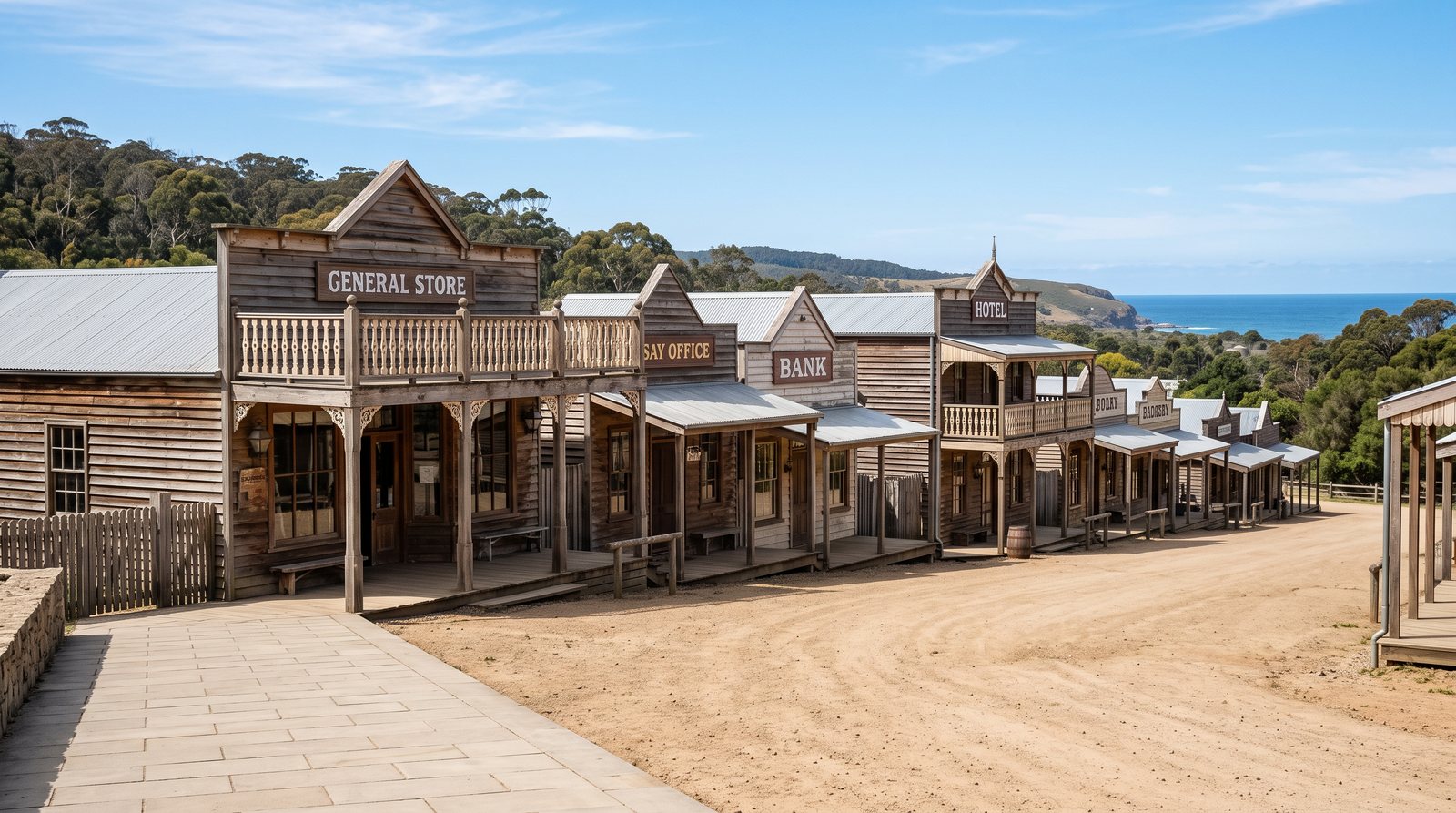
Situated on the Princess Highway between Batemans Bay and Moruya, the village of Mogo occupies a unique position within the Eurobodalla region of New South Wales. Unlike the coastal towns nearby, Mogo is deeply rooted in the hinterland, where the dense eucalypt forests of the Mogo State Forest meet the tidal reaches of the Tomaga River. It is a place where nineteenth-century gold rush remnants coexist with a sophisticated contemporary arts scene and a world-renowned wildlife sanctuary. The village’s appeal lies in this synthesis of heritage and nature, offering a quieter, more contemplative alternative to busier tourist hubs.
The town’s origins are tied to the discovery of gold in 1851, which transformed the quiet valley into a bustling center of industry. The 1857 discovery of alluvial gold in Cabbage Tree Creek sparked a significant rush, drawing prospectors from across the colony. During its peak, Mogo was a thriving frontier town, its streets lined with hotels, general stores, and blacksmiths serving a population driven by the hope of a life-changing strike. The mining operations eventually expanded into the wider region, creating a network of settlements that defined the local economy for decades. Even as the easy gold was exhausted, the town’s identity remained tied to the earth. The Bimbimbie mine, the last significant gold operation in the area, continued to produce until 1984, marking the end of a century-long chapter of extraction and the beginning of the village’s transition into a heritage-focused community.
Today, the physical character of Mogo is defined by its preserved timber-framed buildings, many dating back to the late nineteenth century. These structures, with their wide verandas and weathered facades, provide a tangible link to the town’s colonial past and house a thriving community of artisans. The village has earned a reputation as a center for handcrafted excellence, where pottery, leatherwork, and traditional crafts are practiced with dedication. Walking through the village center, visitors encounter specialized galleries and workshops that prioritize the tactile over the mass-produced. This artisan culture is a core component of the town’s social fabric, sustained by a community that values the slow, deliberate process of creation. The sun-drenched verandas, often occupied by local makers at work, serve as public stages for a way of life that respects the materials of the region and the history of the hands that shape them.
A short distance from the village, the Mogo Wildlife Park represents a significant facet of the town’s modern identity. Established in 1991, the park has evolved into a world-class facility dedicated to the conservation of endangered species. Unlike traditional zoos, Mogo focuses on rare animals, including the cotton-top tamarin, the black-and-white ruffed lemur, and the Sumatran tiger. Its breeding programs are internationally recognized, contributing vital data to global efforts to save species from extinction. The park’s layout emphasizes naturalistic enclosures that reflect the diverse habitats of its inhabitants, from the snowy peaks favored by snow leopards to the dense jungles of red pandas. This commitment to conservation provides a profound counterpoint to the town’s extractive history, shifting the focus from what can be taken from the land to what must be protected and nurtured for the future.
The surrounding Mogo State Forest, once a site of intensive timber harvesting, has recently become a premier destination for outdoor adventure. The completion of the Mogo Trails network in May 2025 marked the culmination of an $8 million investment by the Eurobodalla Shire Council and Forestry Corporation NSW. Spanning over 155 kilometers, this extensive system of mountain bike trails caters to all skill levels, from gentle family loops to technical descents for experienced riders. The trails weave through spotted gum forests and fern-filled gullies, offering glimpses of the Pacific Ocean in the distance. By repurposing the forest for sustainable recreation, the project has boosted the local economy and fostered a deeper appreciation for the region’s natural beauty. The trails serve as a modern conduit between the village and the wilderness, encouraging an engagement with the landscape that is both active and environmentally conscious.
Geographically, Mogo sits where temperate coastal rainforests meet the drier sclerophyll forests of the lowlands. This ecological transition zone supports a remarkable variety of flora and fauna, making the area a significant site for nature observation. The Tomaga River provides a vital corridor for birdlife and aquatic species, its tidal movements connecting the inland village to the marine environments of the coast. For the observant visitor, the natural world in Mogo is an active presence, heard in the call of the yellow-tailed black cockatoo and seen in the intricate patterns of the forest floor. The preservation of these natural assets is central to the town’s future, ensuring that the beauty that first drew people to the valley remains intact for generations to come.
The resilience of the Mogo community was tested during the 2019-2020 Black Summer bushfires, an event that left a lasting mark on the landscape and the town’s psyche. The fires necessitated a massive recovery effort that highlighted the strength of local connections. In the aftermath, rebuilding was not merely about restoring structures but about reaffirming the town’s commitment to its heritage and environment. The successful protection of the Mogo Wildlife Park during the crisis became a symbol of the community’s dedication to its most vulnerable residents. Today, the scars on the landscape are gradually being covered by new growth, and the village has emerged with a renewed sense of purpose. The recovery has seen the introduction of more resilient infrastructure and a heightened awareness of fire management, ensuring that the lessons of the past are integrated into the planning of the future.
In the contemporary landscape of the South Coast, Mogo stands as a testament to the power of a place that knows its own history. It is a destination that invites a slow exploration of its galleries, its trails, and its sanctuary. Whether panning for gold, watching a tiger in the quiet of the morning, or descending a forest trail, the experience is one of connection—to the land, the past, and a community that has chosen to build something lasting. The village continues to evolve, finding new ways to interpret its stories while remaining faithful to the quiet, timber-framed charm that defines its streets. As the sun sets over the coastal range, casting long shadows across the artisan verandas, Mogo remains a place of profound character, a small village with a very large story to tell.