National park
Where ancient spotted gums meet the edge of the dramatic South Coast
Spanning forty-four kilometres of the New South Wales South Coast, Murramarang National Park represents a rare ecological convergence where ancient spotted gum forests meet the tide. This sanctuary preserves a 150-million-year-old geological narrative.
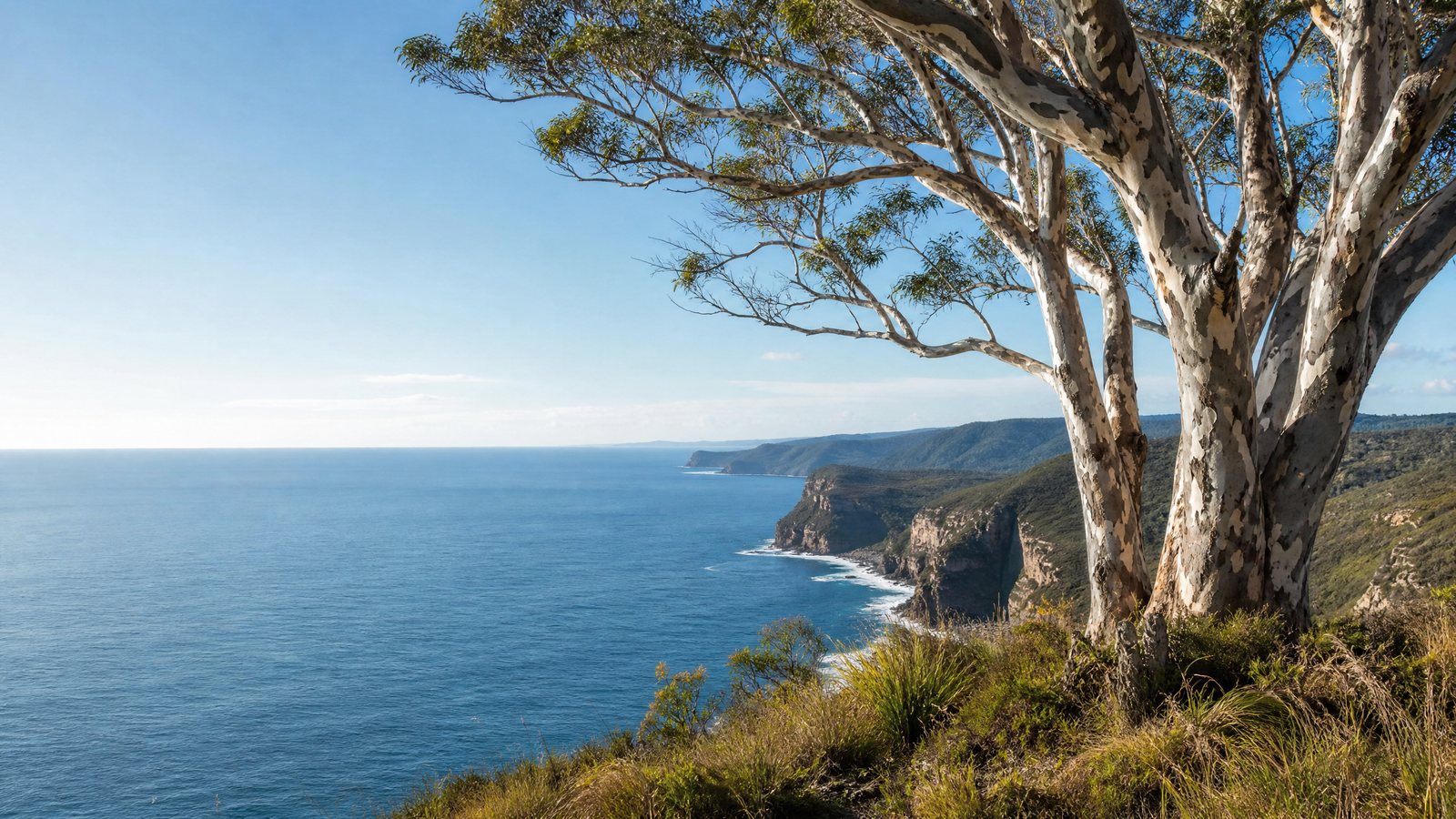
Murramarang National Park, located on the New South Wales South Coast between Ulladulla and Batemans Bay, represents a unique ecological interface. Spanning forty-four kilometres of rugged coastline, the sanctuary is defined by a rare phenomenon where spotted gum forests (*Corymbia maculata*) grow directly to the ocean’s edge [1]. This immediate transition from silver-barked canopy to Pacific salt spray creates a landscape of stark contrasts, where terrestrial and marine worlds are inextricably linked. The park preserves a diverse array of flora and fauna alongside a deep chronological narrative spanning millions of years. This intersection makes Murramarang a critical site for conservation and the study of Australia’s ancient coastal history, offering a sanctuary of quiet, enduring grandeur.
The geological foundations of Murramarang are remarkably old, with headlands predating the formation of the Sydney Basin [2]. At Dark and Myrtle beaches, exposed strata tell a story beginning over 150 million years ago during the Permian period. These sites are recognized geotourism hotspots where the buckling of ancient marine sediments is visible in dramatic cliff faces. At Pretty Beach, sandstone formations contain fossilized shells, providing a tangible link to the early Permian environment when these sediments were deposited in a shallow sea [2]. The durability of these ancient rocks has shaped the characteristic coastline, resulting in sheltered coves and jagged headlands sculpted by the relentless energy of the Southern Ocean over eons.
| Landmark | Significance | Primary Features | | :--- | :--- | :--- | | **Pretty Beach** | Permian sandstone deposits | Fossilized shells, start of South Coast Walk | | **Pebbly Beach** | Coastal ecology interface | Eastern grey kangaroos on the sand | | **Depot Beach** | Spotted gum forest density | "Old Blotchy" ancient tree, rainforest pockets | | **Dark Beach** | Pre-Sydney Basin strata | Dramatic dark rock platforms, volcanic history | | **Wasp Head** | Marine sediment exposure | Fossil-rich cliffs, panoramic coastal views |
Central to the park’s identity is the spotted gum forest, a resilient hardwood ecosystem thriving in nutrient-poor coastal soils. The most celebrated individual is "Old Blotchy," an ancient spotted gum near Depot Beach estimated to be several centuries old. Standing as a monument to species endurance, its massive, mottled trunk reflects the forest’s maturity and environmental continuity. These forests are dynamic systems supporting diverse life, from powerful owls nesting in hollows to myriad insects in the leaf litter. The proximity of these trees to the shore is a rare botanical occurrence, as salt-laden winds typically restrict large eucalypts from growing so close to the tide line.
The park’s fauna is famously represented by eastern grey kangaroos frequenting the beaches. At Pebbly and Pretty beaches, these marsupials are often observed resting on the sand or grazing just meters from breaking waves. This unusual behavior has made the park a site of international interest, offering a rare chance to witness a quintessentially Australian species in a coastal setting. Beyond kangaroos, diverse habitats—from heathlands to rainforest pockets—support a rich avian population, including sea eagles and variegated fairy-wrens. The adjacent marine environment is equally vibrant, with the Batemans Marine Park protecting reefs and kelp forests teeming with fish, rays, and migratory whales.
For the Yuin people, the traditional custodians, Murramarang is a place of immense cultural significance. The landscape is dotted with evidence of long-term Aboriginal occupation, including shell middens, stone tool sites, and ceremonial locations [4]. The name "Murramarang" is believed to derive from a local Aboriginal word, reflecting a connection to the land enduring for millennia. The park’s resources—from coastal seafood to medicinal forest plants—have sustained the Yuin people for generations. Today, park management involves ongoing consultation with the Aboriginal community, ensuring their heritage is respected and that deep cultural knowledge of the landscape is preserved for future generations as a living history.
The Murramarang South Coast Walk provides a modern framework for experiencing this ancient landscape. The 34-kilometre, three-day track stretches from Pretty Beach to Maloneys Beach, traversing headlands, beaches, and forest trails [3]. This journey allows visitors to immerse themselves in the park’s changing moods, from misty mornings in spotted gum forests to golden sunsets over the Clyde River. The walk is designed to be accessible while maintaining wilderness character, utilizing eco-accommodation that minimizes environmental footprints. By guiding hikers through significant geological and ecological sites, the walk fosters a deeper appreciation for the complexity and fragility of the South Coast environment and its unique biodiversity.
Murramarang National Park’s establishment on May 4, 1973, resulted from dedicated community advocacy and recognition of the need to protect the South Coast’s unique heritage [4]. Since its gazettal, the park has expanded to include additional forest and coastline, securing vital corridors for wildlife movement. Conservation efforts focus on managing invasive species, protecting endangered shorebird nesting sites, and maintaining forest health amid a changing climate. The park’s history is a testament to the value placed on wild spaces, and ongoing commitment ensures Murramarang remains a sanctuary for nature and people. This legacy of protection preserves the intricate ecological balance that defines the region’s identity.
In conclusion, Murramarang National Park stands as a remarkable testament to the enduring beauty and complexity of the Australian coastline. It is a place where deep geological time meets the vitality of coastal forests, and ancient Yuin traditions intersect with modern conservation. Whether walking the South Coast Walk, observing kangaroos at Pebbly Beach, or standing by Old Blotchy, the park offers a profound connection to the natural world. By preserving this unique interface of forest and sea, Murramarang serves as a vital link in the chain of protected areas safeguarding New South Wales' biodiversity. It remains a landscape of quiet power, inviting visitors to explore the stories written in its rocks, trees, and tides.