National park
Discover the powder-white sands and crystalline turquoise waters of Jervis Bay
Stretching along the New South Wales South Coast, Jervis Bay National Park preserves a rare geological intersection where pure silica sands meet crystalline waters. This sanctuary offers a connection to Aboriginal heritage and a thriving marine ecosystem.
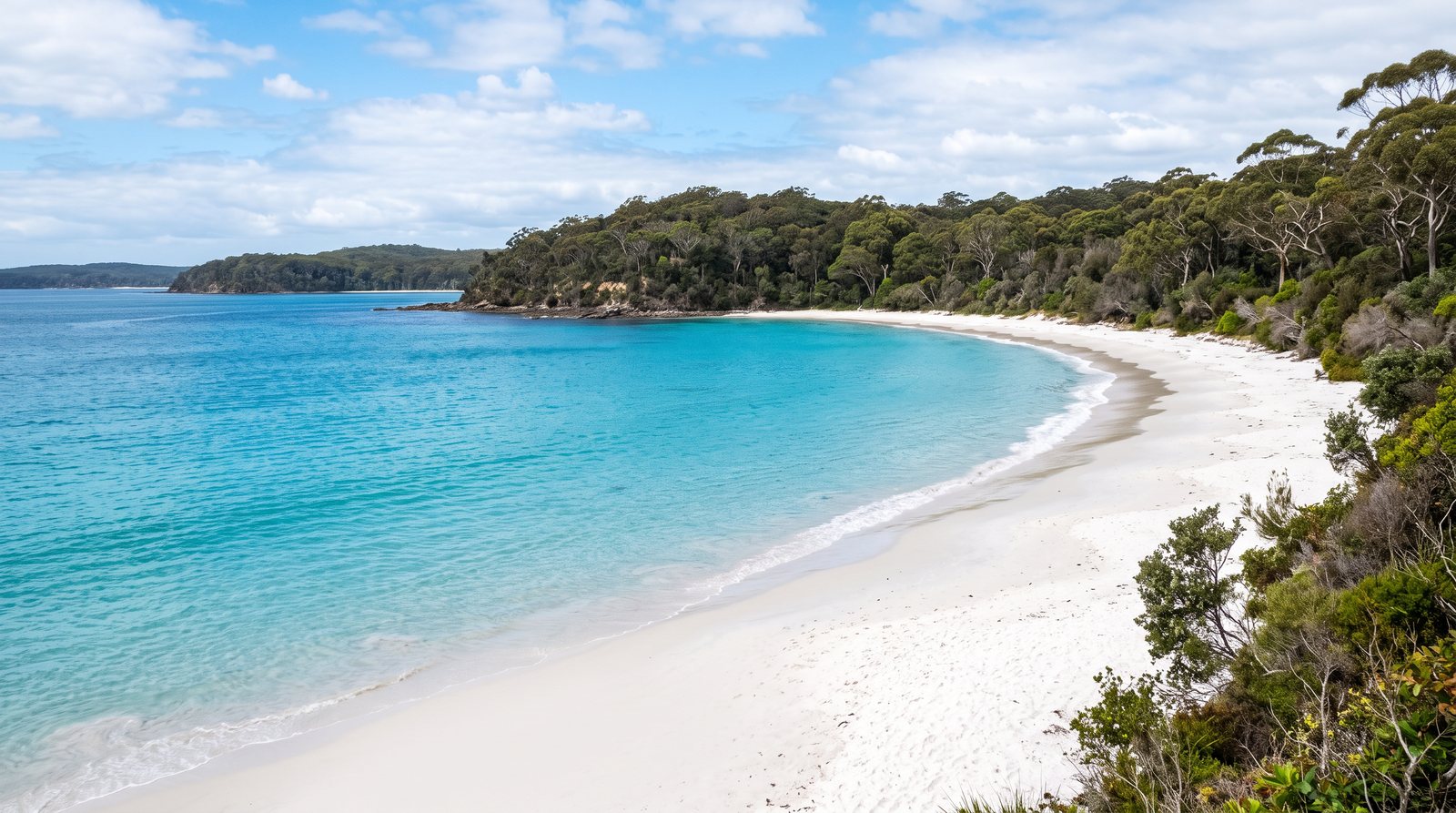
Jervis Bay National Park, situated on the South Coast of New South Wales, represents a striking intersection of terrestrial and marine environments. The park is defined by a visual palette characterized by the contrast between its powder-white sands and the crystalline turquoise of the Tasman Sea. This coastal haven is a complex ecological sanctuary where the rhythm of the tides and the density of the surrounding eucalyptus forests create a unique atmospheric stillness. For visitors at dawn, the coastline offers isolation and clarity, as light reflects off high-silica sands to illuminate the water from beneath the surface. The park’s geographical position provides a sheltered environment that has preserved a pristine ecosystem, making it a critical point of study for environmental scientists and a cherished location for those seeking the raw beauty of the Australian shoreline.
The most distinctive feature of Jervis Bay is its sand, frequently cited as being among the whitest in the world. This brilliant appearance is the result of geological processes occurring over millions of years. The sand is composed almost entirely of fine grains of quartz, or silicon dioxide, a durable mineral that resists the weathering that typically breaks down other rock types into darker sediments. The absence of significant river runoff into the bay prevents the introduction of silt and organic matter that would otherwise discolour the beaches. As surrounding sandstone cliffs erode, they release pure quartz crystals, which are washed and polished by gentle wave action. This high concentration of silica gives the beaches their signature glow and contributes to the unusual softness of the sand, which squeaks underfoot due to the uniformity and fineness of the grains.
Beneath the turquoise waters, Jervis Bay National Park supports a vibrant marine ecosystem. The bay is a key component of the Jervis Bay Marine Park, a multiple-use protected area encompassing habitats like seagrass meadows, rocky reefs, and sandy seafloors. The clarity of the water, a consequence of low nutrient and sediment input, allows sunlight to penetrate deep, fostering extensive seagrass beds that serve as vital nurseries for numerous fish species. The bay is famous for its resident population of bottlenose dolphins, often seen playing in the surf or following vessel wakes. During cooler months, the bay becomes a corridor for migrating humpback whales, which use the sheltered waters as a resting point during their long journey along the coast. The presence of these large marine mammals underscores the bay’s importance as a biodiversity hotspot requiring careful management to ensure its continued health.
The transition from white beaches to the interior reveals a terrestrial landscape rich in biodiversity. Jervis Bay National Park is home to a mosaic of vegetation communities, including tall eucalyptus forests, banksia woodlands, and coastal heathlands. These environments provide essential habitat for native fauna, particularly birdlife. Visitors often encounter colourful Australian king parrots, crimson rosellas, and honeyeaters flitting through the canopy. The park also supports populations of terrestrial mammals such as eastern grey kangaroos and wallabies, frequently seen grazing in open clearings near the coast. The flora has adapted to nutrient-poor, sandy soils, resulting in spectacular wildflower displays during spring. The interplay between dense, shaded forests and the bright, open coastline creates a sensory experience where the scent of salt spray mingles with the earthy aroma of the eucalyptus bush.
The cultural significance of Jervis Bay National Park is deeply rooted in Aboriginal heritage, as the land and waters have been the home of the Yuin people for thousands of years. The park is part of a cultural landscape of immense importance to the Wreck Bay Aboriginal Community, the Traditional Owners who maintain an ongoing connection to the region. The name Booderee, applied to the adjacent Commonwealth-managed park, means 'bay of plenty' in the Dhurga language, reflecting the abundance of resources the bay has provided for generations. Throughout the park, there are more than one hundred recorded Aboriginal sites, including shell middens and stone tool scatters, serving as tangible links to ancient history. The Traditional Owners play a central role in management, ensuring that cultural knowledge and spiritual connection to the country are integrated into conservation efforts.
The administrative history of Jervis Bay is as unique as its ecology, shaped by decisions dating back to the early twentieth century. In 1915, the Jervis Bay Territory was established to provide the landlocked Australian Capital Territory with a sovereign link to the sea, leading to the preservation of land that would eventually become national parks. Jervis Bay National Park itself was officially gazetted in 1995, representing a formal commitment by the New South Wales government to protect the northern and western shores of the bay. This legal framework has been essential in managing the competing interests of tourism and environmental conservation. The park’s history is marked by a patient effort to balance public access with the need to protect fragile ecosystems. By maintaining large areas in their natural state, the park serves as a living record of the region’s environmental history.
For the modern traveler, Jervis Bay National Park offers experiences emphasizing slow exploration and environmental appreciation. Iconic locations like Hyams Beach, renowned for sugar-white sand, draw global visitors, yet the park also contains quieter, secluded spots offering a different serenity. Murrays Beach, at the southern end, provides sheltered swimming with views across to Bowen Island, while walking trails through Scribbly Gum forests offer a chance to observe intricate patterns left by insects on tree bark. The park’s infrastructure is designed to minimize environmental footprints while allowing visitors to immerse themselves in natural surroundings. The emphasis is on "waiting well"—taking time to observe subtle changes in light, the movement of the tide, and the quiet activity of local wildlife. This approach encourages a deeper understanding of ecological value and respect for the delicate balance sustaining it.
As we look to the future, Jervis Bay National Park stands as a vital environmental instrument, providing a baseline for understanding climate change impacts on coastal ecosystems. The park’s high-silica sands and clear waters are scientific assets, offering insights into geological stability and marine health. Ongoing research, from monitoring dolphin populations to studying coastal heathland resilience, is essential for developing effective conservation strategies. The challenge for coming decades will be to maintain pristine conditions in the face of increasing visitor numbers and shifting environmental conditions. By prioritizing the protection of unique features and honouring the cultural heritage of the Wreck Bay community, the park will remain a cornerstone of Australia’s natural heritage. Jervis Bay offers a sense of timelessness, where powder-white sands and turquoise waters tell a story of resilience and profound ecological significance.