Coastal town
The rhythmic dance of basalt cliffs and ocean spray at Kiama Blowhole
Between the dramatic eruptions of the world’s largest blowhole and the quiet grace of historic terrace houses, Kiama offers a profound coastal encounter. This South Coast sanctuary balances rugged basalt geology with a refined, contemporary local culture.
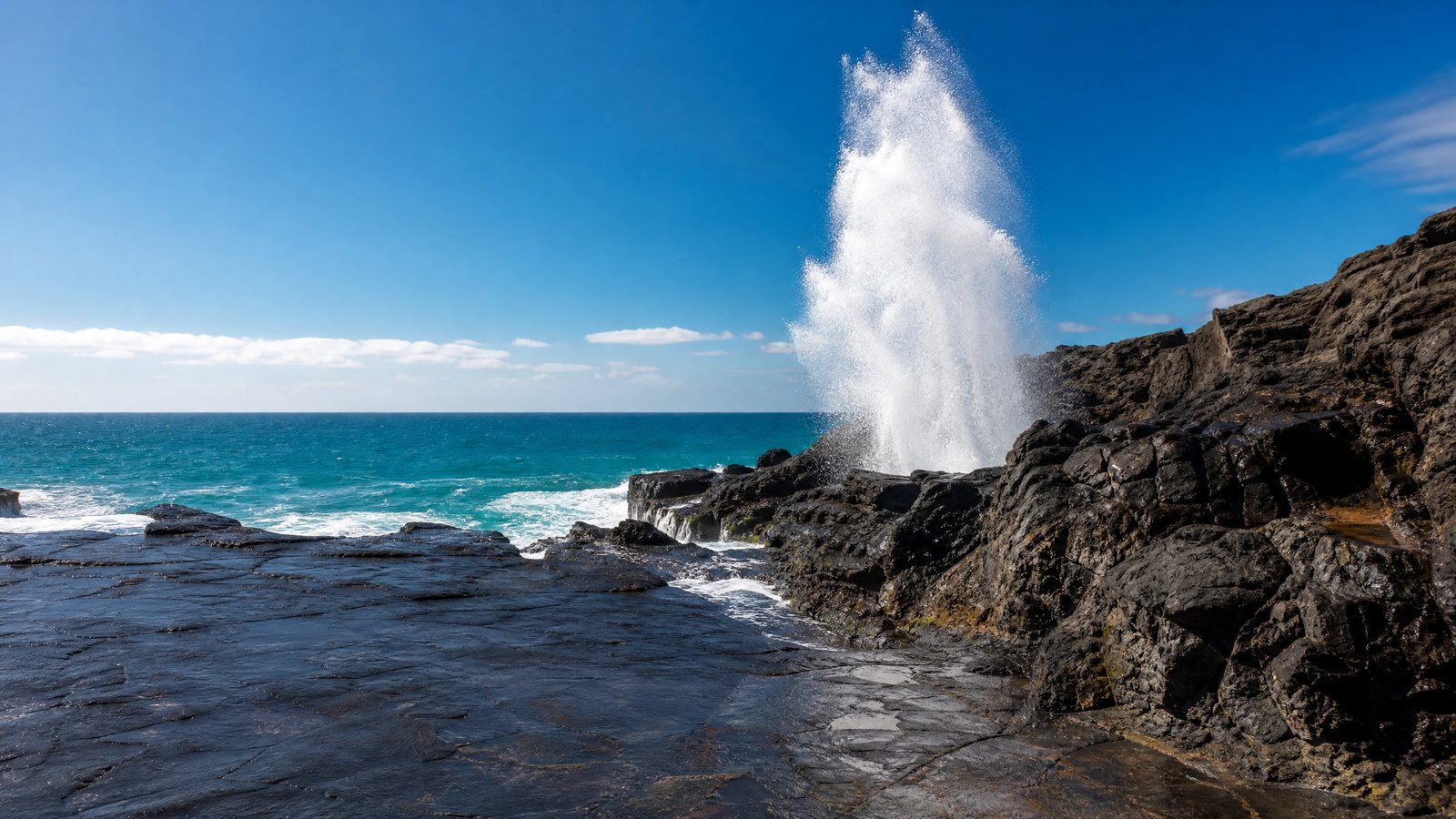
The coastal town of Kiama, situated on the South Coast of New South Wales, represents a profound intersection of geological volatility and serene heritage. Its name, derived from the Aboriginal word 'Kiaram-a', interpreted as 'where the sea makes a noise', serves as a literal description of the town’s most famous landmark. The Kiama Blowhole is a rhythmic environmental instrument, a natural aperture in the basalt cliffs that translates the energy of the Pacific Ocean into vertical plumes of salt spray. When a strong south-east swell rolls in, the compression of air and water within the subterranean cavern creates a resonant boom followed by a spectacular eruption that can reach heights of over thirty metres. This phenomenon is a reminder of the raw power inherent in the Australian coastline, a force that has shaped both the physical landscape and the cultural identity of this regional destination.
The geological foundations of Kiama are rooted in ancient volcanic activity, specifically the basalt flows that cooled into the dramatic columns visible today. These hexagonal basalt structures provide a rugged frame for the town’s harbor and headlands. The durability of this stone allowed for the formation of the blowholes—both the world-renowned main geyser and its more subtle counterpart, the Little Blowhole, located just a few kilometres to the south. While the main blowhole offers a theatrical display of power, the Little Blowhole is often more consistent, performing even in moderate swells. Together, they define the coastal perimeter of Kiama, creating a landscape where the solid permanence of the rock is constantly challenged by the fluid persistence of the ocean.
Traversing this landscape is best achieved via the Kiama Coastal Walk, a twenty-kilometre trail stretching from the Minnamurra River to Gerringong. The northern section offers a transition from calm river reaches to the exposed heights of the Bombo Headland. Here, the scenery is dominated by the remnants of blue metal quarrying, where the removal of basalt has left behind a surreal arrangement of stone columns. This heritage-listed site serves as a testament to the town’s industrial past, when local stone was harvested to build the roads and railways of a growing Sydney. The walk continues past Cathedral Rocks, where the ocean has sculpted the basalt into towering spires that stand as silent sentinels against the breaking surf, offering one of the most photographed vistas on the South Coast.
As the trail moves south from the town centre, the character of the walk shifts toward pastoral coastal beauty. This stretch winds across open headlands where the vibrant green of dairy pastures meets the deep blue of the Pacific. There are no fences here to separate the walker from the cliffs, only the rolling topography of the hills and the occasional sight of whales migrating along the coast during the cooler months. The path leads visitors toward Werri Beach, passing through areas of significant Aboriginal heritage and providing panoramic views that encapsulate the unique 'green-meets-blue' aesthetic of the region. It is a route that demands a slower pace, inviting hikers to notice the subtle changes in vegetation and the way the light interacts with the varied textures of the coastline.
In the heart of the town, the architecture reflects a different kind of durability. The historic terrace houses on Collins Street, constructed in the late nineteenth century, were originally built to house the families of local quarry workers. These beautifully preserved timber and masonry structures now form a vibrant commercial precinct, yet they retain the human scale and character of a bygone era. Standing nearby, the Kiama Lighthouse, established in 1887, remains a functional aid to navigation, its white silhouette providing a stark, elegant contrast to the dark basalt of Blowhole Point. The lighthouse and the surrounding precinct offer a tangible link to the maritime history of the South Coast, a time when the harbor was a bustling hub for regional trade.
The culture of Kiama is deeply connected to its water through its pristine ocean pools. The Continental Pool and the Blowhole Point Rock Pool offer safe havens for swimmers to experience the salt water without the unpredictability of the open surf. These pools are community hubs where the day begins for many locals with a sunrise lap. The Blowhole Point Rock Pool is carved directly into the basalt shelf, allowing the rising tide to refresh the water naturally. Swimming in these pools provides a unique sensory experience—the smell of the sea, the sound of the nearby blowhole, and the sight of the lighthouse overhead—reinforcing the town’s identity as a place where the built environment and the natural world exist in a state of mutual respect.
Beyond the immediate coastline, the landscape rises into the lush hinterland of the Jamberoo Valley. These rolling green hills are the result of fertile volcanic soils and high rainfall, making them some of the most productive dairy lands in Australia. The history of the region is inextricably linked to the dairy industry; Kiama was the site of the first dairy co-operative in Australia, a development that revolutionized the way farmers processed and sold their milk. Today, the hinterland remains a patchwork of emerald pastures, dotted with historic dry-stone walls and pockets of remnant rainforest. A drive into the hills offers a different perspective on Kiama, one defined by the quiet lowing of cattle and the mist that often clings to the escarpment, providing a cool counterpoint to the salt-drenched energy of the coast.
Ultimately, the enduring appeal of Kiama lies in its ability to offer both spectacle and sanctuary. Whether one is standing at the edge of the blowhole, feeling the vibration of an eruption, or walking the quiet, sun-drenched streets of the heritage precinct, there is a sense of being in a place that knows its own value. It is a town that has managed to preserve its history and natural wonders without becoming a static museum piece. The rhythmic dance of the basalt cliffs and the ocean spray continues, a timeless performance that draws visitors back year after year. Kiama remains a quintessential Australian coastal destination, a place where the noise of the sea is not a disturbance, but a profound and necessary conversation between the land and the Pacific.