Waterfall
A dramatic plunge into the verdant depths of Morton National Park
Experience the dramatic grandeur of Fitzroy Falls, where water plunges eighty-one metres into the ancient depths of Morton National Park. This Southern Highlands landmark combines accessible wilderness with rich biodiversity and stunning escarpment views.
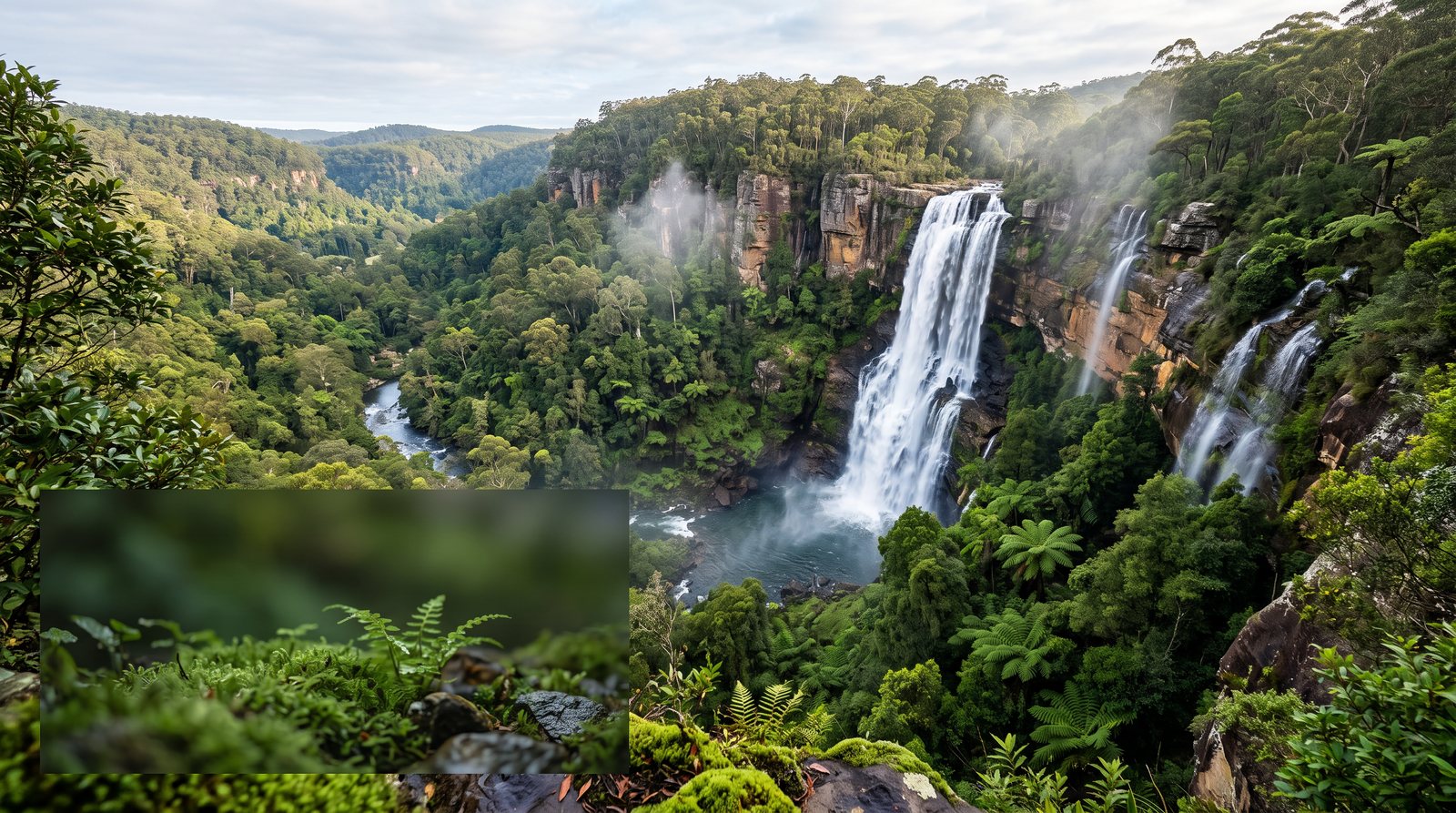
Fitzroy Falls stands as one of the most significant natural landmarks within the Southern Highlands of New South Wales, serving as a dramatic gateway to the expansive wilderness of Morton National Park. The site is defined by its namesake waterfall, which plunges eighty-one metres over a sheer sandstone escarpment into the lush, temperate rainforest of the Yarrunga Valley below. This spectacular display of geological force and natural beauty has made Fitzroy Falls a cornerstone of regional tourism for over a century, offering visitors a profound connection to the rugged landscapes that characterize the Great Dividing Range. The falls are a testament to the patient work of erosion, as Yarrunga Creek has carved a deep, vertical path through the ancient sedimentary layers of the plateau, creating a visual spectacle that changes with the seasons and the prevailing weather patterns of the highlands.
The geological narrative of Fitzroy Falls is deeply intertwined with the broader history of Morton National Park, which is the fifth largest national park in New South Wales. The sandstone cliffs that frame the waterfall are part of the Sydney Basin, a massive geological structure shaped by hundreds of millions of years of environmental shifts. At Fitzroy Falls, the contrast between the high, dry plateau and the deep, moist valley is stark and immediate. The escarpment provides a vantage point that reveals the immense scale of the Australian bush, where the canopy of the rainforest below appears as a dense, unbroken carpet of green stretching toward the horizon. This verticality is a critical component of the local ecosystem, creating distinct microclimates that support a diverse array of plant and animal life that might otherwise struggle to coexist in such close proximity.
Visitor infrastructure at Fitzroy Falls has been carefully designed to provide access to these dramatic views while minimizing the impact on the sensitive environment. The award-winning visitor centre serves as an educational hub, offering insights into the natural and cultural heritage of the area. From the centre, a series of well-maintained boardwalks and walking trails extend along the edge of the escarpment. These paths are notably wheelchair-accessible in many sections, ensuring that the experience of the falls is available to a wide range of visitors. The West Rim Track and the East Rim Track offer different perspectives of the falls and the surrounding valley, with each lookout providing a unique angle on the plunging water. These trails allow for a meditative exploration of the landscape, where the sound of the waterfall remains a constant, rhythmic presence.
The botanical diversity of the Fitzroy Falls area is particularly evident during the spring months, when the forest trails come alive with a vibrant display of wildflowers. The plateau is home to a variety of native species, including banksias, wattles, and waratahs, which thrive in the nutrient-poor but well-drained sandstone soils. As one moves closer to the edge of the escarpment and descends toward the valley, the vegetation shifts toward the moisture-loving species of the rainforest. This transition zone is a fascinating area for nature enthusiasts, as it showcases the adaptability of the Australian flora. The presence of these wildflowers is not only a visual delight but also a vital resource for local pollinators, including a wide variety of native bees and honeyeaters that can be seen darting between the blossoms during the warmer months of the year.
Fauna at Fitzroy Falls is equally diverse, with the area being renowned as a prime location for spotting the elusive superb lyrebird. These remarkable birds are famous for their ability to mimic almost any sound they hear in their environment, from the calls of other birds to the mechanical sounds of human activity. The damp, leaf-littered floors of the forest near the visitor centre and along the walking tracks provide the ideal habitat for lyrebirds to forage for insects and other small invertebrates. Observing a lyrebird in its natural setting is a highlight for many visitors, offering a glimpse into the complex social and vocal lives of one of Australia's most iconic avian species. In addition to lyrebirds, the park is home to kangaroos, wallabies, and a vast array of birdlife, making it a critical sanctuary for biodiversity in the Southern Highlands.
The cultural and historical context of Fitzroy Falls adds another layer of depth to the visitor experience. The area has long been a place of significance for the traditional custodians of the land, who have maintained a connection to the landscape for thousands of years. The Southern Highlands region became a popular retreat for residents of Sydney and Wollongong in the late 19th century, with Fitzroy Falls serving as a key destination for those seeking the cool, fresh air and dramatic scenery of the mountains. The falls were named in honor of Sir Charles FitzRoy, the Governor of New South Wales, during his visit to the area in the 1850s. This history is reflected in the names of various lookouts and trails, creating a tapestry of human interaction with the natural world that spans multiple eras and cultures.
Experiencing Fitzroy Falls is as much about the journey through the Southern Highlands as it is about the destination itself. The drive to the falls takes visitors through rolling green hills, historic villages, and artisanal farm gates, providing a quintessential country NSW experience. Upon arrival at the falls, the transition from the pastoral landscape to the wild, untamed beauty of Morton National Park is immediate. The picnic areas near the visitor centre offer a space for families and groups to gather and enjoy the surroundings, while the more adventurous can venture further along the rim tracks to find quiet spots for reflection. The vehicle entry fee collected at the park contributes to the ongoing maintenance and conservation efforts, ensuring that this spectacular site remains preserved for future generations to enjoy.
In conclusion, Fitzroy Falls is a destination that captures the essence of the Australian wilderness while remaining accessible to all. The combination of its dramatic plunge, the rich biodiversity of Morton National Park, and the well-appointed visitor facilities makes it a standout feature of the Southern Highlands. Whether one is drawn by the geological wonder of the escarpment, the beauty of spring wildflowers, or the chance to hear the mimicry of a lyrebird, Fitzroy Falls provides a lasting impression of the natural world. It remains a place where the grandeur of the landscape meets the quiet details of the forest, offering a sanctuary of beauty and tranquility that continues to inspire everyone who walks its ancient paths.