Historic village
The historic gateway to the Southern Highlands where volcanic peaks meet heritage architecture
Mittagong serves as the sophisticated gateway to the Southern Highlands, where the legacy of Australia’s first ironworks meets the grandeur of volcanic peaks. Between cool-climate vineyards and heritage architecture, it offers a layered encounter with history.
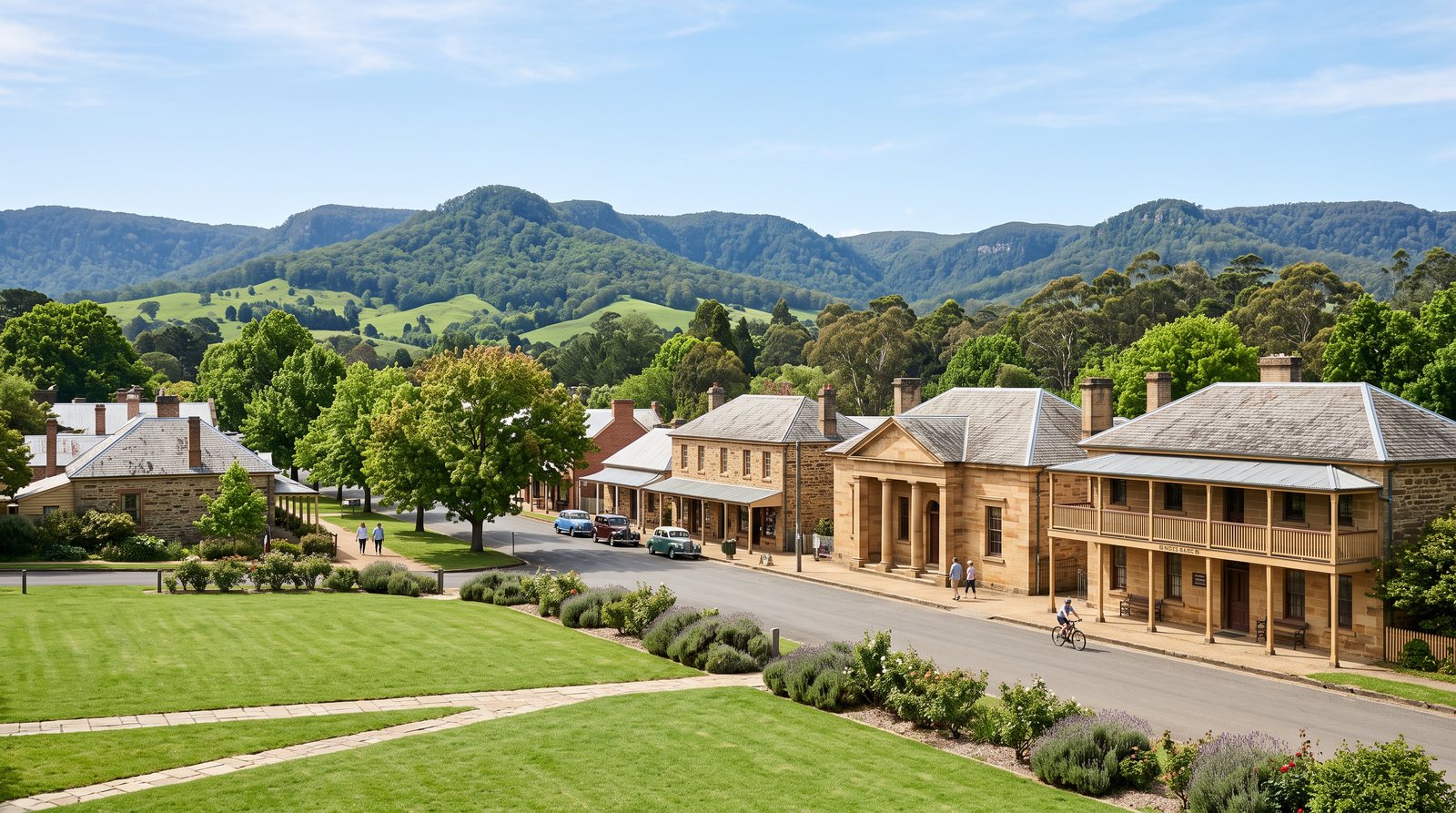
Mittagong occupies a singular position in the geography of New South Wales, serving as the threshold between the coastal sprawl of the Sydney basin and the elevated landscapes of the Southern Highlands. As the first major town encountered upon ascending the Razorback Range, it acts as a gateway not merely in a navigational sense, but in an atmospheric one. The air here carries a distinct clarity, a cool-climate sharpness that signals a departure from the humidity of the coast. The town is cradled by a topography defined by ancient geological activity, notably the looming presence of Mount Gibraltar. This trachyte outcrop stands as a silent sentinel over the village, providing a physical anchor for a community that has long balanced industry with the preservation of its natural and architectural heritage.
The historical narrative of Mittagong is linked to the birth of the Australian iron industry. In 1848, the discovery of iron ore led to the establishment of the Fitz Roy Iron Works, the first of its kind in the nation. This pioneering venture sought to harness the mineral wealth of the highlands to fuel the growth of a young colony. The ruins of the ironworks, located near the town center, serve as a reminder of this industrial ambition. Although the venture eventually closed, its legacy shaped the layout and character of Mittagong. The demand for labor and infrastructure accelerated the development of the town, leading to the construction of substantial heritage buildings. Today, the site is a place of quiet reflection, where the rusted remnants of machinery and the foundations of the blast furnace are preserved within a public park, offering a connection to the ingenuity of nineteenth-century workers.
Rising to 863 meters, Mount Gibraltar, known locally as "The Gib," is the highest point between Sydney and Canberra. Its volcanic origins gifted the area with fertile soils that support a unique ecosystem, including the endangered Southern Highlands Shale Woodlands. The mountain is a vital ecological sanctuary and a destination for those seeking a panoramic perspective of the region. A network of walking trails leads to lookouts that offer views across the Bowral and Mittagong townships and the Nattai wilderness. The trachyte quarried from the mountain was once a prized building material, used in the construction of many of Sydney’s colonial buildings. While the legacy of the quarrying industry is still visible in the sheer rock faces, the mountain has largely been reclaimed by nature, providing a habitat for a diverse array of birdlife and native mammals.
The intersection of history and nature is further explored on the Box Vale Mine track, an evocative walking experience in the region. This trail follows the route of a historic railway line built in the 1880s to transport coal from the Box Vale Mine to the Mittagong ironworks. The path leads hikers through dense eucalypt forest and dramatic sandstone cuttings, eventually reaching a 100-meter-long tunnel carved through the rock. Walking through the darkness of the tunnel, one can hear the echoes of the steam engines that once thundered through these hills. Beyond the tunnel, the track continues to the Nattai Lookout, providing a vista of the rugged Nattai Gorge. The preservation of this railway route as a walking track is a testament to the community's commitment to honoring its industrial past while providing accessible ways for visitors to engage with the wild beauty of the surrounding wilderness.
At the heart of Mittagong’s social life lies Lake Alexandra, a man-made reservoir that has become a cherished public reserve. Originally constructed in the 1870s to provide water for the engines of the Fitz Roy Iron Works, the lake has long since transitioned from a utility to a sanctuary. Surrounded by lush parklands and heritage structures, the lake is a haven for waterbirds, including black swans and moorhens, which glide across its often-misty surface. The perimeter path is a popular route for locals and visitors alike, offering a gentle way to experience the town’s cool-climate flora. In the early morning, the lake is frequently shrouded in a soft highland fog, creating a scene of profound tranquility. The stone bridges and mature trees reflect the Victorian-era aesthetic that permeates much of Mittagong, making the lake a central piece of the town’s cultural identity.
While its history is rooted in iron and coal, Mittagong’s modern identity is defined by the sophistication of its viticulture and culinary scene. The Southern Highlands is recognized as a premier cool-climate wine region, and the hills surrounding Mittagong are dotted with boutique cellar doors and expansive vineyards. The high altitude and basalt-rich soils are particularly suited to the production of elegant Pinot Noir and Chardonnay. This agricultural bounty is complemented by a thriving food culture that emphasizes local, seasonal produce. From refined dining establishments to cozy village cafes, Mittagong has become a destination for those who value the connection between the land and the table. The town’s markets and specialty food shops further reinforce this reputation, offering a taste of the highlands that is both refined and authentic.
The architectural fabric of Mittagong is a rich tapestry of colonial heritage and Victorian elegance. Walking through the village, one encounters well-preserved buildings that tell the story of the town’s evolution. The Mittagong Maltings, a massive complex of red-brick industrial buildings, stands as a monumental example of late nineteenth-century architecture. The town’s residential streets are lined with weatherboard cottages and grander sandstone villas, many featuring the deep verandas and established gardens characteristic of the region. This heritage is a living part of the community, with many historic buildings now housing galleries, antique shops, and boutiques. The sense of a village that has managed to grow without losing its soul is palpable, providing a contrast to the rapid urbanization seen elsewhere. The careful preservation of these structures ensures that Mittagong remains a place where the aesthetic of a bygone era continues to inform the quality of life.
Ultimately, the appeal of Mittagong lies in its atmospheric quality, a blend of mist, mountain, and memory. The four distinct seasons of the Southern Highlands are nowhere more apparent than here. In autumn, the town is transformed by a riot of gold and crimson as the many deciduous trees prepare for winter. In spring, the gardens erupt in a celebration of cool-climate blooms, while winter brings a cozy charm, with frequent morning mists adding a layer of mystery to the landscape. This seasonal rhythm dictates the pace of life, encouraging a slower, more attentive way of being. Mittagong is a destination of layers, where every trail and every heritage stone offers a deeper understanding of the enduring relationship between the Australian landscape and its history.